
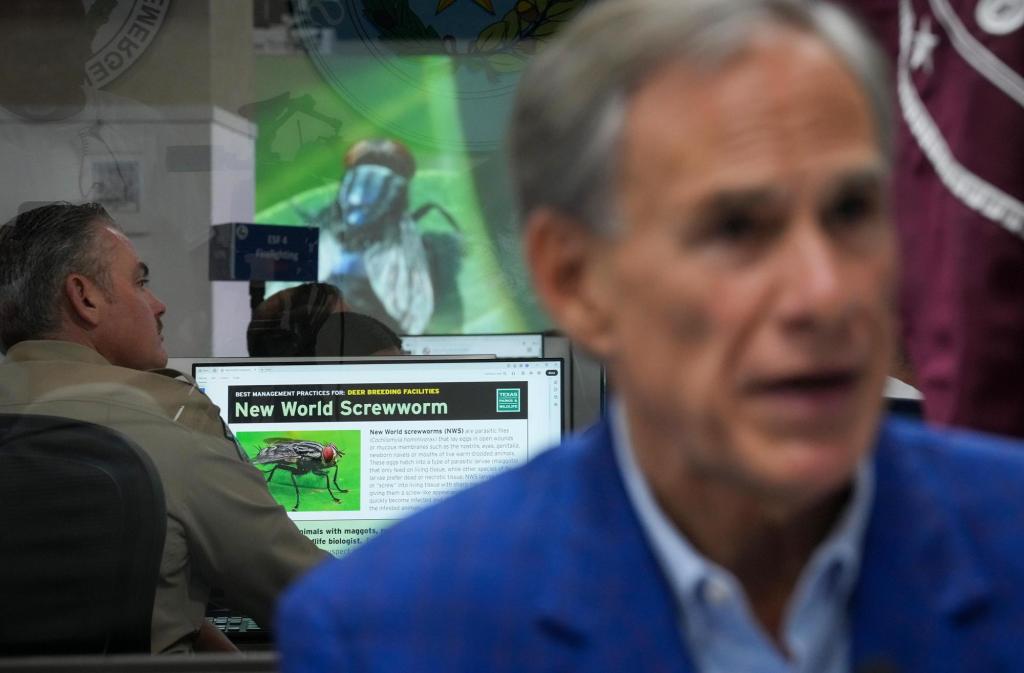
The Connecticut Department of Agriculture is requiring that all animals entering the state from certain parts of the country be inspected for evidence of New World Screwworm infestation after the parasite was found in parts of the U.S.
According to the department, “New World Screwworm is a serious foreign animal disease that causes rapid tissue destruction and poses a significant threat to animal welfare and public health.”
New World Screwworm, or NWS, a flesh-eating parasite that lays its eggs in open wounds and body openings, has been detected in Texas and New Mexico. To prevent its introduction into Connecticut, the State Veterinarian, Thamus J. Morgan, DVM, MPH, DACVPM, has ordered that all domestic animals entering from an infested zone or adjacent surveillance zone be inspected by a qualified veterinarian for signs of infestation.
Entering animals must be found to be free of both open wounds and signs of infestation, the department said in a statement Friday. “This requirement applies to all susceptible species of domestic animals, even if they were otherwise exempt from providing a CVI to the State Veterinarian under the applicable import statute for that animal,” it said.
So far, no cases of New World Screwworm detected in Connecticut, according to the Department of Agriculture.
“Domestic animals, including dogs and cats, originating from an infested zone must be treated by an accredited veterinarian with a systemic product with United States Food and Drug Administration (FDA), United States Department of Agriculture (USDA), or United States Environmental Protection Agency (EPA) authorization for use against NWS, prior to entry and must be within the labeled duration of action of the product upon entry into Connecticut,” the department said.
“This Order is the first line of defense to protect Connecticut’s agricultural industry and companion animals,” Agriculture Commissioner Bryan P. Hurlburt said. “All animal owners – companion and livestock – should watch for signs of infestation and strengthen biosecurity practices to mitigate the introduction of New World Screwworm to the state.”
The order lasts through Oct. 31 and may be extended.
The Department of Agriculture also urges livestock producers and pet owners to check their animals routinely for signs of infection, which include “foul odor, presence of draining or expanding wounds and maggots or eggs around the edges and deep into the wound. Young animals are especially susceptible, especially around the navel, nose, and ears.”
Any suspected NWS infection should be reported to the Connecticut State Veterinarian at 860-713-2505.
Connecticut has coordinating its response to NWS with neighboring states to prevent it from establishing in the Northeast. CT Department of Agriculture “is also coordinating with the Connecticut Department of Public Health and Connecticut Department of Energy and Environmental Protection to monitor the situation and ensure state agencies are aligned in the event NWS is introduced in Connecticut,” the department said.
“Emerging animal health threats like New World Screwworm deserve our attention precisely because the health of animals and people are closely connected,” said Department of Public Health Commissioner Manisha Juthani, M.D.”DPH is working in close coordination with our partners at CT DoAg and DEEP to stay ahead of this situation. For now, Connecticut has no confirmed cases, and we want to keep it that way. We encourage all pet owners and livestock producers to follow the guidance issued by DoAg.”
Katie Dykes, commissioner of the Department of Energy and Environmental Protection, said that agency is concerned about potential spread to wildlife.
“While currently being detected in domestic animals, NWS has the potential to have devastating impacts on our native wildlife populations and if spillover occurs, control and eradication will be much more difficult,” she said. “Coordinated efforts like this to address One Health issues keep people, agriculture, wildlife and our ecosystems safe.”
Information about NWS and how to prevent it can be found on ats screwworm.gov.