
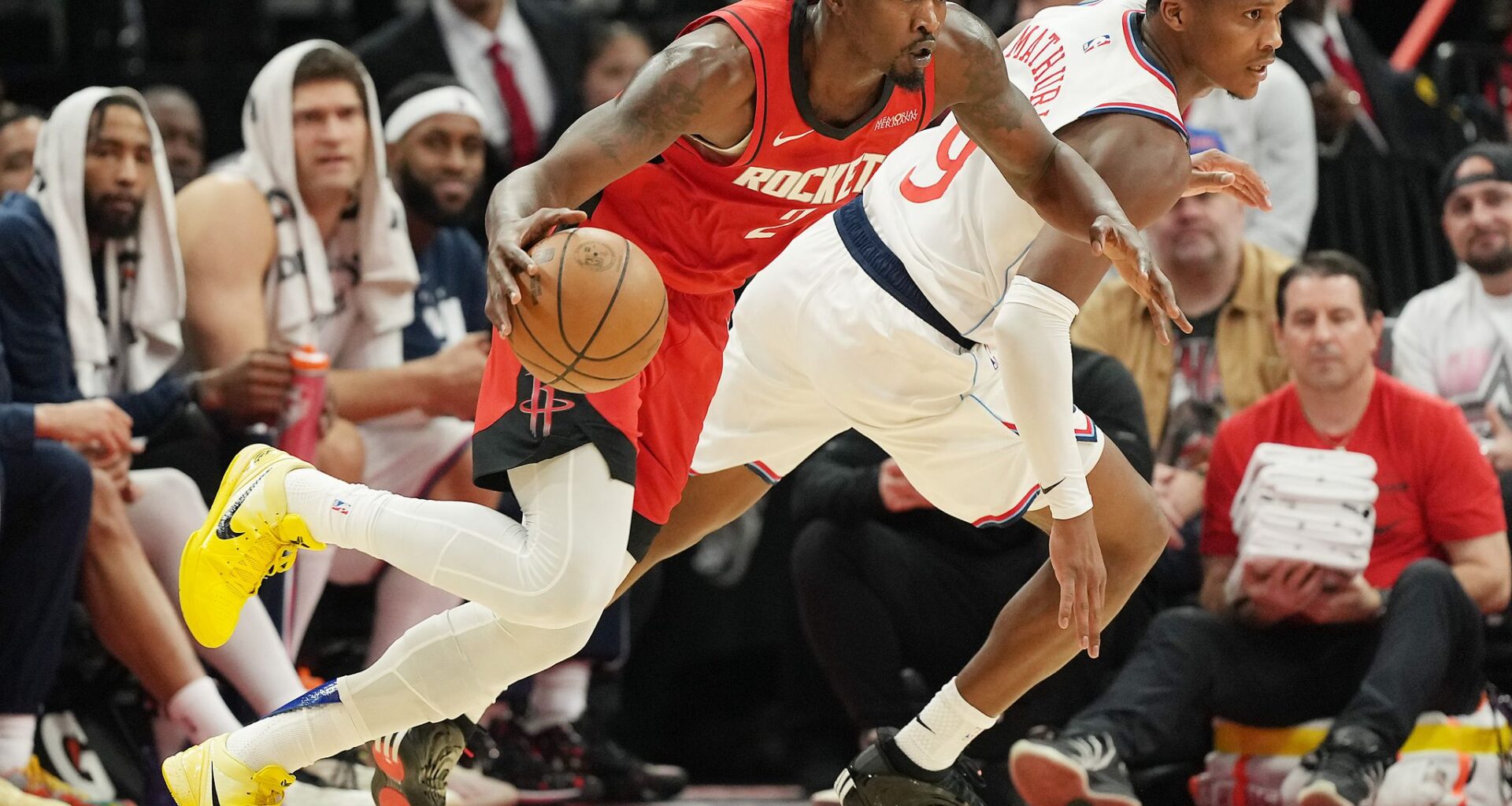
The trade comes almost exactly a year since Finney-Smith signed a four-year, $53 million deal with Houston. The last two years of the contract are non-guaranteed, making him essentially an expiring contract. The forward was expected to be a key two-way forward for Houston but offseason ankle surgery took longer than expected to recover from, and even when he got on the floor Finney-Smith struggled to find his game. Finney-Smith averaged 3.3 points and 2.5 rebounds across 37 games, shooting 33.3% from the field and 27% from three, all career-lows.
Per ESPN, Houston is sending away a 2027 Memphis Grizzlies second round pick and its own second round picks in 2028 and 2033. It is a relatively steep cost to shed the expiring contract and leaves Houston with at-most two second-round picks through 2033.
Trading away Finney-Smith comes with financial benefits for the Rockets. It brings them under the NBA’s first apron and the luxury tax. Houston now has access to the approximately $9 million it has left in the non-taxpayer mid-level exception, although using it would hard-cap the Rockets at the first apron and how much of it they can use depends on the structure of Tari Eason’s extension.
Trading away Finney-Smith’s salary and not taking any back also generates a $13.3 million trade exception that could give the Rockets additional flexibility if they choose to make a trade further in the offseason or into the season.
The move could also help Houston stay under the repeater tax — which comes with steep financial penalties — in a few years. Teams enter the repeater tax if they’ve been above the luxury tax for three of the previous four seasons. The Rockets will likely be a regular tax team beginning next season if they agree to terms with Amen Thompson on a lucrative extension.