
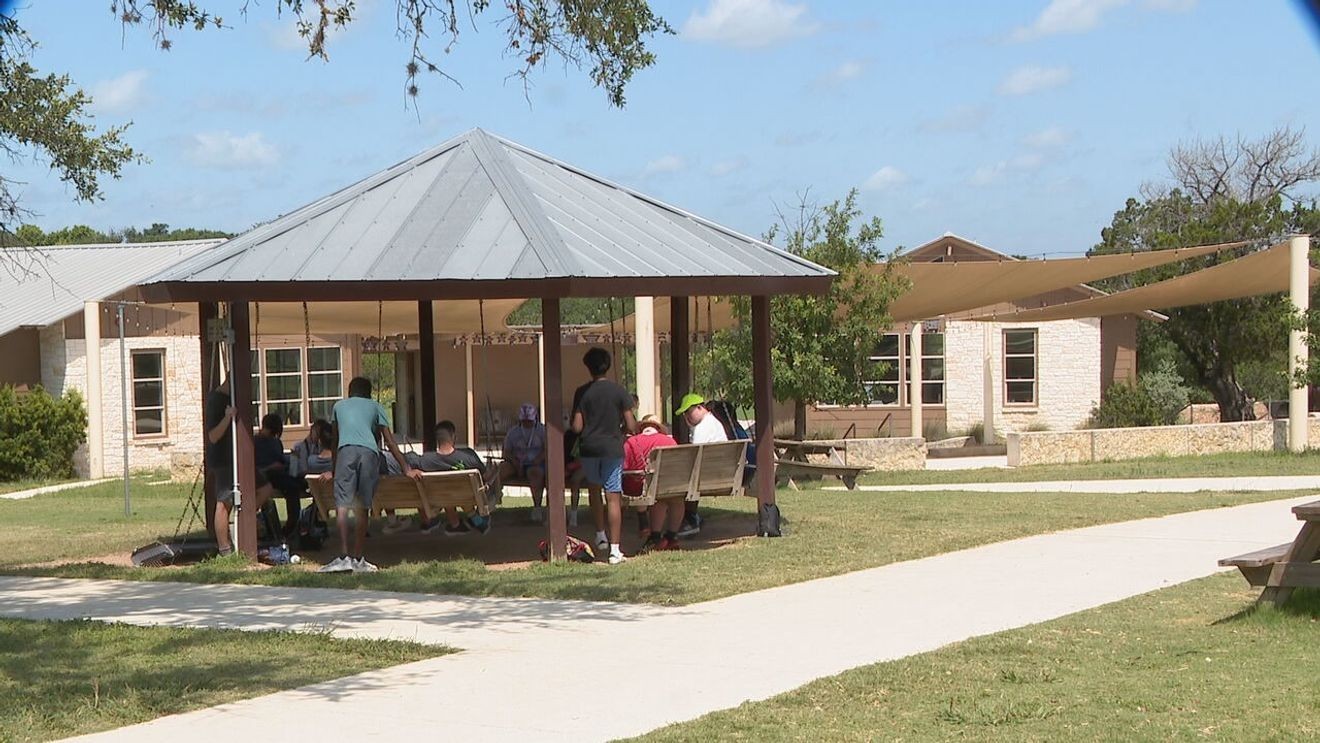
CENTER POINT, Texas — A calm stretch of the Guadalupe River at Camp CAMP is almost unrecognizable from the water that tore through the property last July.
Campers paddle in canoes under the careful watch of lifeguards. The river is quiet, sparkling in the sun.
As floodwaters rushed in a year ago, the camp’s riverfront area was completely submerged, depositing three stories of debris on the property. Luckily, all the camp’s permanent structures are high on a ridge, away from the river and from the devastation.
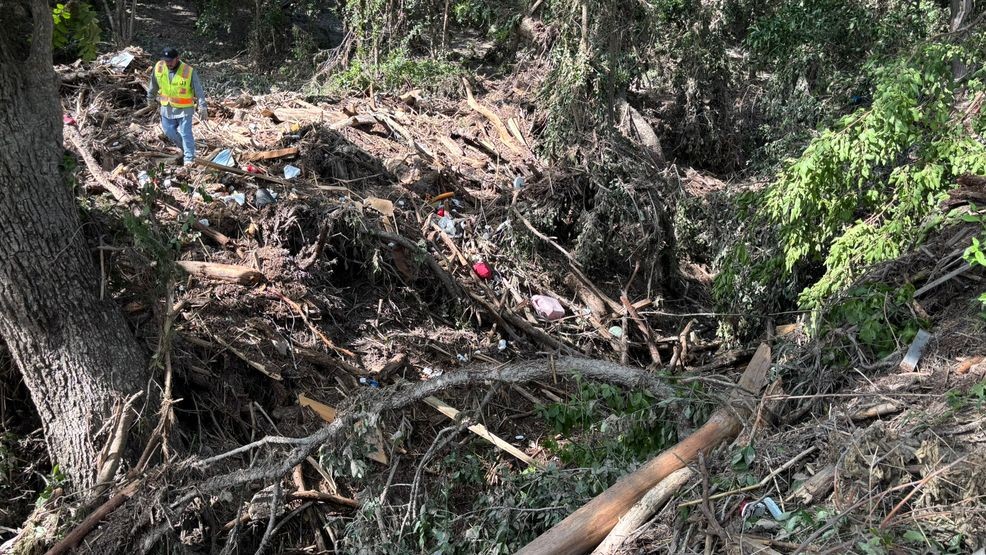
Post-flood view of Camp CAMP’s riverfront (Courtesy Brandon Briery)
Above the campfire pit, a new marker now shows the crest line, a reminder of how high the floodwater rose.
“It was such a significant event that our whole community lived through, so we want to remember,” said Brandon Briery, chief operating officer of Camp CAMP.
For camps in this area, cleaning up the damage was only the beginning.
This summer, youth camps across Texas have also had to prove they are prepared for the next emergency under a new set of camp safety laws passed after the deadly July 4 floods.
The new requirements include updated emergency plans, evacuation routes, staff training, camper orientation, and more coordination with local emergency officials. Camps also face more oversight from the Texas Department of State Health Services, which regulates licensed youth camps.
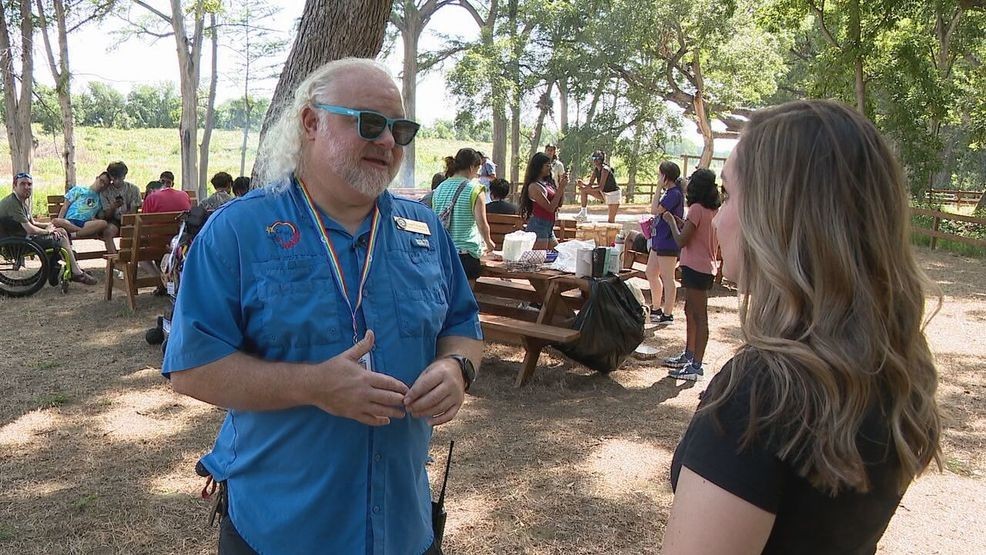
Brandon Briery talks about camp inspections along Camp CAMP’s riverfront area
One of the biggest changes this year was a pre-inspection before a camp could be approved.
“That was the first time we’ve been through that process,” Briery said.
Camp CAMP also went through a surprise inspection. Briery said the camp received perfect marks on both.
Before the new laws, state inspectors checked whether a camp had an emergency plan. During an April legislative hearing, state health officials acknowledged inspectors were not approving the contents of those plans in the same way now required.
“Y’all were not delegated to, quote, approve it. Y’all just said, ‘Do you have one?’ Fair statement?” State Sen. Charles Perry asked during the hearing.
“Yes, sir,” a DSHS official responded.
Under the new system, inspectors are expected to verify parts of a camp’s emergency plan on site.
“We have trained our inspectors to conduct on-site verification of camp emergency plan components,” DSHS Commissioner Jennifer Shuford said during the hearing.
The new laws require camps to annually update emergency plans, train staff, give campers safety orientation, and share emergency plans with local emergency officials. They also require more information for parents, including written notice if any part of the camp is located in a floodplain.
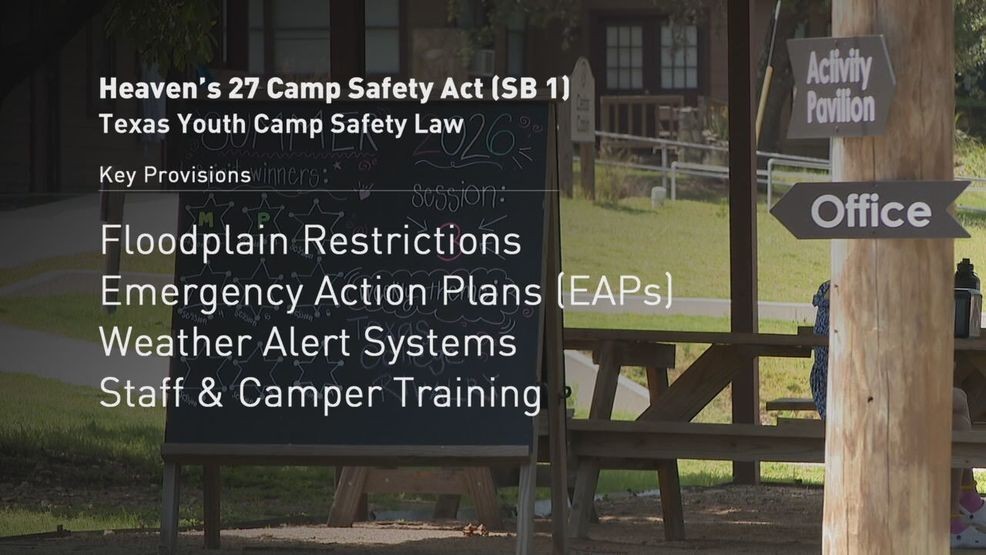
Some of the new camp regulations passed in Texas
The Heaven’s 27 Camp Safety Act also restricts the use of camper cabins in FEMA-designated floodplains, with limited exceptions. The law created an online registry of licensed youth camps and expanded safety standards for some campgrounds and RV parks.
But the rollout has been difficult for some camps.
State Representative Wes Virdell said he feels some parts of the law went too far, too fast.
“There are about 60 camps that have not reopened because of the legislation,” Virdell said. “There’s some pretty egregious stuff that needs to be fixed.”
One of the most disputed requirements involved broadband connectivity.
The rule was intended to make sure camps could still communicate during an emergency, even if one system failed. But some rural and nonprofit camps said fiber internet was either unavailable, unaffordable or unrealistic in remote areas.
Briery said Camp CAMP was in a better position than many others.
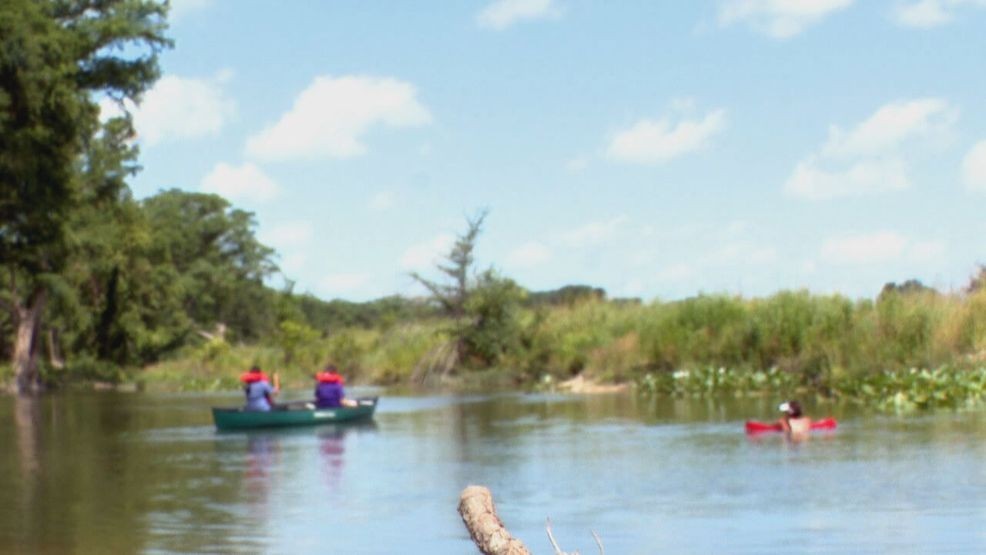
Along the river at Camp CAMP in Center Point, TX
“We already had both fiber and satellite internet connections, so we were okay on that one, but many of our camp colleagues really, really struggled with that,” Briery said.
The state has since allowed more flexibility on the internet requirement for this summer, but camps still have to show they have reliable ways to communicate in an emergency.
For Briery, the challenge was not just meeting the new requirements. It was the short timeline for camps, inspectors, and state agencies to adjust before the summer season.
At Camp CAMP, the mission is to make sure children and adults with disabilities or medical conditions can enjoy a camp experience, regardless of their differences or abilities.
At the end of June, Camp CAMP was one of about 290 camps with approved applications. Twelve more were still under review.
Briery said he hopes the camps still sidelined by the new process can eventually get licensed, because many serve families who may not have many other options.
“If they aren’t able to, then maybe other camps will come into existence that can meet those needs,” Briery said.
Lawmakers are expected to continue discussing the law and possible fixes when they return to Austin in 2027.