
A squirrel feeling it on a metal fence in Georgetown, Texas.
Suzanne Schroeder/Getty Images
Ask most people sweating in brutal Texas heat about Seasonal Affective Disorder, and they might say that it’s a winter problem, typically for people in Alaska and the Pacific Northwest. Then those same people will go home and stay indoors the rest of the week, battening up the hatches and crawling into the freezer to avoid the often suffocating Texas sunlight and humidity.

Winter and Seasonal Affective Disorder—with the hard to take seriously acronym S.A.D.—certainly go hand in hand. The shorter days and lack of light can lead to drops in serotonin levels and cause feelings of sluggishness, depression and insomnia. But lesser known is that there’s a summer version of this as well. And having lived in Seattle (and even Canada) before moving here, I’d argue it’s much worse in Texas.
Article continues below this ad
Sometimes known as reverse or summer Seasonal Affective Disorder, this somewhat rare version of S.A.D. occurs when excessive hot, humid and sunny weather can take a real toll on mental health, leading to increased symptoms of stress (check), irritability (have that too), and occasional difficulty in concentrating. But don’t tell my editor that.
Summer vs. winter S.A.D.
“In the summertime, we have an abundance of heat and humidity and it makes it difficult for people to be outdoors. What happens is the same dynamic as the colder climates,” Dr. Debra Atkisson, psychiatrist and Senior Vice President of Clinical Services at Connections Wellness Group, told Chron.
As Atkisson describes, it ultimately lowers our activity level, renders us sluggish, and can even cause us to withdraw socially. The high temperatures drain your energy, the longer days can push your bedtime later, and the overall horribleness of hot, muggy weather can cause people to retreat and stay indoors just as much as the cold can.
Article continues below this ad
“People will often close their window blinds because of the intensity of the sun and heat, and it begins to mimic that sensation of ‘I’m inside, I can’t tolerate being outdoors too much,'” Atkisson said.
Locals are sometimes surprised to hear when I mention that one of the few things I miss about Seattle is the weather, which they often picture as round the clock rain and dark, unforgiving skies. And sure, it can be like that, and sometimes you have the urge to take too many vitamins so you can at least see some color in your pee.
Austin American-Statesman/Hearst/Austin American-Statesman via Ge
But I find the Texas heat far more repressive. And it seems many Texans feel the same, which is why they often hibernate from May to September, and rarely walk outside in the summer on the state’s few sidewalks. It’s odd to live in a place where you need a machine running 24/7 just to survive. The rain out west can be annoying, but it’s not trying to hurt you, and it’s far easier to spend a few hours in a light drizzle than under the blazing Texas sun.
Article continues below this ad
“I think here, people get more of the seasonal affective component in the summer than they do in the winter … I’d had several people say to me: ‘I literally feel like I have to suffer through the summer,'” Atkisson said. She spoke of a person she knows—a perfectly healthy, young person—who went to meet a friend at an art museum, but had to park several blocks away.
“And she said, ‘By the time I entered the museum, I felt disoriented and had to sit down for 30 minutes and drink cold water. We just looked at each other and decided we’re not doing this again in the middle of the day,'” Atkisson said.
That’s far more than I do, because it at least involves an attempt to leave the house during the daylight. In cooler months in Houston, I walk up a storm and have on occasion traipsed so far from home that I’ll call up my girlfriend like a child and be like, “Can you pick me up? Ice cream’s on me.” During the summer, however, the space between my car and apartment door is far enough, and at night I’m out or often too tired from the heat and work to walk. I hear tell gyms exist, but it’s not the same.
How to offset that summer sluggishness
In wintery areas with not enough sunlight and S.A.D. symptoms, people will sometimes buy UV sunlamps to use indoors. But that obviously wouldn’t work for the Texas summer version, and if somebody bought one of those lamps for me now, I’d chuck it out the window. So beyond miserably whining about it like I’ve been doing this entire article, what is to be done?
Article continues below this ad
“Go back to Seattle, traitor,” I can hear someone saying. But aside from that, Atkisson says that a few simple steps can be taken.
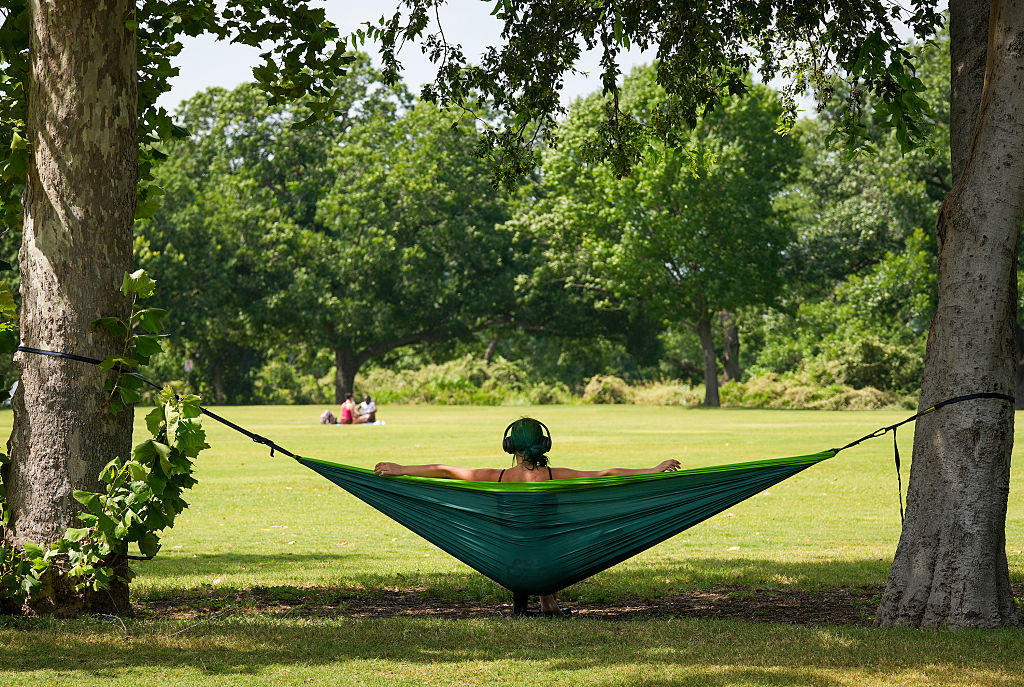
Try walking early in the morning or late at night when the regularly scheduled hellscape isn’t present, stroll in indoor areas as much as you can, focus on consistent sleep routines, find the shadiest parks in your city (with trees, not crime), and make a special effort to plan activities with friends that you won’t just cancel because it’s too damn hot out.
Hopefully, by doing at least a few of the above things that people probably already knew they should be doing, we can all make reverse, summer Seasonal Affective Disorder a thing of the past. And best of all, it’ll hopefully cause West Coast expats like myself to stop annoyingly complaining so much about the heat.
Article continues below this ad