
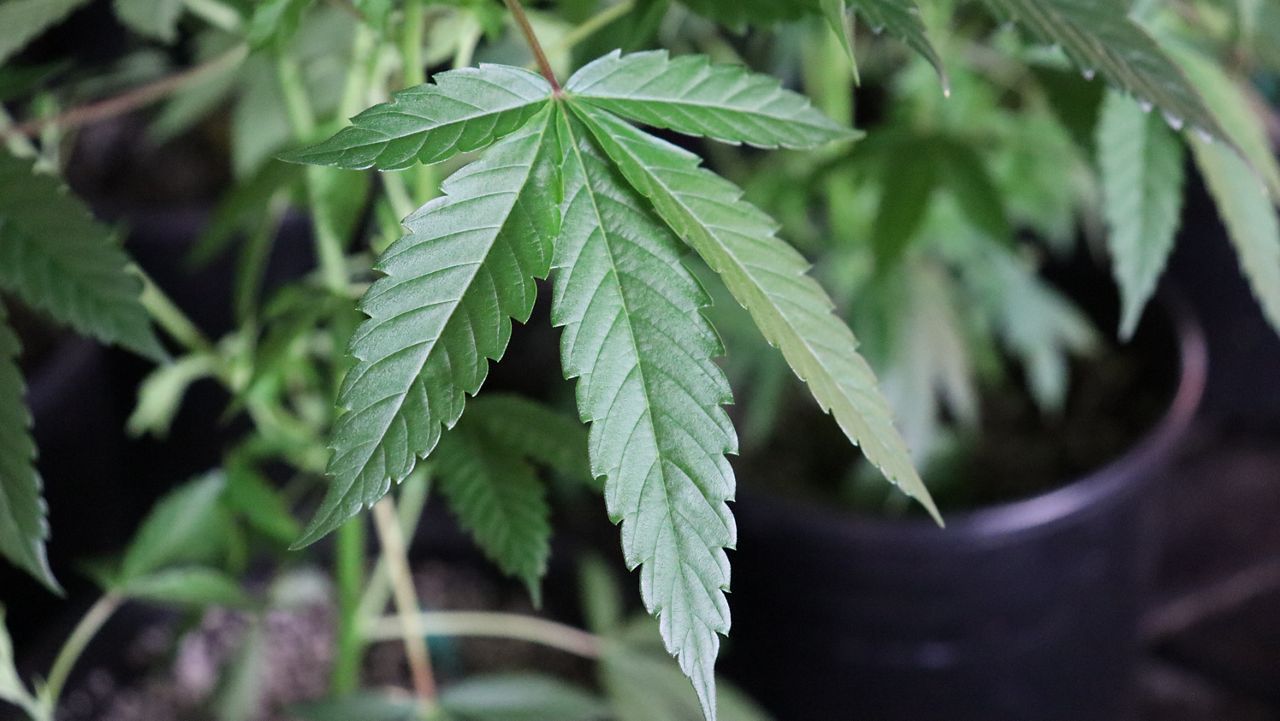
TEXAS — Smokable hemp flower containing tetrahydrocannabinol-acid (THCA) is currently banned in the state of Texas, but smoke shops across the Lone Star State are finding other compounds to sell in its place.
Molly McLaughlin from Green Goddess in San Marcos said tetrahydrocannabiphorol (THCP) is the alternative flower option the store has been selling while THCA is off the shelves.
“THCP is more of like a concentrate,” McLaughlin said. “We have a lot of it in the gummies; this is the first time we’re doing it in the flower form.”
The workaround comes after THCA was taken off the shelves again by a three-judge panel in the 15th Court of Appeals. The panel decided on June 26 not to extend the injunction, making THCA illegal to sell. The compound has been bouncing back and forth in court, stemming from the Department of State Health Services (DSHS) banning it through agency rules on March 31.
Attorneys for the Texas Hemp Business Council and other smoke shops filed a lawsuit against the state for imposing the rules in April and sought an injunction to allow the sale of THCA while they argued their case.
DSHS is currently enforcing all rules on consumable hemp, including new licensing fees.
THCP, however, was not specifically named in the DSHS rules, opening the door for shops to sell it in the meantime.
“I think that they’ve [DSHS] been kind of preoccupied with the THCA issue at this point,” said Dr. Katharine Neill Harris. “There’s still this very big, grey area where businesses are still kind of figuring out ways to sell some of these products.”
Dr. Harris is a drug policy fellow at the Baker Institute at Rice University, and has written articles explaining the confusing legal territory surrounding hemp and THC.
David Sergi, a cannabis-focused attorney based in San Marcos, also explains that THCP is “fair game” to sell.
“My argument is it shouldn’t be included [in the rules] because it’s not directly included,” Sergi said.
One concern with having THCP on the shelves, however, is its potency.
“There’s been studies that look at how it binds to the cannabinoid receptors in our brain that shows that it has about a 30 times higher affinity to binding to our cannabinoid receptors than delta-9 THC, which indicates it’s more potent,” said Harris.
She also explains that THCP is a naturally occurring compound in hemp flower, but in very small quantities. Increasing the amount of the compound to create intoxicating effects would mean chemically altering the plant, she says.
“There are risks with that,” she said.
“For one, we don’t know the full effects of that compound, THCP. Second, we don’t know what’s going on with that manufacturing process, whether there’s residual solvents or other byproducts that are still there,” she said. “Yes, there are testing requirements in Texas, but we don’t really have a robust regulation of that testing.”
Both Harris and Sergi said the best way to regulate THC products is through legislation. The Texas Legislature has attempted to pass THC legislation, such as Senate Bill 3 last year, but it was ultimately vetoed by Gov. Greg Abbott, resulting in the DSHS rules and, subsequently, the current legal back-and-forth over such rules.
One organization, however, says that all compounds should stay off the market.
“It’s less focused specifically on the alphabet soup of products that are out there, and more on the educational piece around how easy it is for young people to gain access to these products,” said Nicole Holt.
Holt is the CEO of Texans for Safe and Drug-Free Youth, an organization that educates parents and kids on the dangers of any substance on the market. She says the legal battle over THCA allows for other intoxicating products.
“Confusion benefits the business, and it creates challenges for the public health and safety aspect,” said Holt.
Back at Green Goddess, consumers haven’t fully warmed up to THCP, but McLaughlin says it’s all based on preference.
“It did take a little for our customers to grab onto,” she said. “As far as THCA sales versus THCP sales, worlds of a difference.”
“THCA is what our customers are really going for, because [with] THCP, it’s hard to find a sativa THCP,” McLaughlin continued.
Sativa is one of two major strains of THC, resulting in a “head high.”
“THCP is more of a body-feeling than a head-feeling, and most of our sativa smokers are looking for that head-feeling,” McLaughlin said.
The Senate Health and Human Services Committee will hear testimony on the “societal impacts of THC consumption” on July 7. Testimony heard could be considered in how the Legislature will move forward with THC in the next legislative session.