
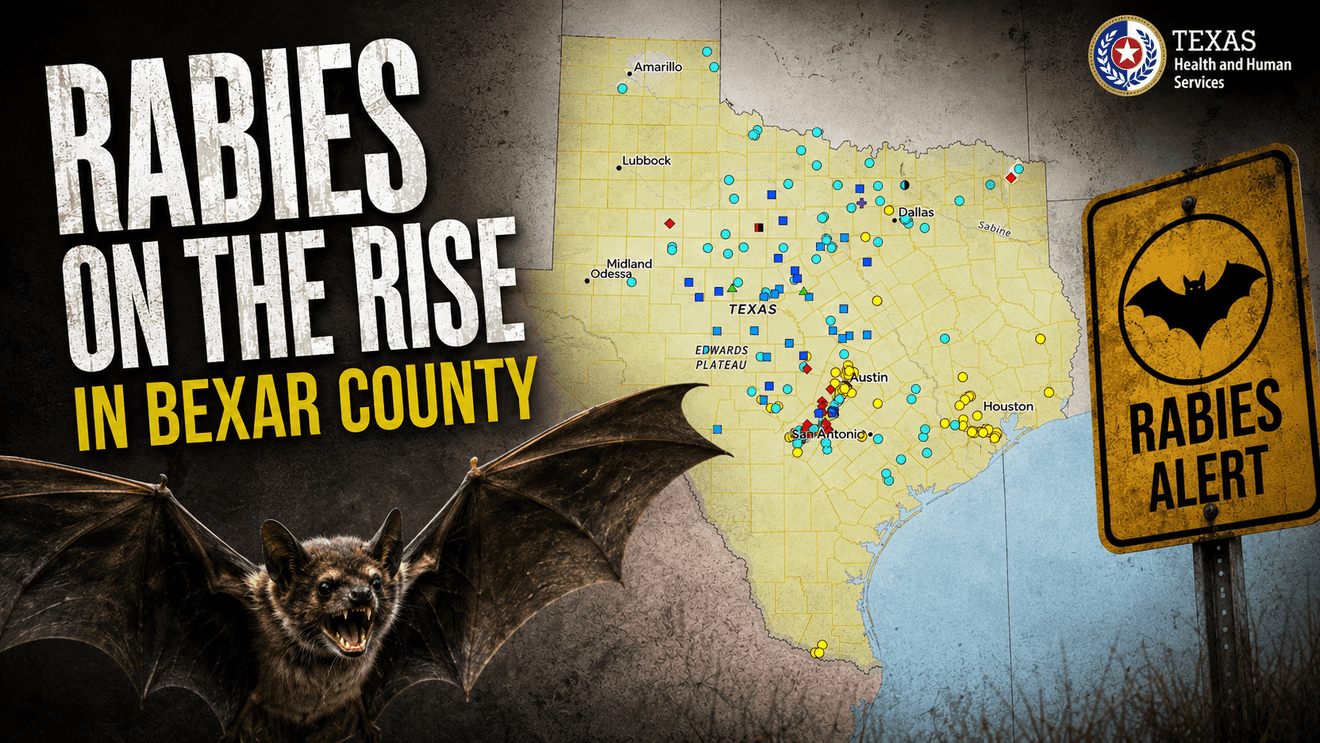
SAN ANTONIO – Bexar County rabies cases appear to be among the highest in Texas this year, according to a map from the Texas Department of State Health Services.
The map, updated July 6, shows a noticeable cluster of confirmed rabies cases centered around San Antonio and surrounding communities. While rabies has been detected across much of Texas, few areas show as many confirmed cases concentrated in one region as Bexar County.
RELATED: Bexar County issues rabies advisory after confirming two more infected foxes
Statewide, bats remain the most common animal testing positive for rabies in 2026, accounting for 90 confirmed cases. Skunks follow closely with 87 cases, while raccoons account for 25.
The state has also confirmed rabies this year in:
20 foxes14 cats2 cows1 dog1 goat1 horse1 coyote
Although the map does not list county-by-county totals, the concentration of markers around San Antonio stands out compared with most other parts of Texas.
RELATED: Child exposed to rabid skunk on North Side marks 18th positive case in Bexar County
Rabies is a viral disease that attacks the central nervous system and is almost always fatal once symptoms begin. However, the disease is preventable through prompt medical treatment after an exposure.
How to spot a potentially rabid animal
Rabies can affect an animal’s brain and nervous system, causing unusual behavior. While not every sick or aggressive animal has rabies, experts say these warning signs should never be ignored.
Unusual aggression. The animal may growl, bite, lunge or attack without being provoked.Unusual friendliness. Wild animals that normally avoid people—such as bats, foxes, skunks or raccoons—may seem unusually tame or approach humans.Staggering or trouble walking. Rabid animals may appear disoriented, stumble or have difficulty standing.Excessive drooling or foaming at the mouth. Difficulty swallowing can cause saliva to build up.Acting confused or disoriented. The animal may wander aimlessly or appear unaware of its surroundings.Paralysis or weakness. Some animals become weak, drag their legs or are unable to move normally.Unusual daytime activity. Nocturnal animals like bats, raccoons and skunks seen wandering during the day can be a warning sign, although illness isn’t always the cause.Vocalizing excessively. Animals may make strange noises or vocalize more than usual.What to do if you see a suspected rabid animalStay away and keep children and pets at a safe distance.Never try to capture or handle the animal yourself.Report the animal to local animal control or your local health department.If you are bitten or scratched, immediately wash the wound with soap and running water for at least 15 minutes and seek medical care right away. Early treatment can prevent rabies from developing.Comment with Bubbles
BE THE FIRST TO COMMENT
Remember, not every aggressive or sick animal has rabies, and not every rabid animal foams at the mouth. If an animal is behaving abnormally, it’s safest to treat it as a potential rabies risk until professionals can evaluate it.