
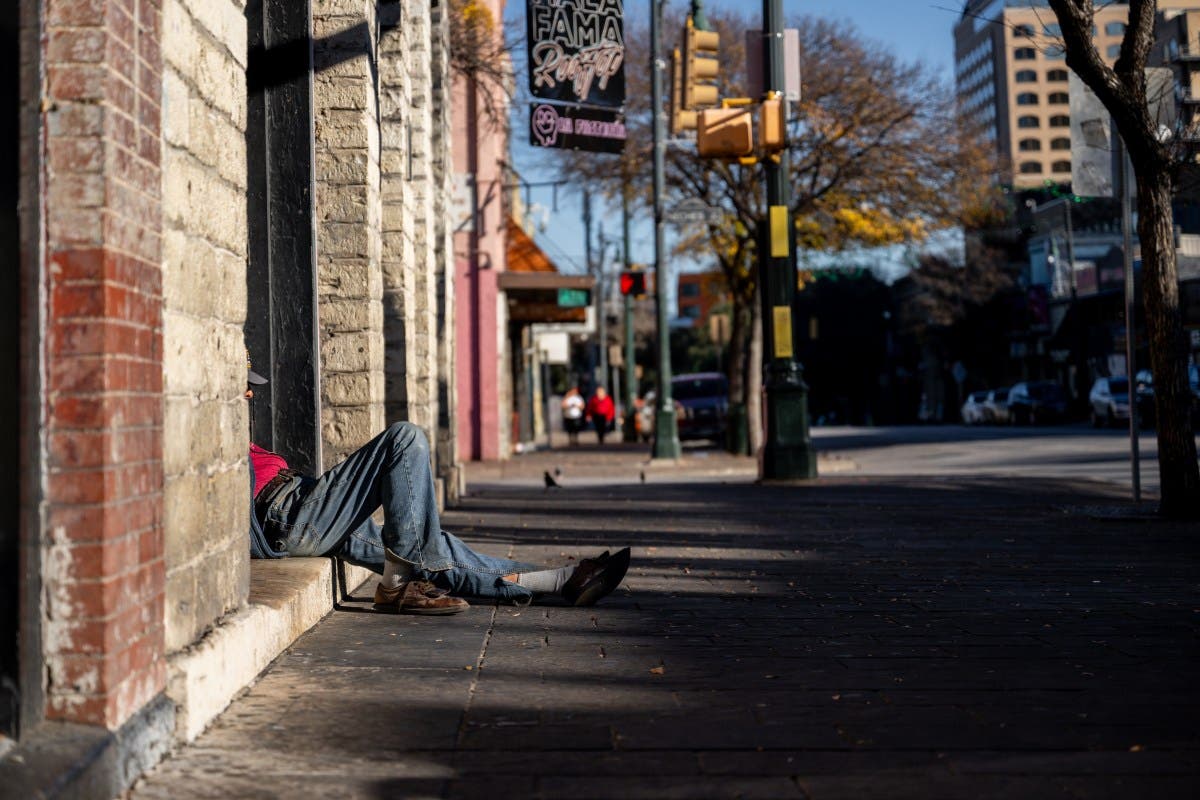
Voters in Austin, Texas, rejected a ballot measure that would have raised property taxes in the city to pay for a variety of public initiatives, including local homelessness services.
Nearly 110,000 people in the Texas capital—or 63.5 percent of the total voter turnout on Tuesday—voted against Proposition Q, according to preliminary results from election officials in Travis, Williamson and Hays counties. More than 62,000 people voted in favor, about 36.5 percent.
It is surprising that Austin, a blue dot in a solidly red state, voted in line with Texas Governor Greg Abbott’s recommendations to shut down the proposition: “If you live in Austin, go vote on Tuesday AGAINST Prop. Q—against raising your property taxes even more,” the Republican hardliner wrote on X on Monday.
What Were Austin Voters Asked To Decide On?
Voters in Austin were asked to voluntarily agree to a city-backed plan that would have raised more than $100 million in property tax revenues to pay for homelessness services, parks and public safety, among other initiatives, by raising their property taxes by more than 20 percent.
Had the measure been approved, Austin homeowners with a property worth about $500,000 would have faced an increase of $25.22 per month, or $302.64 per year, in the city portion of their annual property tax bill, as reported by Axios. According to city authorities, the increase would have shored up a significant budget shortfall at City Hall that would have been covered by taxpayers.
Critics argued that the move would have made Austin more expensive and ultimately be detrimental to residents, with the Save Austin Now political action committee accusing authorities at City Hall of being “reckless” in their policies.
 What Did Austin Voters Decide?
A strong majority of voters rejected Proposition Q, in an attempt to protect affordability in a city that has seen a massive surge in home prices and property tax bills since the COVID-19 pandemic homebuying frenzy.
According to data shared by political consultant Derek Ryan on X, 55 percent of those who voted against Proposition Q in Austin were Democrats, the equivalent of nearly 50,000 people. Some 16 percent, or roughly 14,000 people, were Republicans.
“Wake up, Austin Councilmembers,” Ryan commented.
Matt Mackowiak, head of Save Austin Now and former Travis County GOP chair, said on Tuesday that Proposition Q’s failure was a “victory for taxpayers.” On X, he wrote: “The LARGEST property tax increase in Austin history goes down over the opposition of the Mayor and 9/10 council members. Taxpayers in Austin have said ENOUGH IS ENOUGH!!!!!”
What Comes After Proposition Q’s Failure?
Austin Mayor Kirk Watson, who backed Proposition Q and had said it was “time to trust the voters” to make the right decision on it, recognized that the plan failed after early voting totals started coming in on Tuesday.
“Voters prioritized affordability,” Watson said in a statement following the vote on Tuesday. “They’re worried about their finances, their grocery and utility bills, their property taxes, and more. They’re concerned about the stability of all levels of government, including city government.
“We need to give voters reason to trust us—to trust that we will strike the right balance between services and the funding needed to provide those services.”
Austin City Council member March Duchen, who represents District 10 and was a lone Council voice against the measure, wrote on X that “Prop Q wasn’t just a vote on taxes and affordability—it was a referendum on trust. My colleagues and I now have an opportunity to change course and restore our constituents’ faith in local government, and I hope we seize it.”
City Council member Vanessa Fuentes commented on the ballot’s results by acknowledging voters’ frustration: “We’ve heard you, we understand,” she said in a statement.
However, Fuentes warned that, “as the cost of living continues to rise—and as federal budget cuts continue to underfund basic needs like food, housing, and healthcare” the budget shortfall at City Hall would mean future cuts to public services.
“Finding a new path forward means cutting $110 million from the proposed budget,” she said. “These cuts will have real and serious consequences—that could mean fewer paramedics on shift, fewer families receiving rental assistance and access to food programs, longer wait times for emergency services, and reductions in park maintenance and public health outreach—all at a time when many in our city need more help, not less.”
Newsweek contacted Watson’s office, Duchen, Fuentes and Save Austin Now for comment by email on Wednesday.