
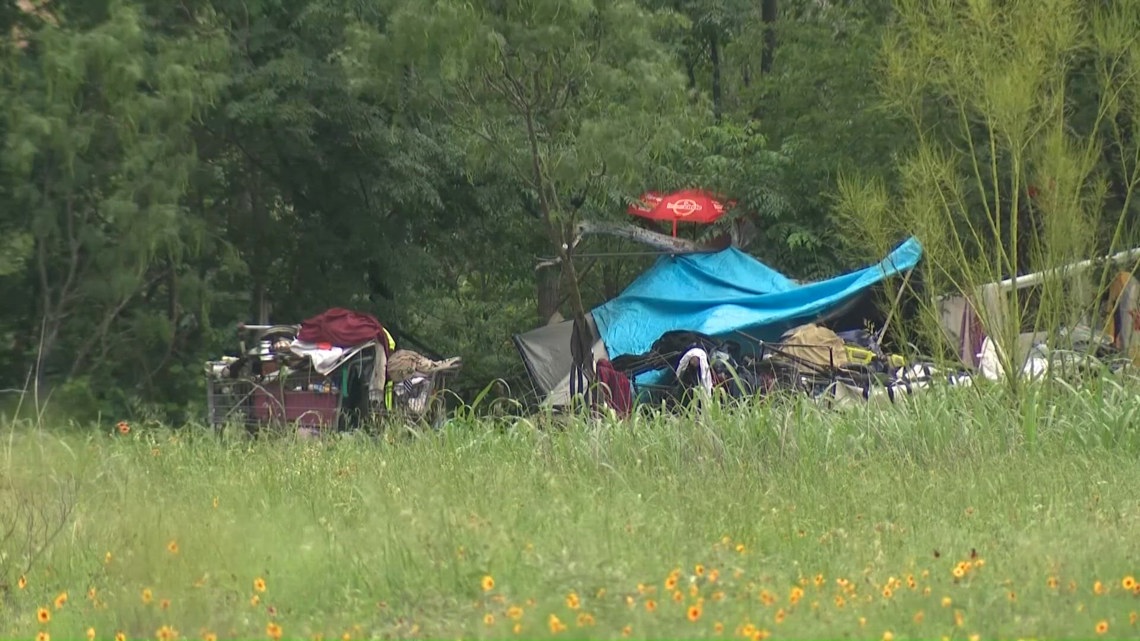
The city highlighted early progress, but homeless advocates said the strategy causes harm and does little to solve homelessness.
AUSTIN, Texas — City of Austin leaders say a newly expanded homeless encampment management initiative is already showing results, just one month after launching.
The Homeless Strategy Office rolled out the program in May, aiming to create a more consistent response to encampments while increasing outreach to people living in them.

This story continues below.
Director David Gray said the initiative is designed to give both the public and people experiencing homelessness a clearer understanding of what to expect when camps are cleared, while prioritizing outreach before enforcement.
According to Gray, between May 11 and June 5, crews cleared 127 encampments and removed 300 tons of debris. He said 35 people were moved into shelters and nine others were connected with services.
“We’re not just cleaning out encampments and sweeping spaces, but we’re also leaning in with compassion and helping people get on a track to housing, employment, healthcare or whatever their underlying need is to end their homelessness,” he said.
Organizer for homeless advocacy nonprofit VOCAL Texas Eli Cortez said the numbers suggest otherwise.
“It’s inflicting a lot of harm,” Cortez said. “It’s causing people a lot of pain and it’s not moving us towards reducing the number of people on our streets.”
Cortez pointed to city data showing that while 44 people accepted shelter or services, another 44 people refused it. He said many people turn down help because shelters do not meet their needs, including couples who do not want to be separated, people with pets and those worried about safety or crowded conditions.
“The shelters that we have in our city are failing to meet the needs of people that are living outside,” Cortez said. “People aren’t saying, ‘No, I don’t want a shelter.’ They’re saying no because of the conditions that come with a shelter. People don’t want to live in cramped conditions with 300 other people. They don’t feel safe in that kind of way.”
Cortez also said for many people living in these camps, the sweeps don’t feel like outreach; they feel like displacement. He pointed to data that showed that 28% of the cleared camps saw people return. He said the sweeps can leave people without essential belongings, medication and survival gear.
“We’ve heard of personal belongings being thrown out, like family’s ashes,” he said. “People are already just doing everything they can to find stable housing, to find employment opportunities, and then to lose everything and have to start over again and again is not only exhausting and traumatic.”
Cortez said the city’s approach is especially troubling as Austin faces a budget deficit and could be cutting social services.
“These encampment sweeps are not cheap initiatives, especially in a time where our budget is extremely constrained,” Cortez said. “And not pairing it with the same amount of additional investments or intentional strategy around expanding our shelter beds, expanding housing opportunities, is a waste of money.”
Gray said the city is listening to those concerns and has already changed parts of its shelter system.
“Our bridge shelters, Northbridge and Southbridge, have double occupancy now in those rooms, and so couples can come in together. At the Marshaling Yard, we brought in a new facility that serves as an on-site animal shelter so we can accommodate more people with pets.”
He also said the city has improved food service, housing navigation, job training and healthcare offerings for shelter guests.
Gray said the city is trying to understand why people return to camps after cleanup, including whether they need to stay near work, family or services.
“Sometimes what we find is people camping in a location because it’s close to their job, sometimes it’s close to family members or it’s close to resources that they access,” Gray said.
He said outreach teams then try to connect people with shelter in the same area.
“If somebody is constantly encamping at a park on the north side of town, over time we’ll have a conversation about getting that person enrolled into our Northbridge Shelter,” Gray said.
The city said it is still calculating the cost of the program.