
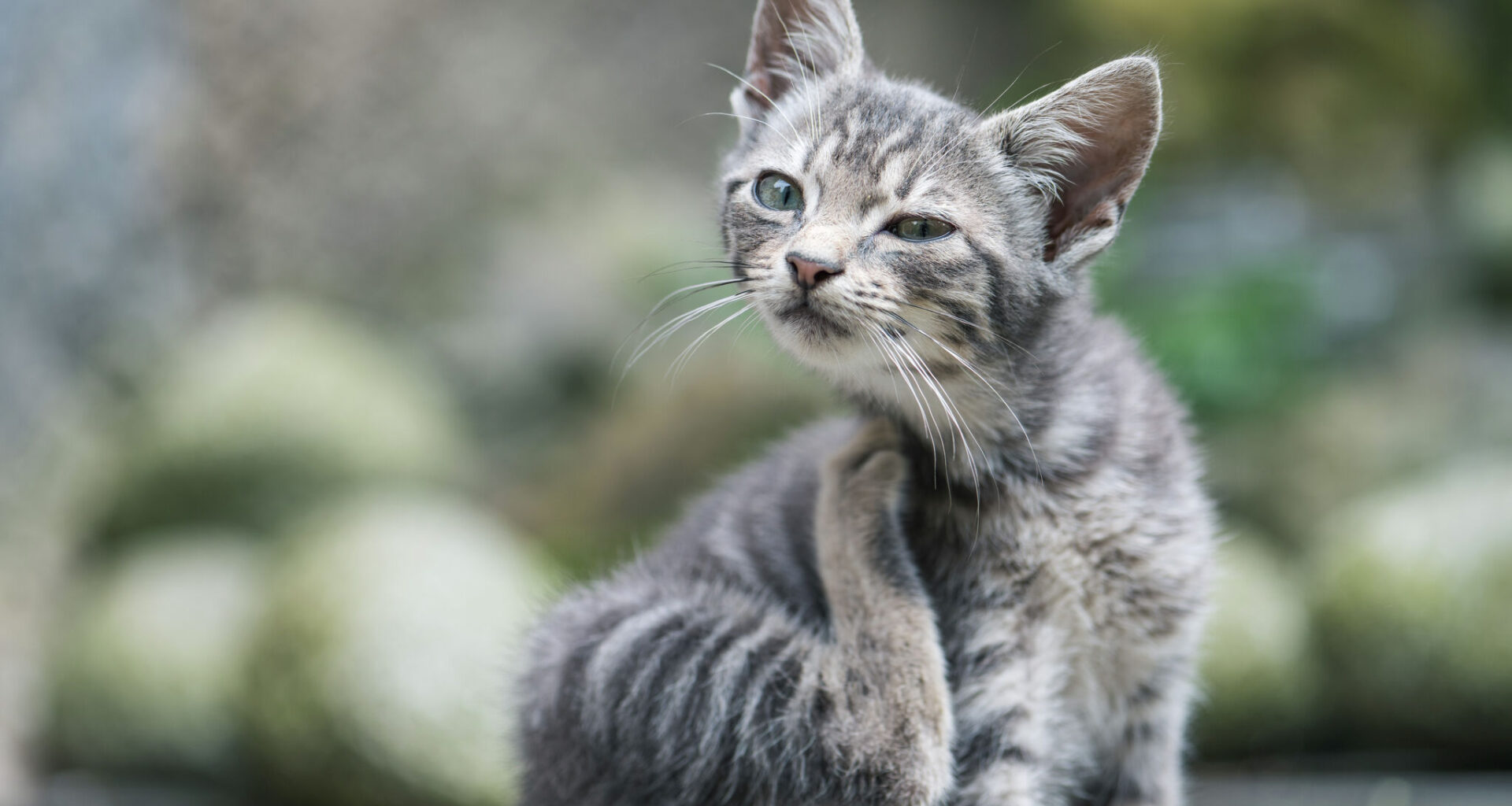
Cases of a once-rare bacterial disease have been on the rise in South Texas over the last several years and now researchers with Texas A&M University have formally linked the illness to flea-infested stray cats in the Rio Grande Valley.
However, murine typhus, which is caused by Rickettsia typhi bacteria, has historically been considered endemic in deep South Texas. Some of the highest number of cases can be found in Hidalgo and Cameron counties, but also outside the Valley in places like Bexar and Nueces counties.
Between 2008 and 2023, more than 6,700 cases of typhus were reported in South Texas, according to the Texas Department of State Health Services. But recently, Texas A&M researchers detected typhus bacteria-carrying fleas in a small number of stray cats collected in the Valley.
“When the research team tested fleas collected from domestic cars for several disease-causing pathogens, it detected R. typhi in fleas removed from six of the 167 cats sampled,” the university’s College of Veterinary Medicine and Biomedical Sciences reported on July 2.
That equates to just 3.5% of the cats tested. Researchers also detected two different kinds of bacteria that cause cat scratch disease.
“When an infected flea bites a person or animal, the bite breaks the skin, causing a wound. Fleas poop when they feed. This poop… contains bacteria, which can be rubbed into the bite wound… and cause an infection,” reads an explainer on the CDC’s website.
Symptoms begin to appear within 3 to 14 days of infection and can include fevers and chills, body aches, headaches, loss of appetite, nausea, vomiting, stomach pain and cough, according to the CDC. About half of patients will also experience a non-itchy rash. Typhus rarely causes severe illness, and less than 1% of all cases are fatal.
Though Texas A&M only recently confirmed that some of Hidalgo County’s stray cats carry typhus-infected fleas, local health officials say it’s neither a very common illness nor one worthy of sparking alarm. Hidalgo County health authority Dr. Ivan Melendez said Valley doctors have long known that stray cats serve as vectors for murine typhus. Texas A&M’s research only confirms that local wisdom.
“This is my 40th year practicing medicine. And even 40 years ago, we already knew that this was related to stray cats and possums,” Melendez told MySA on Wednesday, July 8.
“My response to that would be (that it’s) perhaps further confirmation of a long-believed association with stray cats and possums — with numbers being persistent — of an easily diagnosable and treatable disease,” he added a few moments later.
While the number of infections seems impressive when looking at the 15 years between 2008 and 2023 combined, they’re far less so when looking at each year individually. Since 2019, Hidalgo County has reported only 654 cases of murine typhus, according to the county’s infectious disease dashboard. Cases peaked in 2019 at 129, and fell to their lowest — 60 cases — in 2024. Last year, the county reported 102 cases, and has reported 33 cases through June of this year.
Melendez said the disease is easily treated with antibiotics and referred to symptoms — particularly headaches — as “bothersome” but less concerning than other pathogens.
“Do I see it as a significant health risk? Potentially. Is it a high priority? I think, to be honest with you, no,” Melendez said.