
TEXAS — Babies born in the Lone Star State as of June will now be tested for additional rare genetic disorders.
“The idea of the newborn screening is that we find them before those complications arise, and then you can improve them,” says Dr. Luis Umana, a genetic and metabolism specialist at Children’s Health in Dallas.
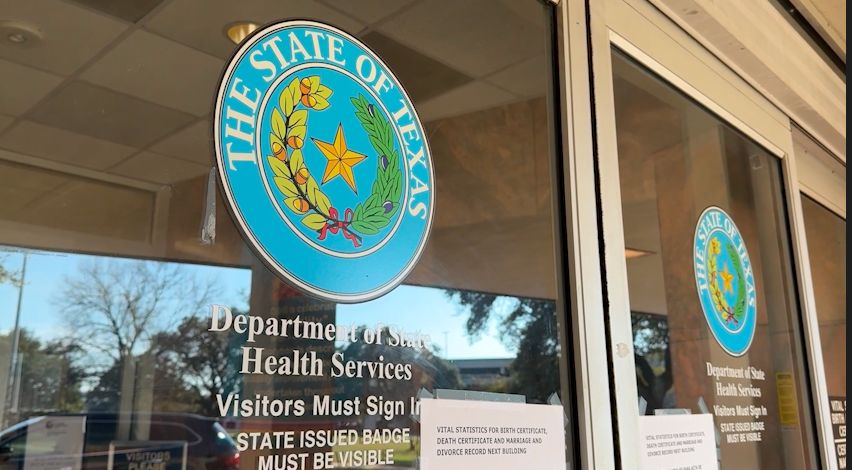
The Texas Department of State Health Services has added the rare genetic disorder guanidinoacetate methyltransferase (GAMT) deficiency to the newborn screening test.
“This is a condition in which the body cannot create chemical compound that we call creatine,” explained Umana.
The specialist says the disorder is rare, but if not treated, it can be life-threatening.
“Babies who don’t have this ability to form creatine, they can grow with problems of…muscle weakness. And more serious is intellectual disability and seizures,” he said.
In June, Texas became the 20th state to screen for the rare genetic disorder by having newborns pricked on the heel.
The test is for one of 60 rare disorders that the state requires newborns to be tested for.
“We take two samples, one on the first 48 hours of life and the second one between the first two weeks of life,” said Umana.
Samples are processed at state labs in Austin. Then, if something is found, treatment is available.
According to Texas health officials, across the state about 1,000 newborns are diagnosed with life-threatening disorders each year through the GAMT screening.
In North Texas, Umana said that Children’s Health is the only hospital capable of treating children with rare genetic disorders.
“We’re one of the few centers in the state that has the complete expertise to treat all of these rare conditions and metabolic disorders,” he said.
Thanks to the early testing now underway, Umana and other experts are hoping to resolve dozens of cases annually.
“And baby might go on to have close to normal development, normal lifespans. That’s why the newborn screening is considered to be one of the great successes of public health policy,” said Umana.