
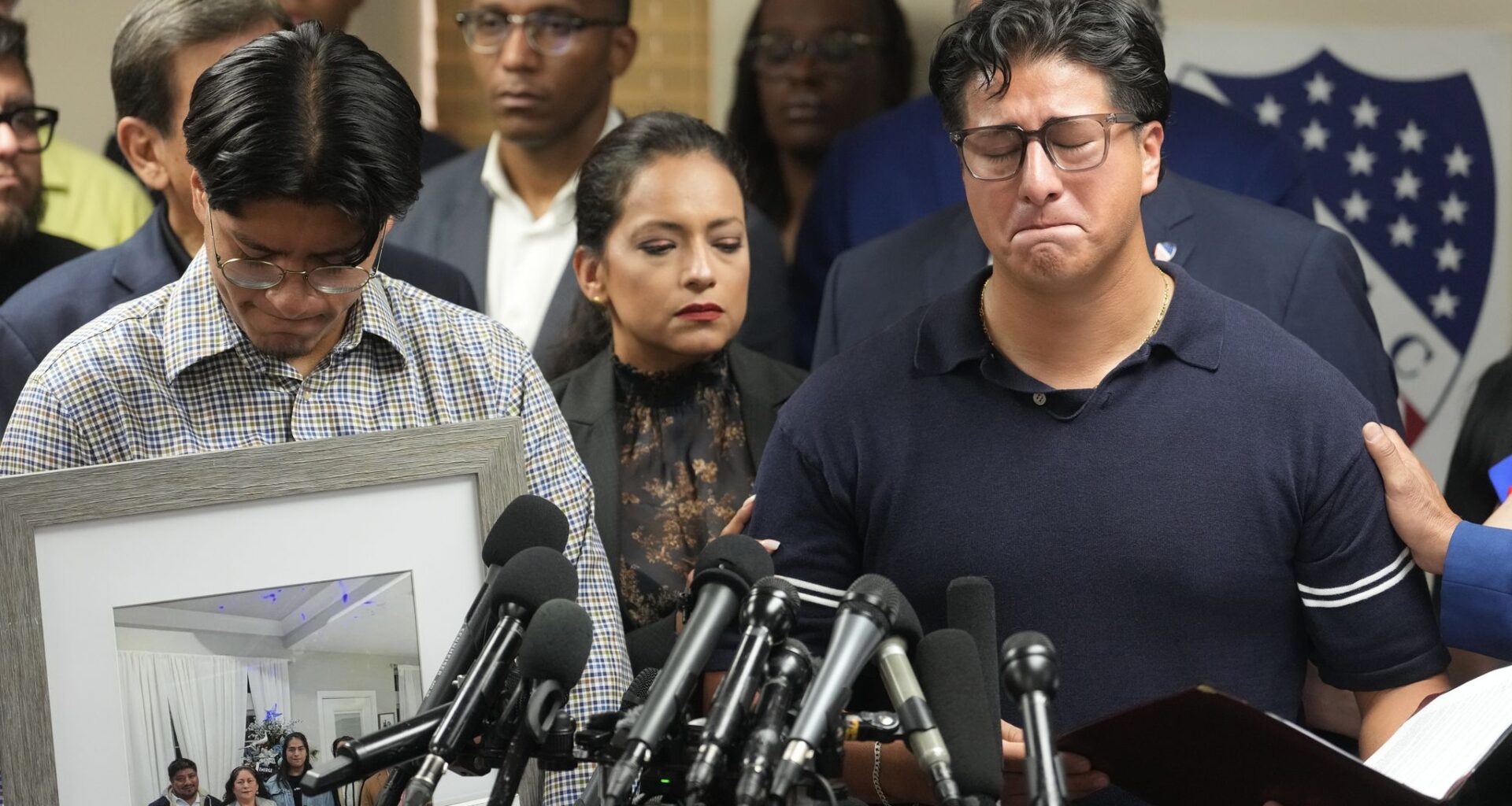
Lorenzo Salgado Araujo, 52, a Mexican citizen, was shot and killed Tuesday in Houston’s Magnolia Park neighborhood while he was being pursued by ICE, according to Houston Chronicle reports.
League of United Latin American Citizens CEO Juan Proaño said the three other people in the vehicle during the incident were Salgado’s brother and two of his employees. He said they are being held and pressured to self-deport, a claim he said could jeopardize the case.
Since the shooting, members of the Houston community, local leaders and LULAC have called for transparency.
At a Thursday afternoon news conference led by Proaño, speakers included Espina and the CEOs of Mi Familia Vota, UnidosUS Action Fund and Latino Victory.
Proaño said Salgado’s family has not been able to identify and claim his body and has faced hurdles in trying to do so.
“Before putting Lorenzo into the ambulance and sending him to the hospital, they took away all his personal identification,” Proaño said. “There was nothing to identify him when he arrived at the hospital and as a result the hospital took him in as a John Doe.”`
Proaño added that officials did not confirm his death until more than 24 hours after the shooting. He said Salgado’s wife could not claim the body because she lacked the legal documentation required to do so, but lawyers are working to have his son do so.
The Chronicle has reached out to the Harris County Institute of Forensic Sciences for a response.
LULAC launched a GoFundMe page for Salgado on Wednesday morning with an initial goal of $25,000. It has since raised more than $250,000. According to the page, Salgado was a husband, father of three boys and a small-business owner.
“This has definitely been one of the more impactful cases I’ve seen that generated such a big reaction,” Espina said.
Espina has more than 14 million followers across social media and has previously filmed endorsements for Democratic Senate candidate James Talarico and U.S. Rep. Sylvia Garcia.
“This is something that has brought a lot of people — not just Latinos, but many communities — together who see what’s going on,” Espina said. “It’s now become something that has united people across many races and, I would even say, political parties.”