
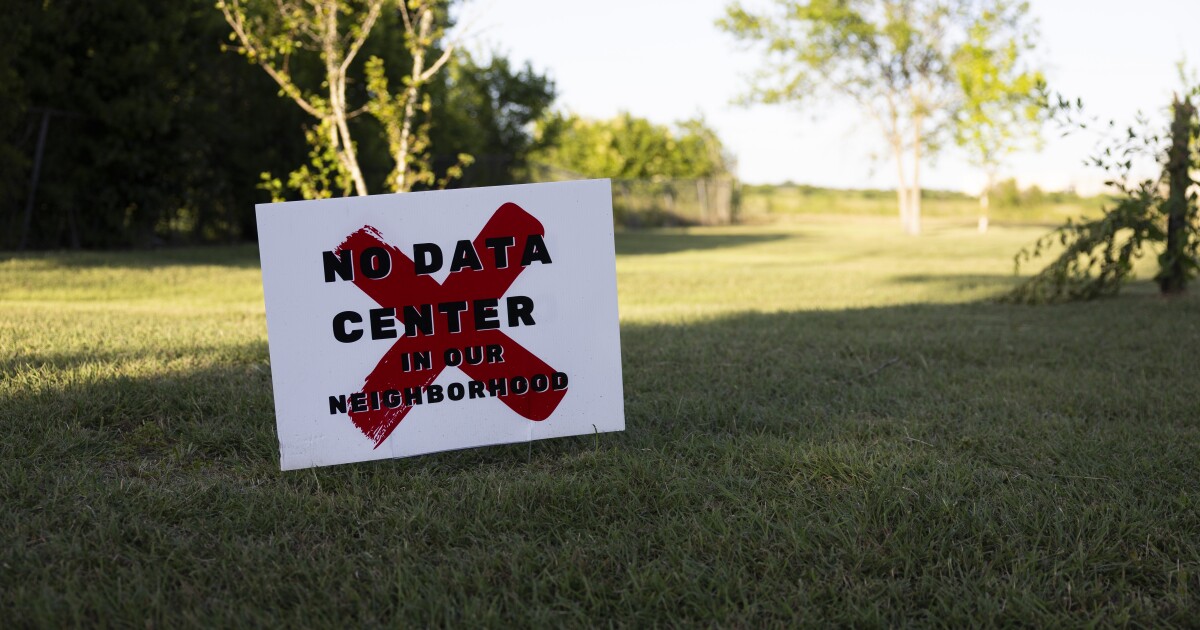
The Taylor City Council was set to consider a proposed ordinance Thursday night that would temporarily ban data centers. But 15 minutes after the council meeting began, the city released a statement on its Facebook page saying council members would not be taking any action on the proposed ban.
“State law does not allow a city to enact or change its zoning by popular vote,” Mayor Pro Tem Kelly Cmerek said at the meeting. “This is a determination about the legal process made available to the city. It’s not a judgment about a policy issue — about the concerns you guys have voiced.”
The decision and the way it was communicated caught many people attending the meeting off guard. Multiple residents inside the council chamber gasped as they learned about the Facebook post from organizer Sarah Winters’ public remarks criticizing it.
“After this meeting started, y’all posted this on Facebook, knowing we were all coming here?” Winters told council members. She pointed out that the mayor wasn’t at the meeting, adding: “Tell me this is not shady, shady business. Shame on all of y’all.”
Cmerek said Mayor Jim Buzan was not at the council meeting because he was out of the country on vacation.
The citizen-initiated ordinance was submitted to the city last month, along with more than 1,400 signatures from residents. The hope was that if council members didn’t take action on the proposed ban themselves, they would place it on the ballot for voters to decide.
Cmerek said council members made the determination to not take action on the proposed ban or place it on the ballot after speaking with outside counsel. He also apologized for the way the council’s decision was communicated.
“Obviously, this information was put on the website inappropriately. I do apologize for that,” he said.
Lorianne Willett
/
KUT News
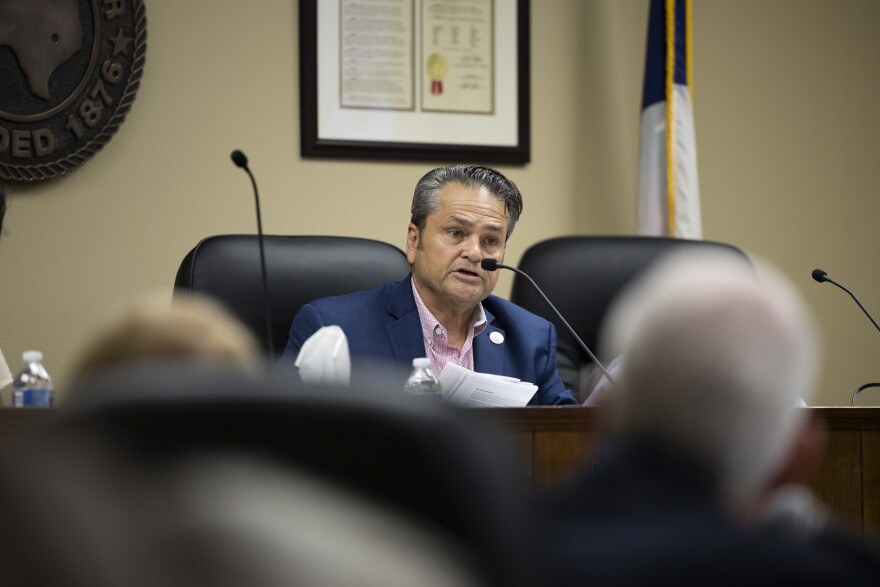
Mayor Jim Buzan speaks during a City Council meeting in Taylor in June. Buzan was absent from Thursday’s City Council meeting.
Cmerek said council members plan to address some of the concerns about data centers through changes to the city’s comprehensive plan and land development code. He encouraged residents to stay involved.
A city spokesperson, Jerrod Kingery, would not say when the city or its council members first determined that action wouldn’t be taken on the proposed ban.
Carrie D’Anna, an organizer with the Halt Taylor Data Center Coalition, helped submit the citizen-initiated ordinance to the city last month. She said the city did not communicate its decision to her or other organizers before Thursday’s meeting.
“They could have told us at any point in time, but instead they allowed us to organize, and then they post their decision before we’ve even started speaking on the website?” D’Anna said. “That’s humiliating. It’s humiliating. It feels like they’re intentionally trying to make light of what we’re trying to say.”
D’Anna said people traveled from Austin, San Marcos and Houston to speak to the city’s council members about the proposed ban.
“This means a lot to a lot of people,” she said. “We’re hungry for leadership that will advocate for us, and we leave hungry every time we’re here.”
If approved, the ordinance would have amended Taylor’s land development code to pause current data center projects and prohibit the approval of any additional data centers until the city creates a “dedicated digital infrastructure zoning district.”
Data centers house servers, or computers, that can be used for a variety of purposes, including data storage and artificial intelligence processing.
“For months, residents have called for a pause on data center approvals and for digital infrastructure zoning,” Winters said before the meeting. “Since submitting our petition on June 11, we’ve waited for this moment — our City Council speaking publicly and on the record about protecting our water, grid, and quality of life. No data centers until we have zoning designed for them.”
Lorianne Willett
/
KUT News
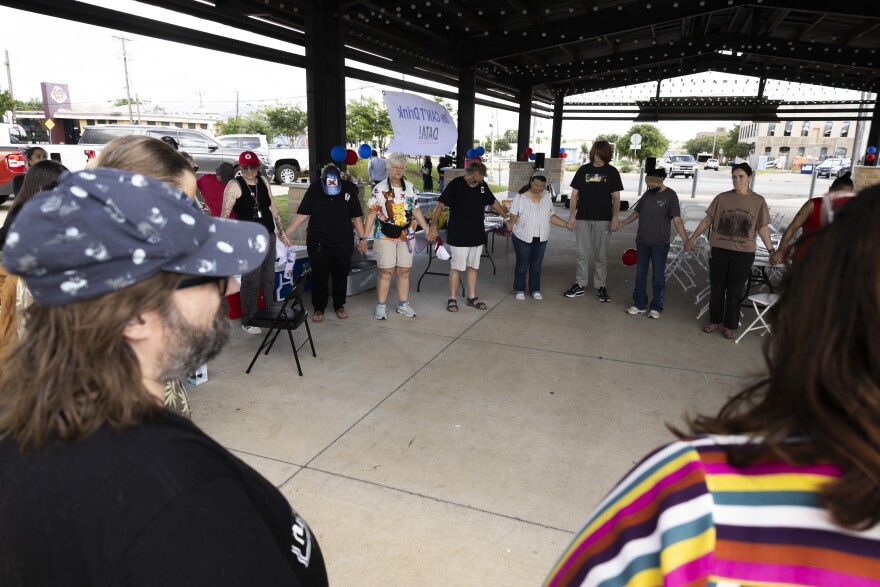
Members of the Taylor community gather to pray ahead of a city council meeting in June regarding a proposal to temporarily ban data centers.
Taylor would not have been the only Central Texas city to ban data centers. Last month, San Marcos became the first city in the state to do so. Commissioners in Hays County, where San Marcos is located, also recently passed a resolution to pause data center development, citing concerns about water, but the resolution is mostly symbolic in nature and not legally binding.
Data centers also caught the attention of state lawmakers, with some calling for increased transparency after it was revealed that the majority of the state’s data centers are not reporting their water usage.
Taylor has two data center projects in various stages of development, including one that’s being built despite a deed promising the land would become a park.