
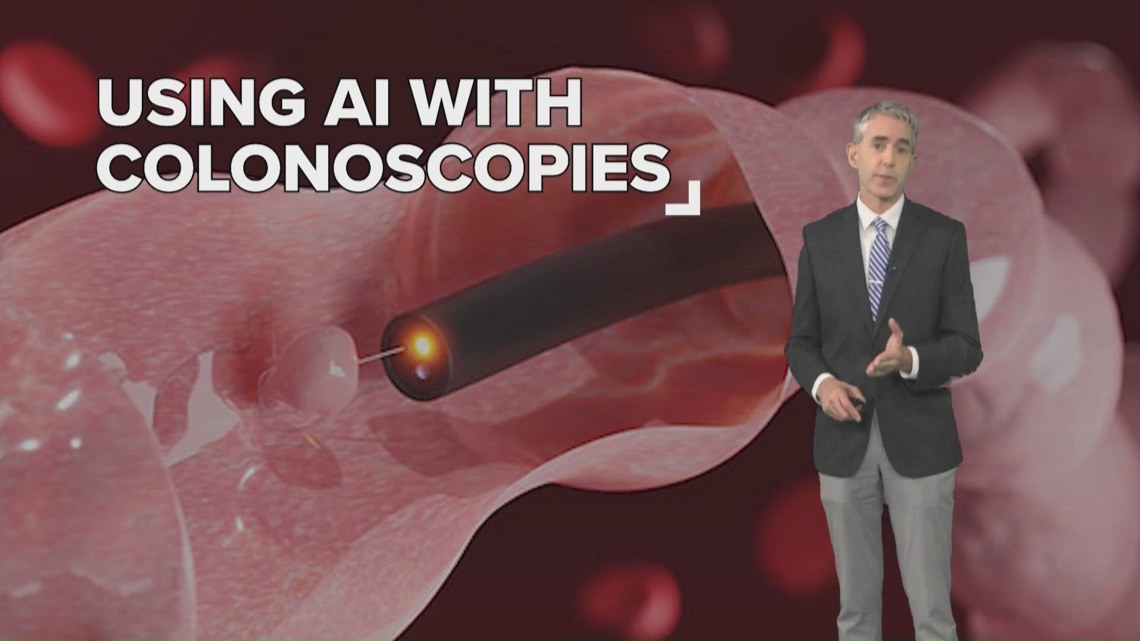
The addition of AI adds a second pair of eyes on the patient, resulting in more positive long-term outcomes.
SAN ANTONIO — If you have had a colonoscopy, you know it typically lasts less than an hour. But, what happens during that procedure can change, or even save, a life years before cancer ever has a chance to develop, and new AI tech right here in San Antonio is making outcomes even better for patients.
Physicians at UT Health San Antonio are now using artificial intelligence-powered technology during colonoscopies to help detect precancerous polyps in real time. They say it is like a second pair of eyes serving as a second observer capable of detecting cancer even earlier. Dr. Sarah Marucci, a clinical assistant professor of gastroenterology at UT Health San Antonio, the academic health center of The University of Texas at San Antonio, told KENS 5, “It’s important for a physician to always be there and to be doing a good job going slowly through the colon, looking at all the nooks and crannies. So just being able to have four eyes instead of two looking at the colon wall, can help us pick some of those very subtle findings.

This story continues below.
A colonoscopy is one of the few screening tools capable of detecting cancer early, and preventing it altogether. Screenings identify and remove precancerous polyps that can develop into colorectal cancer over time. By detecting polyps earlier, physicians help patients avoid more invasive, complex treatments and have a lower risk of this deadly disease. Dr. Marucci added, “If we find them early during a colonoscopy, we can remove them and prevent that risk of those polyps turning into cancer down the road.”
Some of the risk factors for colorectal cancer you need to be aware of include being overweight or obese, a sedentary lifestyle, alcohol and tobacco, a higher risk as you age and family history. “Or some other medical conditions that might predispose them to the development of colorectal cancer earlier. So they might have an earlier age range to start at,” said Dr. Marucci.
Dr. Marucci also stresses colorectal cancer doesn’t only affect the patient, so if you won’t get screened for yourself, do it for your loved ones.