
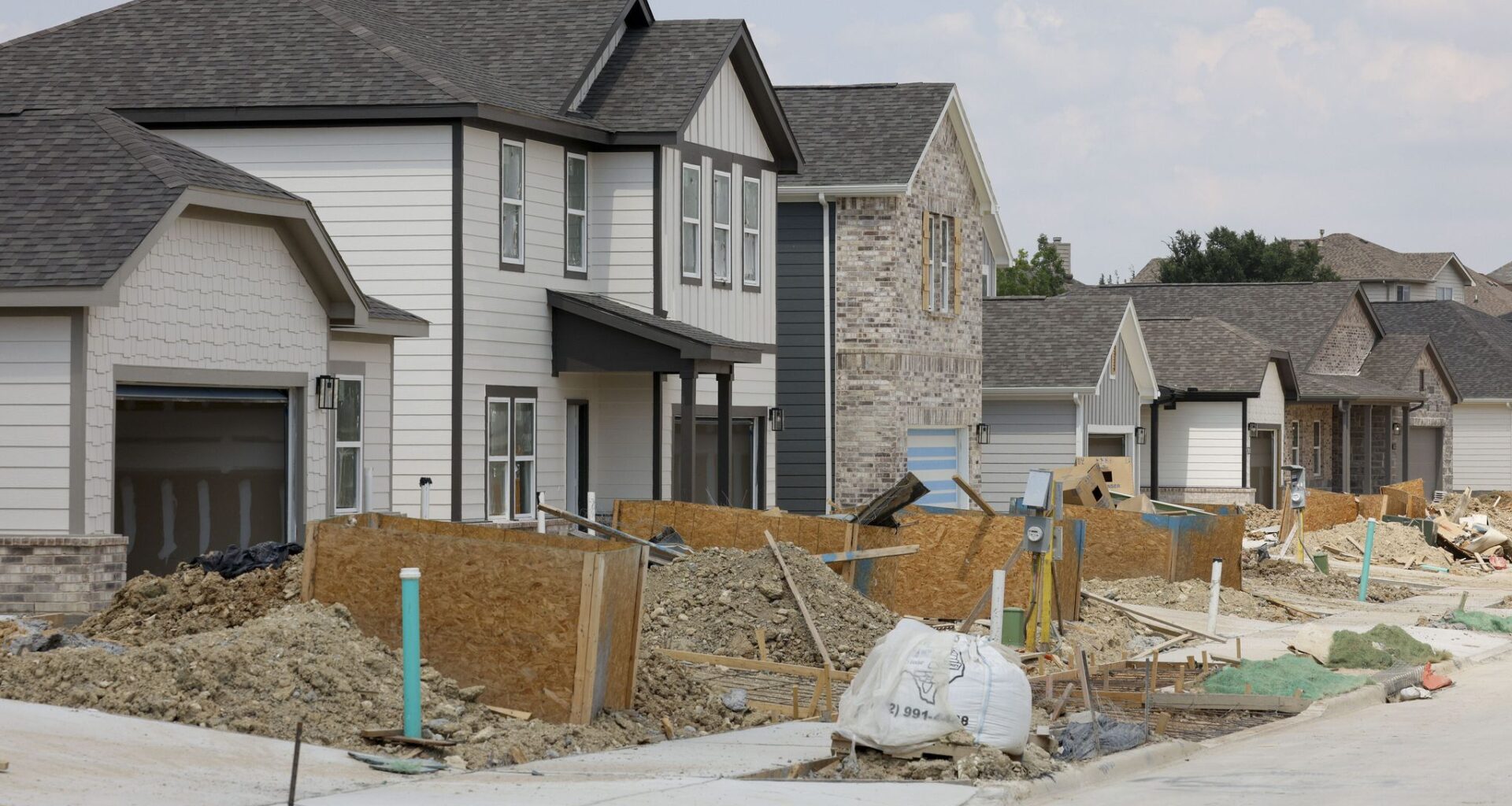
A new federal housing law will limit mega investors across the country.
Elías Valverde II/Staff Photographer
A new federal housing law will limit mega investors across the country, including in Dallas-Fort Worth which has the most investor purchases, of any kind, of any U.S. metro.

Dallas has seen massive growth for a long time and that signals to investors that the city could be a good market to buy a home, said Hannah Jones a senior economic research analyst at Realtor.com.
“Mega investors and investors in general are fairly active in southern markets like Dallas …, some of these larger markets where there’s plenty of inventory that’s relatively affordable, that means that they can make better returns on renting out these properties,” Jones said.
Article continues below this ad
Debates over the 21st Century ROAD to Housing Act — a measure that aims to address housing affordability issues which is set to become law on Friday after President Donald Trump said he wouldn’t veto the bill — often included how large institutional investors should be regulated.
D-FW is no stranger to housing investors. In 2025, there were 22,421 investor purchases in D-FW, more than any other U.S. metro, according to data from Realtor.com.
D-FW also had one of the highest percentages of investor activity in the U.S. About 15.6% of home purchases are some kind of investor, meaning they purchased at least one home using a corporate structure like a limited liability company.
Investors vs. mega investors
Some investors are national companies, but others are people who are just buying houses in the city they live in to rent.
Article continues below this ad
The upcoming law prohibits the purchase of any new single-family homes by large institutional investors, which it defines as investors that own over 350 single-family homes. According to the Realtor.com data, those investors — which it calls mega investors — represented 2.4% of purchases in 2025.
National mega investors include companies like Blackstone, Invitation Homes and American Homes 4 Rent. Many large institutional investors create build-to-rent neighborhoods, collections of single-family rentals organized into a community with amenities.
An earlier version of the law would have required investors to sell single-family homes built as rentals to a homeowner after seven years.
Ted Wilson, principal of the housing market research firm Residential Strategies Inc., said the initial version of the bill caused concern in the housing industry because it could have destroyed the build-to-rent market.
Article continues below this ad
The newest version of the law includes an exception for large institutional investors seeking to purchase or build single-family homes for the rental market and doesn’t require the homes to be sold after seven years. The law also doesn’t require large institutional investors to divest or sell any homes purchased before the enactment of the law.
History of investors
Following the 2008 financial crisis — from about 2010 to 2020 — large institutional investors came into D-FW and bought up resale housing, Wilson said.
“When these investors came in, they bought down the available inventory and lowered it to about a three-month supply of listings that were out there,” Wilson said. “Well, we find that in the resale world when inventory gets that low, it becomes inflationary.”
The investments increased values and made money for companies, but led to a lot of the affordability challenges that we’re experiencing today, he said. Maybe that was great for homeowners, but it also created issues. The new law tries to address those investors.
Article continues below this ad
“It really prevents something like that from happening again,” Wilson said. “I also kind of laugh and say, well, this bill is maybe about 15 years too late, but nonetheless, I understand the intent.”
Overall, Wilson said the new law will likely help keep housing more affordable.
Mega is relative
Investors may have a big impact on the housing market in a really small geographic area, but the investor share of the total U.S. market is around 11% and mega investors are only a small portion of that number, Jones said.
Dallas has a larger investor presence than many cities, but it’s still a small segment.
Article continues below this ad
“In 2025, mega investors were less than 2.5% of all purchases and overall investors were closer to 15%, so definitely more than the U.S.,” Jones said. “But if you’re talking about the institutional investors that are really targeted with some of this legislation, it’s still a pretty small share of the market overall.”
The overall market is influenced more by other market dynamics and not just investors alone, Jones said. Additionally, smaller investors have increased their activity over the past few years, meanwhile mega investor’s are purchasing a smaller percentage of homes, according to Realtor.com.
Jones said this law’s largest impact will be increasing housing supply, but discussions around the bill brought attention to investors.
“The provisions in the bill around investors have been pulled back pretty significantly, and so I don’t see it as super impactful either way for investors,” Jones said. “It definitely raises some awareness and definitely puts some boundaries around, or some expectations, on investors to let go of some housing stock.”