
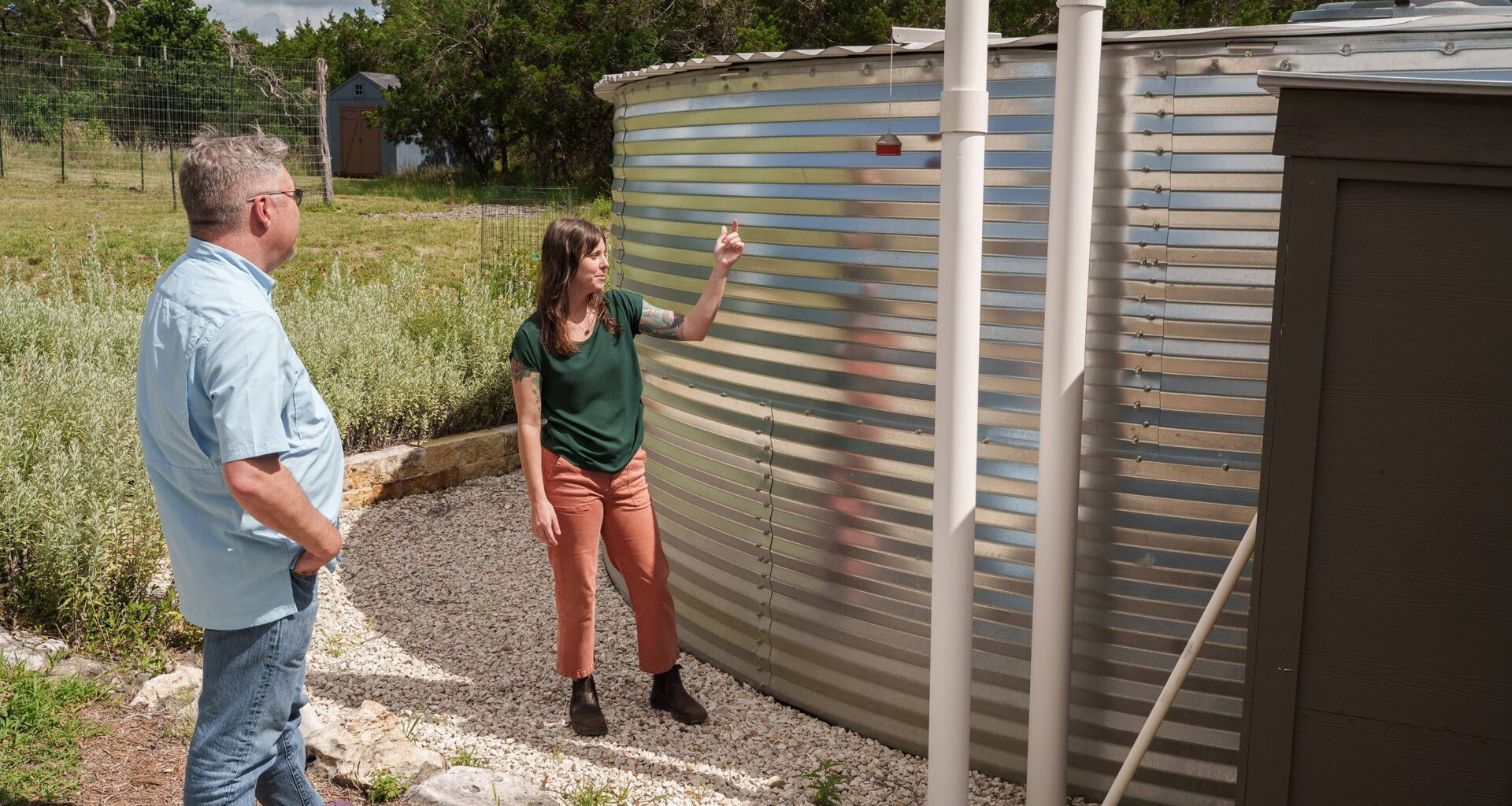
Since the pioneer days, Central Texans have drilled wells to pump water from the Edwards and Trinity aquifers. But population and industry growth are draining aquifers faster than Mother Nature can replenish them, especially during drought. Some homeowners have even seen their wells run dry. For Tritsch, the answer was rainwater: Her family built a system to collect the rain that falls on their roof, store it in a 25,000-gallon tank, and clean it for all of their needs.
“We were interested in rainwater, and we were lucky to be working with a builder who had experience with rainwater-harvesting systems,” Tritsch says. “It was also cheaper to build a rainwater system than it was to dig a well. So rather than extracting water from our groundwater resources, we are capturing it and storing it right here on the landscape where it’s coming down.”
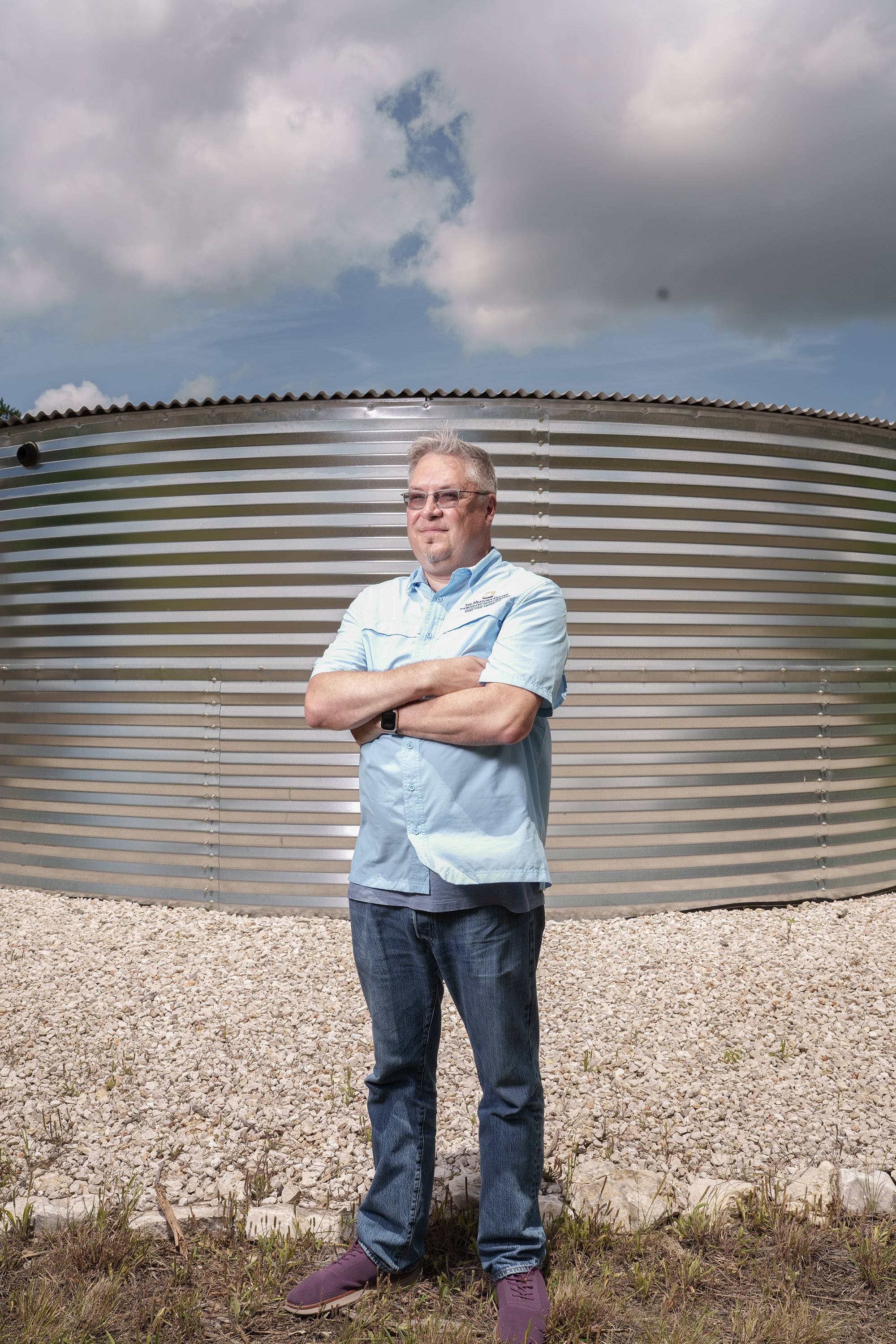 Dr. Robert Mace
More Texans should be following Tritsch’s example, says Dr. Robert Mace, executive director of TXST’s Meadows Center for Water and the Environment. Mace recently published “Reliable Rainwater Is Only a Roof Away: The Firm Yield of Rainwater Harvesting in Texas.”
Coauthored by Ricardo O. Briones, a TXST sustainability program graduate who now works for the Texas Commission on Environmental Quality, the report finds that rainwater harvesting can be a reliable water-supply strategy. A Meadows Foundation endowment and the National Oceanic Atmospheric Administration funded their work with grants of about $60,000 and $20,000, respectively, Mace says.
The report also launched the Rainwater Assessment and Interactive eNumator for Firm-yield Analysis Limits (RAINFAL) tool, a website that enables homeowners to quantify the reliability of household-scale rainwater harvesting systems in their specific regions within Texas.
“The biggest misconception about rainwater harvesting is that it’s not reliable,” Mace says. “But it is reliable — you just have to design the system properly.”
In his 2023 book, Groundwater Sustainability: Conception, Development, and Application, Mace analyzed how different groundwater management policies have succeeded or failed in their efforts to provide water for communities without endangering aquifers.
Aquifers are easy to overwhelm, he says, which makes rainwater harvesting more sustainable than pumping from wells. “That’s something we’re seeing in the Hill Country. We’re seeing water wells failing, particularly during dry spells, at unprecedented levels.”