
In San Antonio, summer heat is not just about the temperature on the thermometer. The real number to watch is the heat index – what it feels like when humidity is added in.
That matters here because South Texas heat often comes with muggy air. When humidity is high, sweat does not evaporate as easily, which makes it harder for your body to cool down. A 95-degree afternoon in San Antonio can feel closer to 100 to 105 degrees, especially along pavement, parking lots, playgrounds, sports fields, and construction sites.
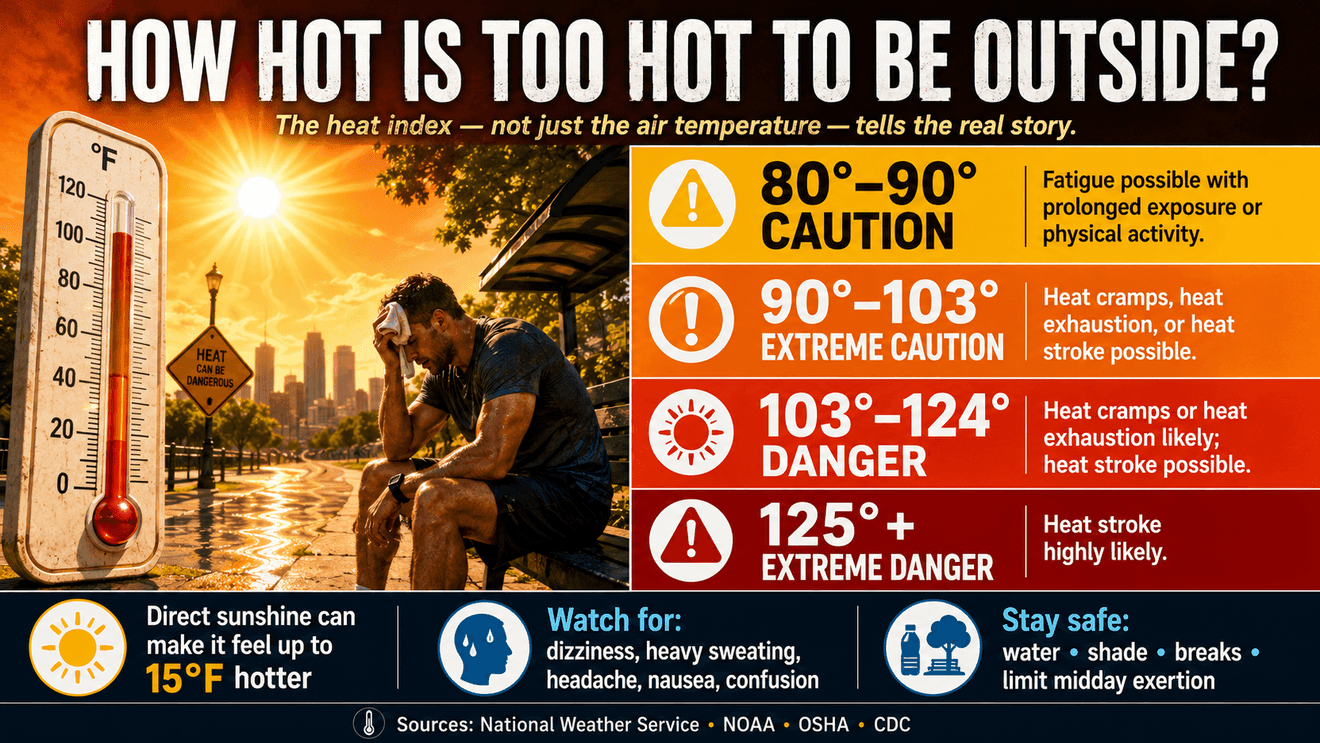
The National Weather Service uses these heat index categories…
80 to 90: Caution
Fatigue is possible with long exposure or physical activity.
90 to 103: Extreme Caution
Heat cramps, heat exhaustion, or heat stroke become possible.
103 to 124: Danger
Heat cramps or heat exhaustion become likely. Heat stroke is possible.
125 or higher: Extreme Danger
Heat stroke becomes highly likely.
For San Antonio, the practical cutoff is simple: once the heat index reaches the upper 90s, outdoor activity should be limited. Once it reaches 103 degrees or higher, conditions become dangerous, especially for children, older adults, outdoor workers, athletes, and people without reliable air conditioning.
Direct sunshine can make it worse. Heat index values are calculated for shady conditions, and full sun can make it feel up to 15 degrees hotter.
That is why the hottest part of the day in San Antonio — usually from late morning through late afternoon — is the time to be most careful. Walking the dog, mowing the lawn, running, youth sports, outdoor job sites, and even waiting at a bus stop can become risky when the heat index climbs above 100.
Older adults, young children, people with medical conditions, and people without air conditioning are among those most at risk during extreme heat.
The safest approach is to move strenuous activity to the morning or evening, drink water often, take breaks in the shade or air conditioning, and avoid long periods of direct sun during peak heating.
Watch for warning signs of heat illness, including dizziness, headache, heavy sweating, nausea, weakness, muscle cramps, confusion, or fainting. Confusion, passing out, or a very high body temperature can be signs of heat stroke, which is a medical emergency.
The bottom line for San Antonio: when the heat index reaches 100 degrees, take it seriously. When it reaches 103 degrees or higher, it is time to limit time outside and move as many activities as possible indoors.