
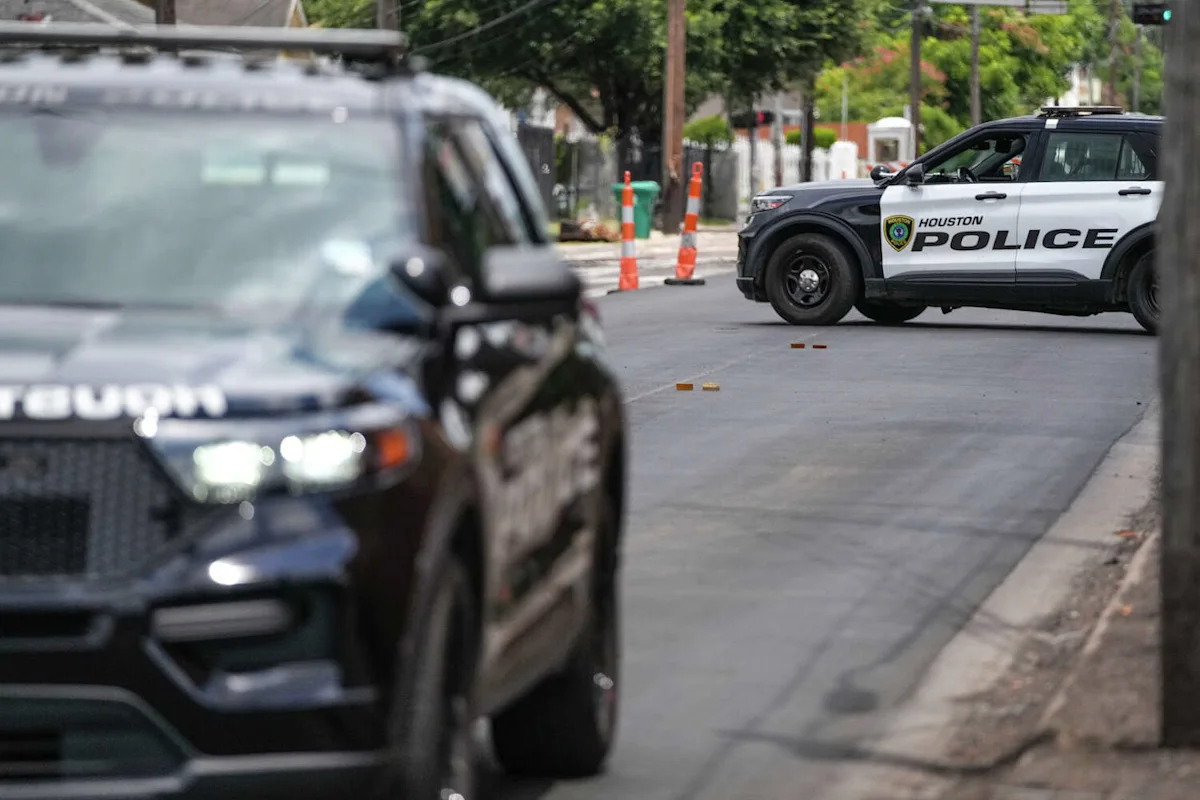
Outrage over a deadly traffic stop in Magnolia Park on Tuesday is drawing new scrutiny to how U.S. Immigration and Customs Enforcement agents conduct arrests on city streets, including their use of unmarked vehicles, the absence of body cameras and a growing reliance on roadside encounters during a nationwide immigration crackdown.
The fatal shooting of Lorenzo Salgado Araujo has become a flashpoint in a broader debate over how ICE is carrying out immigration enforcement. While the agency has long conducted traffic stops and arrests away from the border, immigration experts, local residents and civil rights advocates say the Trump administration’s push for dramatically higher arrest numbers has made the encounters more frequent, more visible and, potentially, more dangerous.
“Vehicle pursuits are inherently unsafe, and if they’re going to conduct thousands of these every week, we will inevitably end up with these situations,” said David J. Bier, director of immigration studies at the libertarian Cato Institute. “ICE right now appears to be doing the exact opposite of what it should be doing to reduce threats to its officers, the public, and immigrants.”
AFTERMATH: Houston attorney fears ICE may pressure detained witnesses to self-deport after fatal shooting
Agents often use vehicles without police markings or the lights and sirens typical in law enforcement, with ICE often using large and small dark colored SUVs as well as white government fleet vans to patrol neighborhoods, according to immigrants’ rights groups that have encouraged people to know their rights and spot vehicles in their community.
U.S. Rep. Sylvia Garcia, D-Houston, confirmed Friday that none of the ICE vehicles were equipped with cameras, nor did any of the officers have body cameras.
“They should have something so that the public can know that if they are being followed, that they know who it is,” Garcia said during a Friday press conference with others demanding more transparency about the incident. “If I am being followed by a black SUV, and I don’t know who it is, I too would be scared. And I, too, probably would not have stopped.”
ICE’s approach differs from Houston Police Department policies discouraging officers from initiating pursuits in unmarked vehicles.
The policy exists because pursuits in unmarked vehicles can create confusion for both officers and motorists, said Gregory Fremin, a former HPD captain.

Hundreds of demonstrators gather in Houston’s Magnolia Park neighborhood for a protest, march and candlelight vigil the day after the shooting of Lorenzo Salgado Araujo by a federal agent during a federal immigration enforcement operation in Houston on Wednesday, July 8, 2026. (Raquel Natalicchio/Houston Chronicle)
Additional Presence
ICE does not disclose the number of agents in Houston – home to one of the agency’s 24 regional field offices. Officials also do not typically discuss how they enforce immigration laws in Houston, aside from national directives on training and officer protocols.
A spokesperson for U.S. Immigration and Customs Enforcement this week said there was no active surge in immigration agents in Houston.
But the Trump administration’s immigration crackdown has driven a surge in ICE activity.
Historically, more migrants were detained near the Mexico and Canada borders by Customs and Border Protection agents than in the interior of the country by ICE. But since February 2025 ICE has outpaced CBP.
In Houston, that has meant more frequent on-street arrests, often by agents in unmarked cars, witnesses said.
Neighbors near where an ICE agent fatally shot Salgado on Tuesday say more officers are on the streets, discouraging people from spending time out and about in the community.
READ MORE: Houston man killed by ICE agent was not initial target, Rep. Sylvia Garcia says
Juan Gonzalez has lived in the same house on Canal Street for 55 years and hadn’t had problems until recently.
He said people now have to carry paperwork, even if they’re citizens. ICE agents patrol the neighborhood and regularly stop people just because they’re Hispanic, he said, notably at the nearby gas stations and the meat market, popular stops for day laborers and people setting out to work for the day.
“And why?” Gonzalez said. “Those are the ones doing the work, they’re hard working people.”
Residents and immigration rights advocates also question ICE’s account of Tuesday’s encounter.
The agency has said Salgado rammed or attempted to ram ICE vehicles and steered toward deputies before he was shot. No publicly released video or eyewitness accounts have corroborated ICE’s description of what happened.
“ICE has repeatedly made claims that its officers used force after being physically threatened by a person in a car-only to have those claims undermined by video evidence,” said Joanna Schwartz, a University of California – Los Angeles law professor who studies police misconduct on Tuesday.

A driver gives a thumbs-up in support while passing a protest following an officer-involved shooting during a federal immigration enforcement operation in Houston on Tuesday, July 7, 2026. (Raquel Natalicchio/Houston Chronicle)
Operational shift
ICE’s work has always included some traffic stops,, Bier and others said, but engaging with suspects in vehicles is happening with more frequency.
Trump administration directive to increase migrant arrests leaves officers to roam communities as opposed to building surveillance cases, as ICE rapidly hires new officers.
Bier said it fundamentally alters how they enforce immigration laws, leaving little time for the more typical playbook “to plan operations carefully in advance rather than conduct random unplanned stops, and, second, conduct surveillance and make arrests when targets are outside their vehicles.”
Some lawmakers have tried to block police from using unmarked vehicles. Last legislative session, state Rep. Wes Virdell, R-Kerrville, filed HB 2656, but it did not receive a hearing.
POLICING ICE: How will the feds investigate the shooting of Lorenzo Salgado Araujo?
Virdell said Friday that he and others will bring the bill back when lawmakers convene in January, and intend for it to also apply to federal authorities. The aim is to only allow unmarked vehicle use in rare cases, such as seeing a drunk driver or an in-progress abduction.
While he said he is supportive of ICE, Virdell said they have a duty to conduct traffic stops responsibly, and using unmarked vehicles puts everyone at risk.
“They need to have a warrant if they are operating in unmarked vehicles for operations, in my opinion,” Virdell said. “It should be the duty of law enforcement to be transparent.”
Subscribe
There’s more to Houston with the Chronicle. Subscribe today for just 25¢.
This article originally published at Deadly Houston shooting fuels concerns about ICE enforcement tactics and unmarked vehicles.