
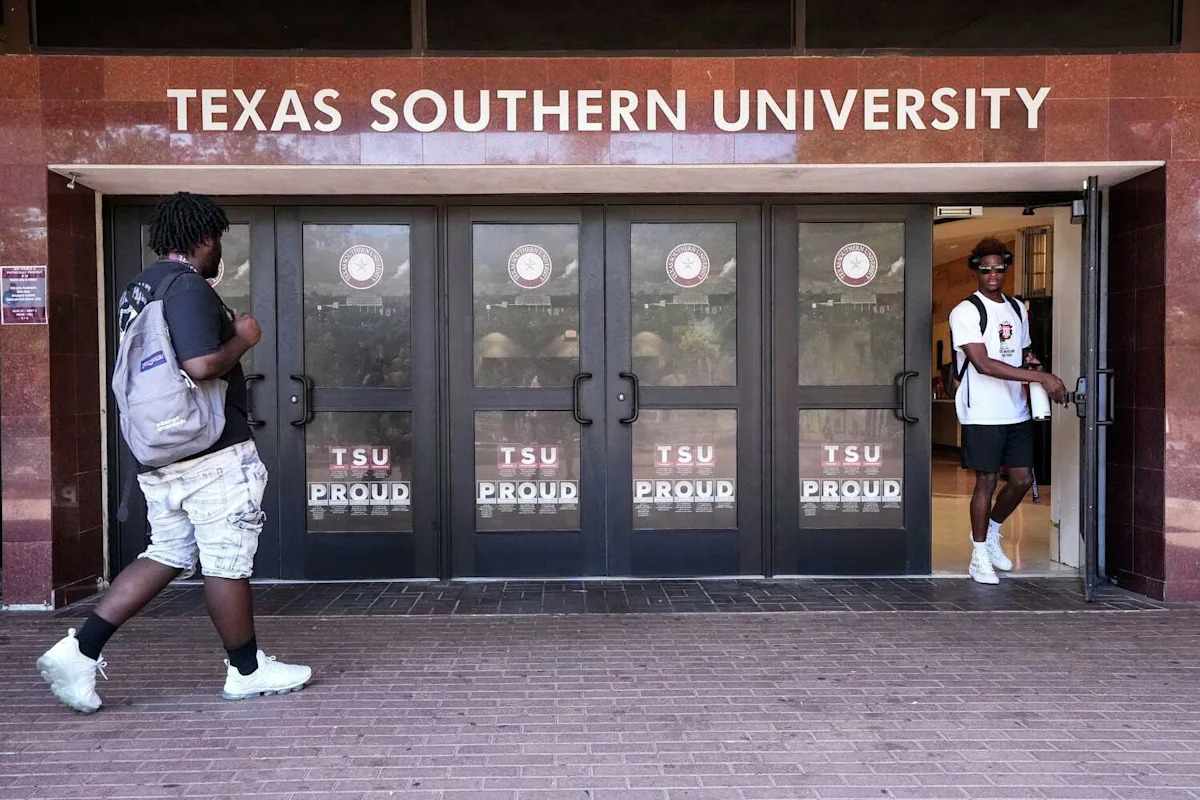
Texas Southern University has mapped out a major building plan worth $1.7 billion to create a more connected and modernized campus, including new dorms, athletic facilities and law school building that have long been on students’ and alumni’s wish lists.
The historically Black university still needs to secure funding through different sources like donations, private partnerships and legislative appropriations. But university officials say they have high hopes for the new campus master plan that is “both visionary and pragmatic.”
HIGHER ED: TSU, Prairie View aim to boost research funding through HBCU consortium
If the plan is realized, students will see most of TSU get a facelift over the next 10 years. Construction would occur in three phases and create new academic, living and dining facilities; a relocated track and football field that can seat 10,000 fans; and several refurbished outdoor spaces, beginning with an extended Tiger Walk.
“If you continue to have outdated, unused facilities on your campus, you’re sending a message to your students and to those who you’re seeking to partner with,” university president J.W. Crawford III said. “We want the students, faculty and staff and our partners … excited about being here.”
TSU was founded in 1927 and first operated out of Jack Yates High School in Houston’s Third Ward. It wasn’t until 1947 that the historically Black university moved onto the campus that students know today, with the purchase of 53 acres and the construction of the Fairchild Building.
Since then, TSU has expanded to 150 acres and enrollment has grown to more than 8,600 students. But similar to many other HBCUs, the university hasn’t been funded as equally as predominantly white institutions. That underfunding has prevented more rapid development, and in recent years, some students, faculty and staff have complained about housing availability and campus conditions, such as aging academic structures at the Thurgood Marshall School of Law.
Separate from the master plan, TSU has some new buildings already in the works: a new Health and Wellness Center and the Catalyst for Urban Transformation, which is connected to the Nabrit Science Center. (The latter is at the site of the recently demolished Samuel Milton Nabrit building.) The university received $95 million in state funding for that construction.
The university has also recently completed other projects: a new athletic strength and conditioning facility, the renovated Charles P. Rhinehart Music Auditorium and the renovated W.R. Banks Child Development Laboratory. The Robert J. Terry Library and Lanier Hall East housing facility are slated to be demolished this year to make way for more campus developments.
The master plan
The Tiger Walk runs through the campus of Texas Southern University in Houston on Tuesday, March 9, 2021. (Elizabeth Conley, Houston Chronicle / Staff photographer)
The campus upgrades were unveiled this week on the heels of a new strategic plan that aims for stronger student outcomes, greater research productivity and better technology systems.
Some of the physical improvements should help achieve those goals, Crawford said, because generally college students who live on campus are more likely to persist and graduate.
“It’s unrealistic to think that you can accomplish, and nor should you try to accomplish all that you want to do or need to do for an institution, with taxpayers’ dollars,” Crawford said. “I want the taxpayer to see that we are being not just good stewards, but being prudent in how we use those funds and what we use them for.”
In the plan’s first two years, TSU aims to convert the existing testing center into a visitor’s center and add locker rooms to an existing recreation center, helping meet NCAA standards for visiting teams. The plan also calls to extend the main campus walkway known as the Tiger Walk, and complete other outdoor beautification projects.
The third through fifth years would see more new buildings on campus, if all goes to plan. That includes a new building for the acclaimed Ocean of Soul marching band, new student housing with residence life offices and a relocated track and football stadium with more seats.
It would also add a new front entry drive and visitor parking off Blodgett Street, plus a new aviation and engineering building, an athletics recruiting center and law school building. (The Texas Legislature has committed $10 million for the planning and design of the new law building.)
Years six to 10 would see more new structures, including two parking garages, more housing and expanded museum spaces.
Crawford said he’s optimistic that the university’s vision will become reality, though it will need major funding efforts. The Texas Legislature has questioned TSU’s finances more broadly, however, especially after a state financial audit found “significant weaknesses” in its financial processes, resulting in a Texas Rangers investigation.
“I am laser focused on changing the narrative about Texas Southern University,” he said. “There have been missteps in the history of this institution but it has a very vital and important legacy. And while we’re rooted in the present, we’re looking to the future.”
Subscribe
There’s more to Houston with the Chronicle. Subscribe today for just 25¢.
This article originally published at Texas Southern plans to build new football field, housing as part of $1.7B campus remake.