
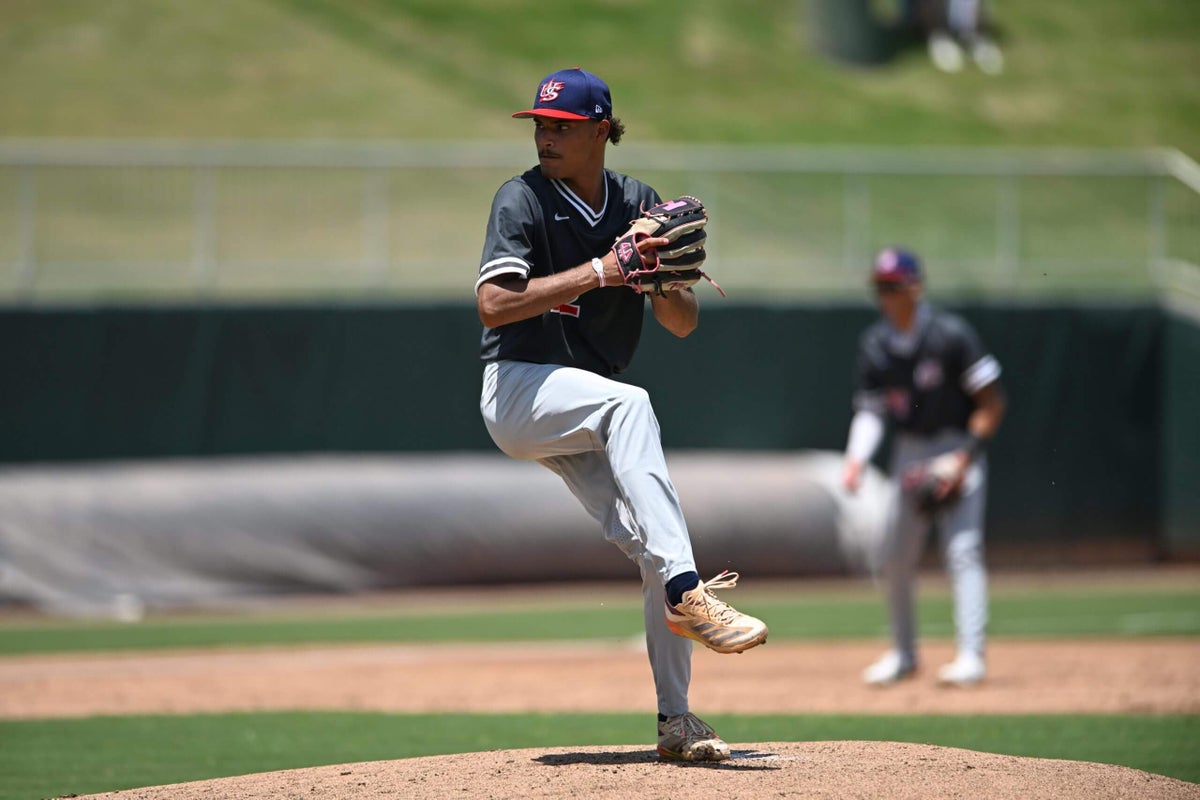
PHOENIX — If Todd Fitz-Gerald had his way, he’d probably still be coaching at American Heritage Schools in Plantation, Fla.
After all, it’s where he played football and baseball, where he met his wife Colleen and where he felt at home coaching high school baseball.
When his contract wasn’t renewed in 2011, it opened up a new opportunity for the coach, one that took him to Marjory Stoneman Douglas High School in nearby Parkland, where he is the head of a baseball program that has won six consecutive state championships.
First, though, he had some changes to make.
“(The) number one thing that I wanted to do when I went here is I had to change the culture and put my plan in place on how I saw the program and envisioned the program moving forward,” Fitz-Gerald said in a recent phone call.
The culture Fitz-Gerald established for the team that plays at Anthony Rizzo Field is one that has led to several players being selected in the early rounds of the MLB Draft and, in some cases, reaching the big leagues fairly quickly after their draft year. Those success stories include Roman Anthony, Jesús Luzardo and Coby Mayo, who all played under Fitz-Gerald.
Players drafted under Fitz-Gerald
On Saturday, the Stoneman Douglas MLB pipeline added a first-round pick to its resume: left-hander Gio Rojas, who was taken with the No. 16 pick by the Texas Rangers. Considered the top high school pitcher in the draft, Rojas joins the Rangers organization after a standout high school career where he had an 0.65 ERA in 162 innings. The Athletic’s Keith Law ranked Rojas as the No. 25 prospect in the class, and highlighted the left-hander’s dominating pitch mix.
“His fastball is low 90s, up to 97-98, with life from a lower three-quarters slot, while his best pitch is a high-spin sweeper/slider that batters whiffed on two-thirds of the time they swung at it at tracked events in 2025-26,” Law wrote in the top 100 prospect ranking. “He does lower his arm slot for the slider, which can cause it to flatten out a little and could give better hitters a clue what’s coming (although they might just miss it by less). He has a promising changeup he hasn’t used much, as he hasn’t needed it.”
“Coach Fitz is kinda the man that started it all,” Rojas said last month at the MLB Draft Combine. “I was on the map, but he got me on the biggest map possible.”
The Stoneman Douglas, and by extension Fitz-Gerald, “way” emphasizes continuity, particularly in how players are coached.
“We coach the varsity and the JV, and so the kids are getting the same message from top to bottom,” Fitz-Gerald explained. “It’s not like I just have one guy coaching JV and then when they get to varsity, they have to be re-taught.”
The culture extends into the classroom and outside school, where players are expected to carry themselves like professionals — don’t get caught wearing slides on coach’s watch — and treat others with grace.
“How the players treat each other, having them mentor the younger players on the JV level, the respect for the game, how you go about your business, the preparation in practice, paying attention to detail (and) doing all the little things,” Fitz-Gerald said.
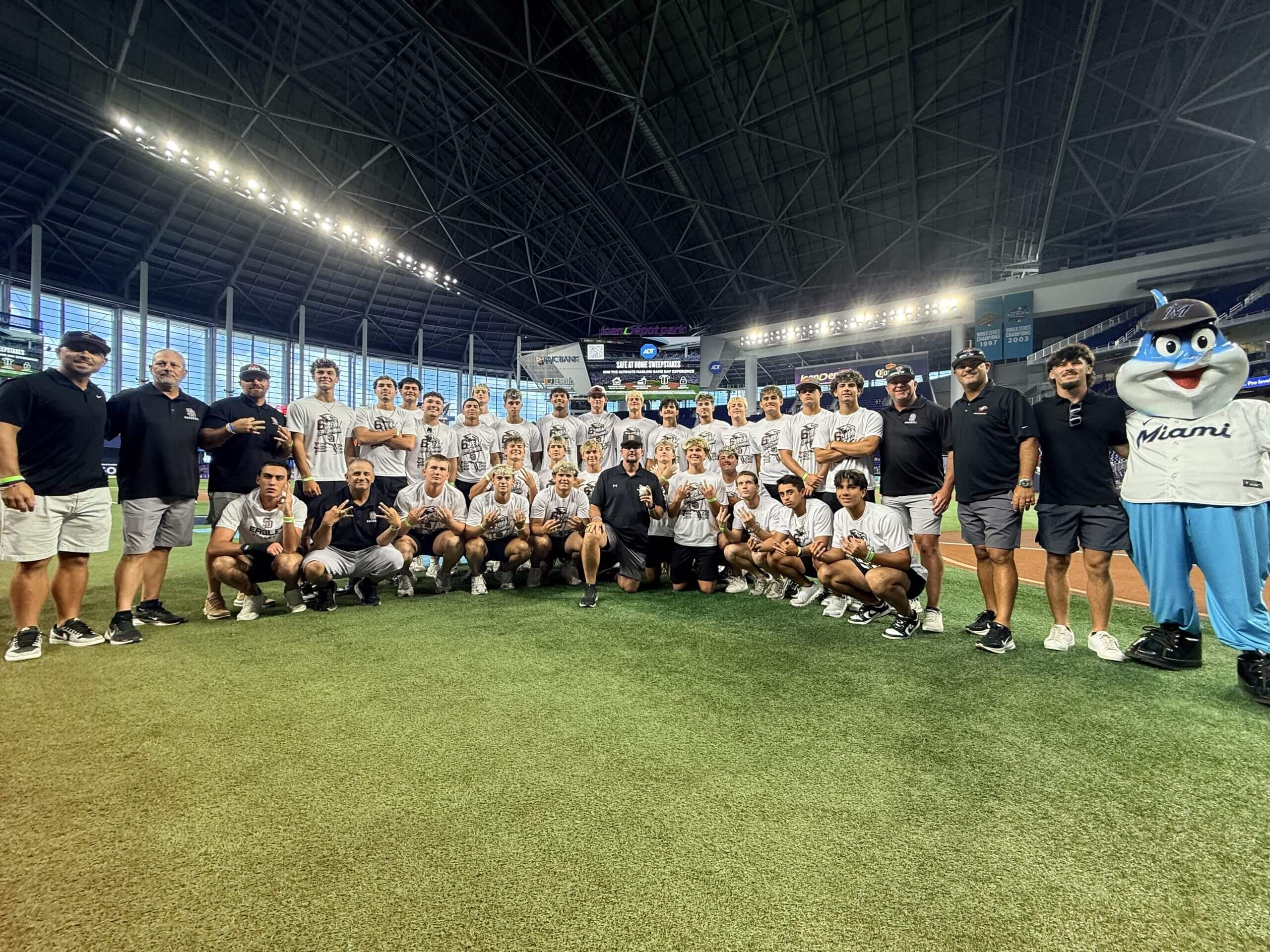
Todd Fitz-Gerald, center, poses with his Stoneman Douglas team at loanDepot Park in Miami. (Courtesy of Todd Fitz-Gerald)
At practice, effort and attitude are some of the most important elements.
“He held us accountable for running hard, running on and off the field, not making bonehead mental mistakes,” said Luzardo, who was named to his first MLB All-Star Game roster earlier this week. “The regular errors are going to happen. But the hustle plays, making sure you run out every ball you pop in the infield (and) making sure you’re getting out of the box — just playing the game the right way.”
Complainers, Rojas said, are shown the bench. Even the most skilled player on the field isn’t immune from punishment.
“Everybody’s held to a standard,” Fitz-Gerald said. “So it’s the accountability piece from your top guy on your team, like a Roman Anthony, to the bottom guy on your team. They all have to be treated equally when it comes to discipline and when it comes to making sure that they’re doing the right things that they need to do.
“If I can’t suspend Roman Anthony for doing something, but my bottom kid did the same thing, and I suspend him, what does that say about me as a coach?”
It’s created a powerhouse program and dozens of accolades for Fitz-Gerald, including a spot on USA Today’s 2026 “Starting 9” as the nation’s best head coach.
“He really cares about his players, but at the same time, he really cares about winning,” Rylan Lujo, a draft-eligible sophomore at Georgia who played under Fitz-Gerald as a high schooler. “So when you have both of those the way that he does, it’s just a recipe for success.”
Year over year, the players may change, and some of Fitz-Gerald’s own rules might relax, like removing his no facial hair policy. The recipe, though, stays the same.
“At the end of the day, whether you win or lose, I want the other team on the other side to say that’s a well-coached, prepared team, they play the game the right way,” he said.
On Saturday, the Fitz-Gerald “way” has led to the program’s biggest success story yet.
“The best thing that ever happened to Gio was Coach Fitz,” Rojas’ father, Luis, said.