
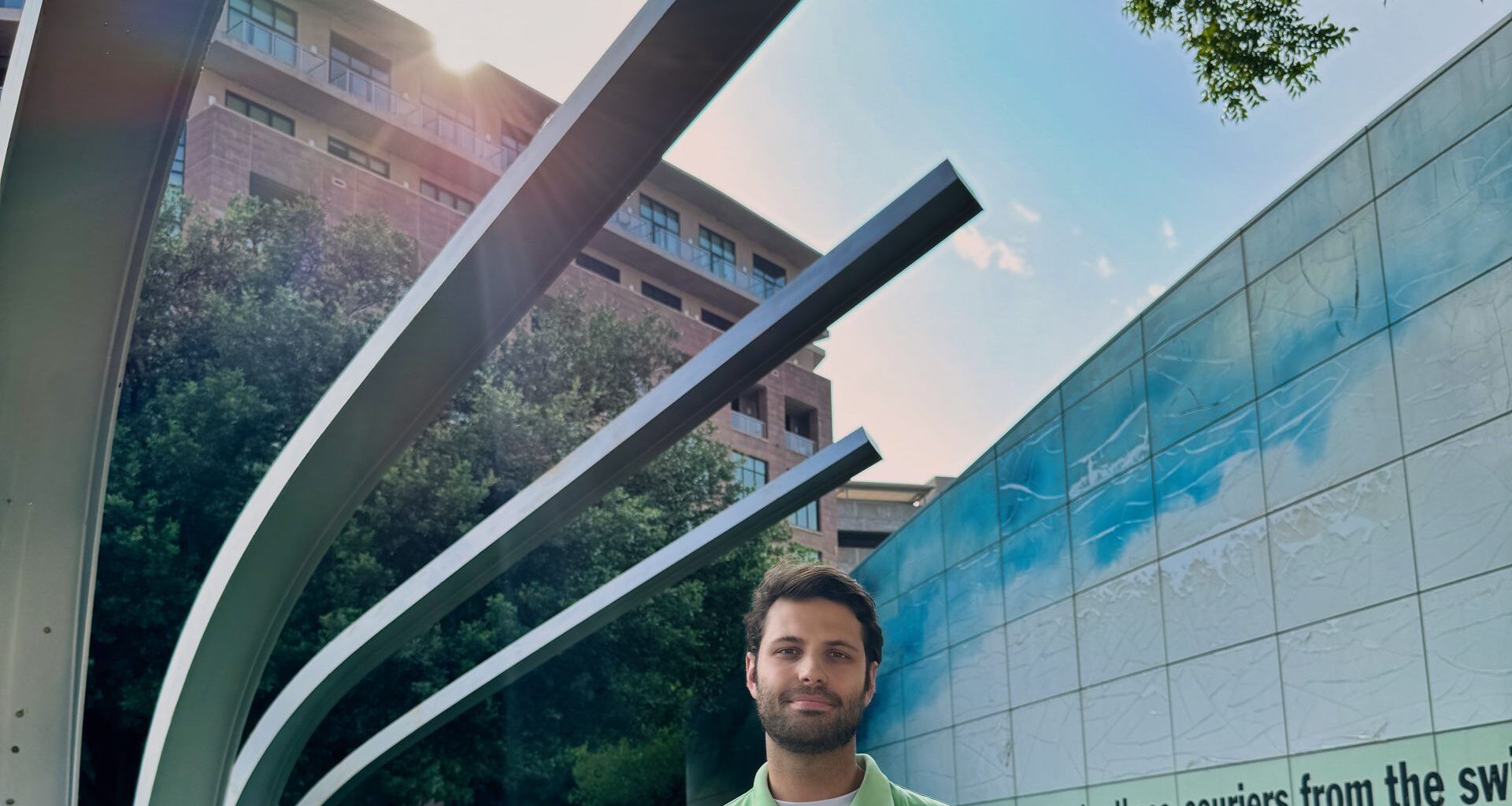
To paraphrase a Texas bumper sticker, Rob Smat wasn’t in Fort Worth when a tornado devastated the city’s westside and downtown on March 28, 2000, but he got here as soon as he could.
Smat’s family, then living in Georgia, was planning a move to Fort Worth when they saw the destruction on their television screens. Smat, then 6, said his grandmother called and told them there wasn’t going to be a city left to move to.
The city wasn’t eradicated, but the F3 tornado left a wide swath of destruction. At the end of the tornado’s rampage, officials estimated it inflicted $450 million in property damage. Casualties included two dead and 80 injured.
Smat has now written a book, “Tornado at the Tower,” chronicling the devastation but also — more important from his point of view — preserving the stories of some of the people caught up in the storm and its aftermath.
Currently a filmmaker (“The Last Whistle,” a 2019 sports drama) and author (“Power to the Players,” a book about the stock market and GameStop), Smat said he was always intrigued by disaster movies and how they told their stories.
“Growing up in the shadow of a real-life disaster really inspired me from an early age, and really just never left me,” he said.
Over time Smat learned more about the devastation he had seen wrought on Fort Worth through his television screen, and also came to understand more about its long-term effects.
He recalled the 2011 opening of Fort Worth’s first In-N-Out Burger at 2900 W. 7th St. and how people said it was a rebirth of the area.
“I remember the rebuilding,” he said. “I wasn’t here to see what was here before. But I saw the change that was happening. It gave me a kind of outsider’s point of view.”
And, of course, he remembered The Tower, the city’s fourth-tallest building, and how it became the symbol of the tornado’s impact.
Then called the Bank One Tower, about 90% of its 3,540 windows were shattered. Dangling panels and shards of glass rained onto downtown’s streets for days, Smat said.
“I heard some of the stories about that day from people I knew, and as we neared that 25th anniversary of the storm, I realized … a lot of these stories were going to get lost to time.”
It was fear of losing that history that inspired him to put pen to paper.
Smat interviewed tornado survivors and combed through newspaper archives and television newscasts of the disaster, hoping to one day write a standard history.
Then he met Jim Eagle, a longtime Fort Worth real estate executive, now with JLL.
“Jim’s very much the Forrest Gump of the Fort Worth tornado,” Smat said. “He’s in the skyscraper, dining at the Reata Restaurant on the 35th floor, when it strikes, and then he’s the one that has to pick up the pieces for years to come in one way or another, on the real estate side.”
The meeting led Smat to shift his storytelling plan for the book. Instead of a straight narrative or a standard history, the book is propelled by three main characters, much like a feature film.
“We’re trying to get as close as possible to what happened, and any gaps or falsehoods are not intentional, they’re really the result of a lack of memory,” he said.
He was inspired by the 2013 book “Five Days at Memorial: Life and Death in a Storm-Ravaged Hospital” and its 2022 Apple TV adaption “Five Days at Memorial,” both revolving around a hospital in the aftermath of Hurricane Katrina.
Smat is already working on a script, titled “The Birdhouse,” based on his book. He would like to see it adapted for television.
“There’s plenty of drama for something similar to ‘Five Days at Memorial,’” he said.
Eagle’s story is central to the book. The story of the tornado hitting The Tower reads like a real-life disaster movie, he said.
Eagle spends the latter half of the book rebuilding his home as well as the iconic downtown building that came very close to being destroyed by both the tornado and the fact that no one seemed to know what to do with it.
“No one wanted to touch it. Jim and others did some incredibly complex work to save and rehabilitate what is now a successful downtown high-end residential property,” said Smat.
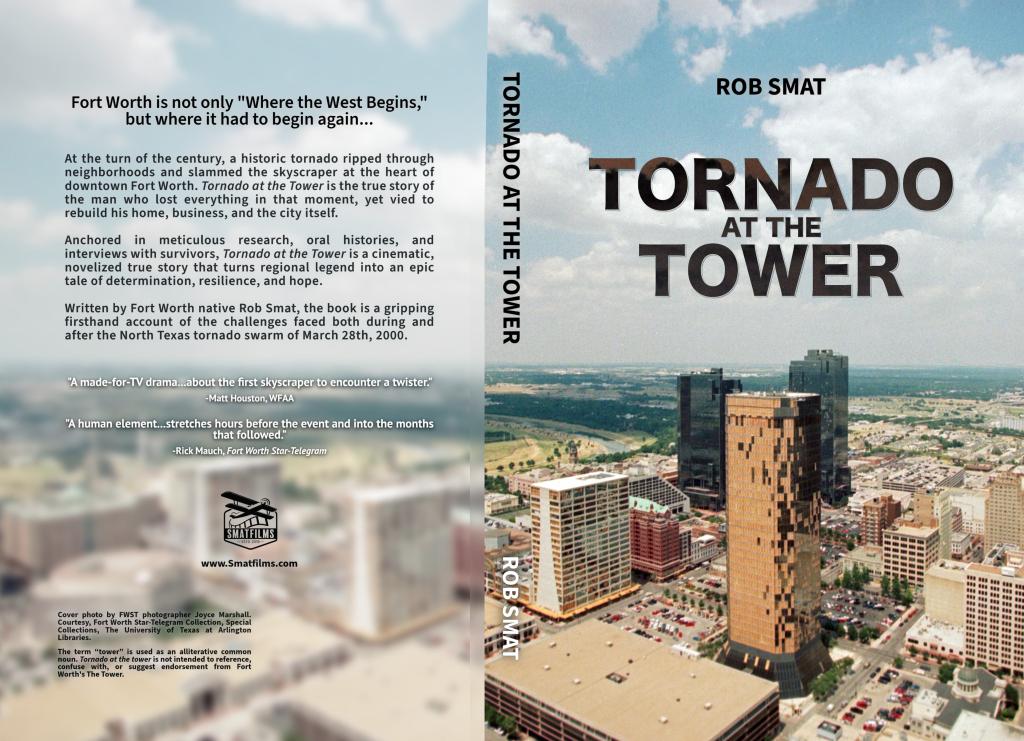 “Tornado at the Tower,” by Rob Smat, tells the story of the March 28, 2000, tornado in Fort Worth. (Courtesy | Rob Smat)
But for several years after the tornado, the former Bank One building was something of a laughing-stock, boarded up wooden panels that replaced the broken glass. The Wall Street Journal published a story about the building, referring to it as an “eyesore.” City residents referred to it as “Plank One” or “The Birdhouse,” for all the birds that made a home there.
Eventually, the former Bank One Tower reopened with a new name and a new purpose. The Tower debuted in 2005. With 36 floors and 276 units, it is Fort Worth’s largest residential high-rise.
“Jim was really central to it (reopening) and really key to the success of that building,” Smat said.
The other stories in the book feature well-known figures in the city: Rusty Reid, CEO and president of Higginbotham, and Carolyn Bauman Cruz, senior staff photographer for the Fort Worth Star-Telegram at the time of the tornado.
Smat is proud of the result.
“Everything in the story that is the most gripping, fantastic, interesting, unbelievable moments — those are the ones that truly happened,” he said. “And the stories are there. They won’t be lost.”
People new to Fort Worth will have some answers about the tornado as well, he said.
Smat also sees the book as a lens through which it’s possible to view both the Fort Worth of the past and the current city.
“I think we were just starting to come out of the shadow of Dallas then and after this tornado, all the pieces started coming together to become this modern city we are now,” he said. “I believe that’s a big part of this overall story I’m telling.”
Bob Francis is business editor for the Fort Worth Report. Email him at bob.francis@fortworthreport.org.
News decisions are made independently of our board members and financial supporters. Read more about our editorial independence policy here.
This <a target=”_blank” href=”https://fortworthreport.org/2026/07/11/tornado-at-the-tower-how-destruction-led-to-rebirth-in-fort-worth/”>article</a> first appeared on <a target=”_blank” href=”https://fortworthreport.org”>Fort Worth Report</a> and is republished here under a <a target=”_blank” href=”https://creativecommons.org/licenses/by-nd/4.0/”>Creative Commons Attribution-NoDerivatives 4.0 International License</a>.<img src=”https://i0.wp.com/fortworthreport.org/wp-content/uploads/2021/04/cropped-favicon.png?resize=150%2C150&ssl=1″ style=”width:1em;height:1em;margin-left:10px;”>
<img id=”republication-tracker-tool-source” src=”https://fortworthreport.org/?republication-pixel=true&post=661328&ga4=2820184429″ style=”width:1px;height:1px;”><script> PARSELY = { autotrack: false, onload: function() { PARSELY.beacon.trackPageView({ url: “https://fortworthreport.org/2026/07/11/tornado-at-the-tower-how-destruction-led-to-rebirth-in-fort-worth/”, urlref: window.location.href }); } } </script> <script id=”parsely-cfg” src=”//cdn.parsely.com/keys/fortworthreport.org/p.js”></script>