
Houston’s summer skies and drainage ditches are full of characters.

There’s the bird with the yellow ponytail stalking crawfish near a bayou, the white-headed aerialist circling high above neighborhoods, and, yes, those really are ducks perched on power lines.
Houston Audubon says a handful of birds are especially hard to miss around the city this summer. They include Houston’s official bird—the yellow-crowned night heron—along with Mississippi kites, chimney swifts and black-bellied whistling ducks.
Article continues below this ad
Meet the birds of Houston’s summer.
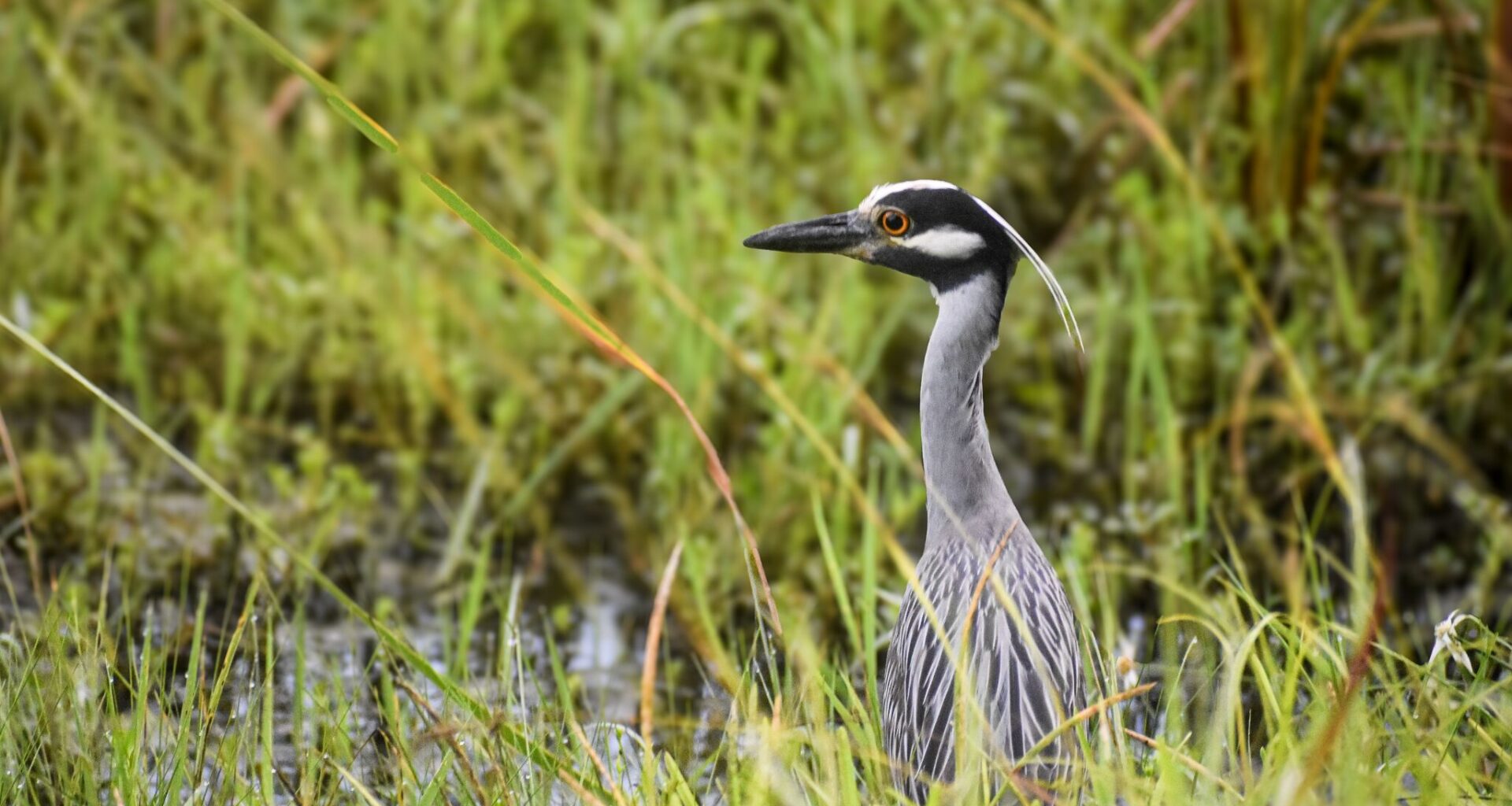
Yellow-crowned night heron
Yellow-crowned night-herons become a more familiar sight around Houston during their spring and summer breeding season.
Ariana Garcia
Houston’s official bird has been showing up in some very unofficial places.
Article continues below this ad
You might spot a yellow-crowned night heron creeping along a bayou, wandering through a park or stalking prey in a neighborhood drainage ditch. With its slate-gray body, bold facial stripes, bright yellow crest and vivid red eyes, it’s hard to mistake it for anything else. Its favorite snack? Crawfish.
Yellow-crowned night herons live along the upper Texas coast year-round, but sightings become more frequent during breeding season from April through July as migratory populations travel north. They mainly forage at night and spend much of the day hidden among branches near water.
The yellow-crowned night heron was named the official Bird of Houston in 2019.
Article continues below this ad
Black-bellied whistling ducks
Black-bellied whistling ducks are a common sight around Houston’s ponds, parks and neighborhoods.
Ariana Garcia
If you’ve ever done a double-take at a row of ducks sitting on a power line, you’ve probably met Houston’s black-bellied whistling ducks.
The noisy birds are common around shallow ponds, golf courses, city parks and schools. Their chestnut-colored breasts and black bellies are paired with bright pink bills and legs, while a broad white wing stripe flashes in flight.
Article continues below this ad
Black-bellied whistling ducks are known to perch in trees and on power lines, thanks in part to their unusually long legs.
Ariana Garcia
Those unusually long legs help explain their strange choice of hangout. Black-bellied whistling ducks spend more time walking on land and perching in trees and on power lines than many other ducks.
They’re also extremely social, gathering in flocks that can number up to 1,000 birds. Breeding runs from late May through August, with nesting activity peaking in late June and early July.
Black-bellied whistling ducks are a common sight around Houston’s ponds, parks and neighborhoods.
Ariana Garcia
The ducks mostly eat plants, grasses, sedges and agricultural crops, occasionally adding snails, insects and spiders to the menu. And true to their name, their soft, high-pitched whistles can announce a flock before it comes into view.
Article continues below this ad
Mississippi kites
Mississippi kites glide and circle overhead as they hunt insects on the wing.
Greg Lavaty/Houston Audubon
That graceful bird effortlessly circling over your neighborhood might be hunting without ever touching the ground.
Mississippi kites are aerial acrobats, gliding, circling and swooping after cicadas, dragonflies, beetles and grasshoppers. Insects make up most of their diet, though they’ll also catch frogs, lizards, snakes and small birds.
Article continues below this ad
Mississippi kites can be spotted soaring above Houston as they hunt cicadas, dragonflies and other insects.
Greg Lavaty/Houston Audubon
The birds can look almost falcon-like in flight. Adults have long, pointed wings with dark tips, mostly dark tails, pale gray bodies and pearl-white heads. Their red eyes and dark facial markings give perched adults an especially striking appearance.
Listen for a piercing, high-pitched two-syllable whistle overhead. Houston Audubon has also reported a large number of Mississippi kites at the Smith Point Hawk Watch.
Chimney swifts
Chimney swifts spend nearly their entire lives in flight, stopping only to roost or nest.
Greg Lavaty/Houston Audubon
Chimney swifts take “always on the go” to another level. The small, gray-brown birds spend nearly their entire lives on the wing, stopping only to roost or nest. They even bathe while flying.
Article continues below this ad
There’s a reason you won’t see one casually perched on a branch. Chimney swifts can’t perch like most birds. Instead, their long claws are adapted to cling to vertical surfaces.
The birds historically nested in hollow trees, but after losing much of that habitat to development, they adapted to chimneys and other human-made structures for nesting.
Found in Houston from March through October, chimney swifts are especially noticeable in the late afternoon and evening as small flocks zip overhead in search of food.
Article continues below this ad
Look for slender bodies, round heads, long curved wings and short, tapered tails. Their stiff, shallow wingbeats and chittering calls are often the biggest giveaway.