
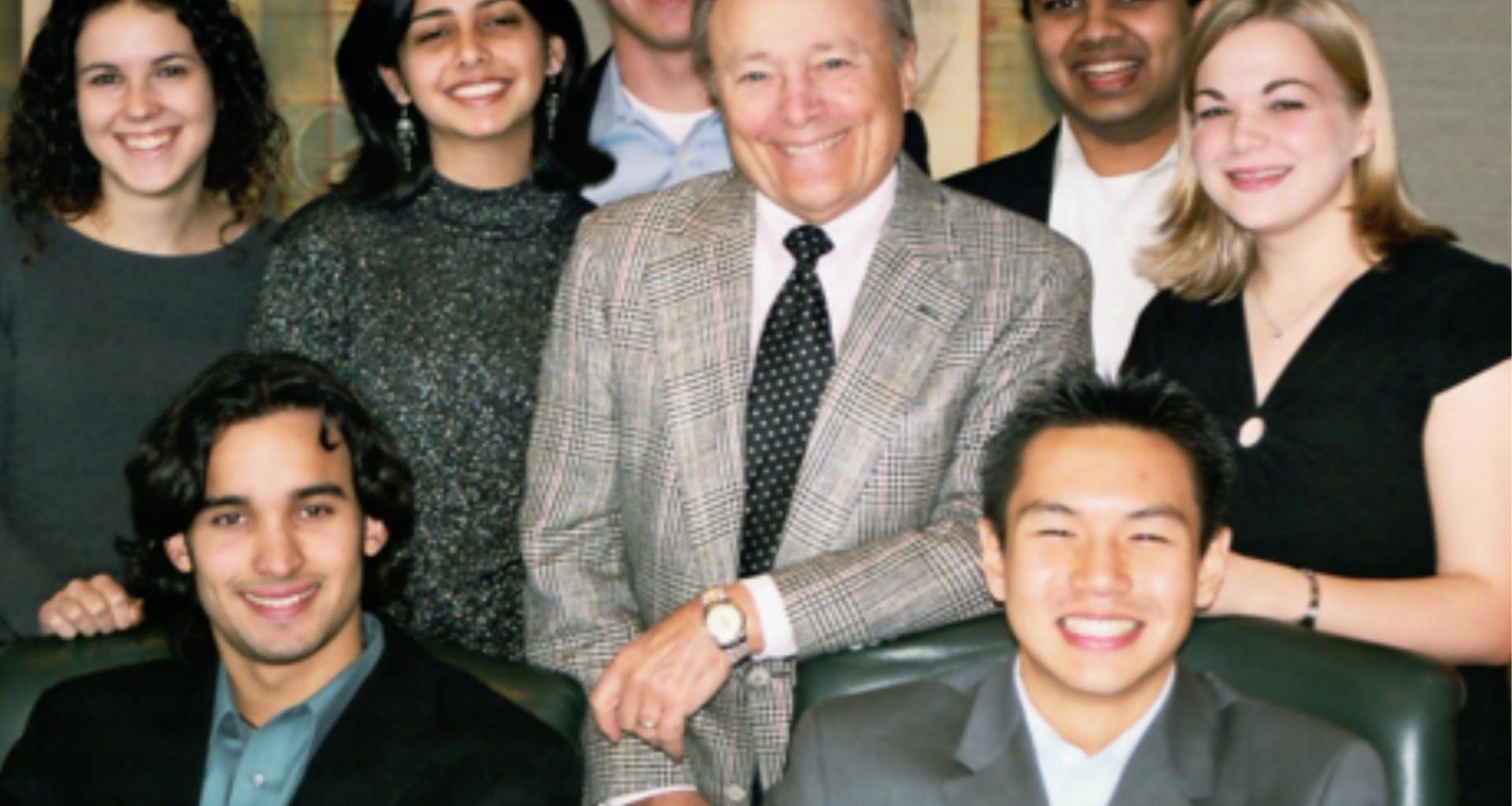
Former Congressman Bill Archer, 98, died July 4 at his farm in Stanley, Va. The former Texas representative co-founded the Archer Fellowship Program at UT and graduated from the University with a bachelor’s degree in business administration in 1950 and a law degree in 1951.
Former U.S. Rep. Archer, R-Houston, served in the United States House of Representatives for 30 years. During his long tenure, he pushed influential government spending legislation focused on lowering taxes and reforming welfare.
In 2001, Archer co-founded the Archer Center with Don Carlson, who worked on his congressional staff during his entire tenure in Congress. The two partnered with the UT System to form the Archer Center in Washington, D.C., which houses academic programs and invites students from across the system each semester. The program has brought over 2,200 interns to Washington, who work at the White House across various federal organizations and nonprofits.
Carlson said Archer’s main goal was always ensuring the Center could serve as many students from diverse pathways as possible. Starting 2010, the center introduced a program for graduate students with multiple pathways.
“He envisioned a broader program that would eventually include graduate, law, doctoral, and medical students, exposing them to the policymaking process in health care and other critical areas,” Carlson wrote.
Archer’s tie to UT ran deeper than just academics. He was a tennis player on the University’s varsity intramural team and was named champion intramural athlete in 1951. In 1981, UT honored him with a Distinguished Alumnus Award, which awards alums who “truly exemplify the phrase, ‘What starts here changes the world,’” according to the Texas Exes website.
Carlson said the values that shaped Archer’s engagement with Archer Fellows were formed during his time on Capitol Hill. He rarely asked his junior staffers to run unnecessary errands and instead let them focus on their futures and acknowledged their accomplishments.
“He genuinely believed young people could make a difference,” Carlson wrote. “He invested in students because he saw them not simply as future leaders, but as individuals whose ideas, talents, and commitment to service could help shape the future of the country.”
Archer made his last public appearance this April during the Archer Center’s 25th anniversary celebration at the Library of Congress.
Carlson said he last spoke with Archer the week before his death.
“That final conversation reflected one of his most enduring qualities: his deep appreciation for the people who supported him throughout his life and career, and his remarkable memory for the relationships he built along the way,” Carlson wrote.
Archer is survived by his wife, Sharon Sawyer Archer; five children, William Reynolds Archer III, Richard Archer, Sharon Funk, Lisa Parker and Barbara Archer; and two stepsons, Scott and Christopher Sawyer.