
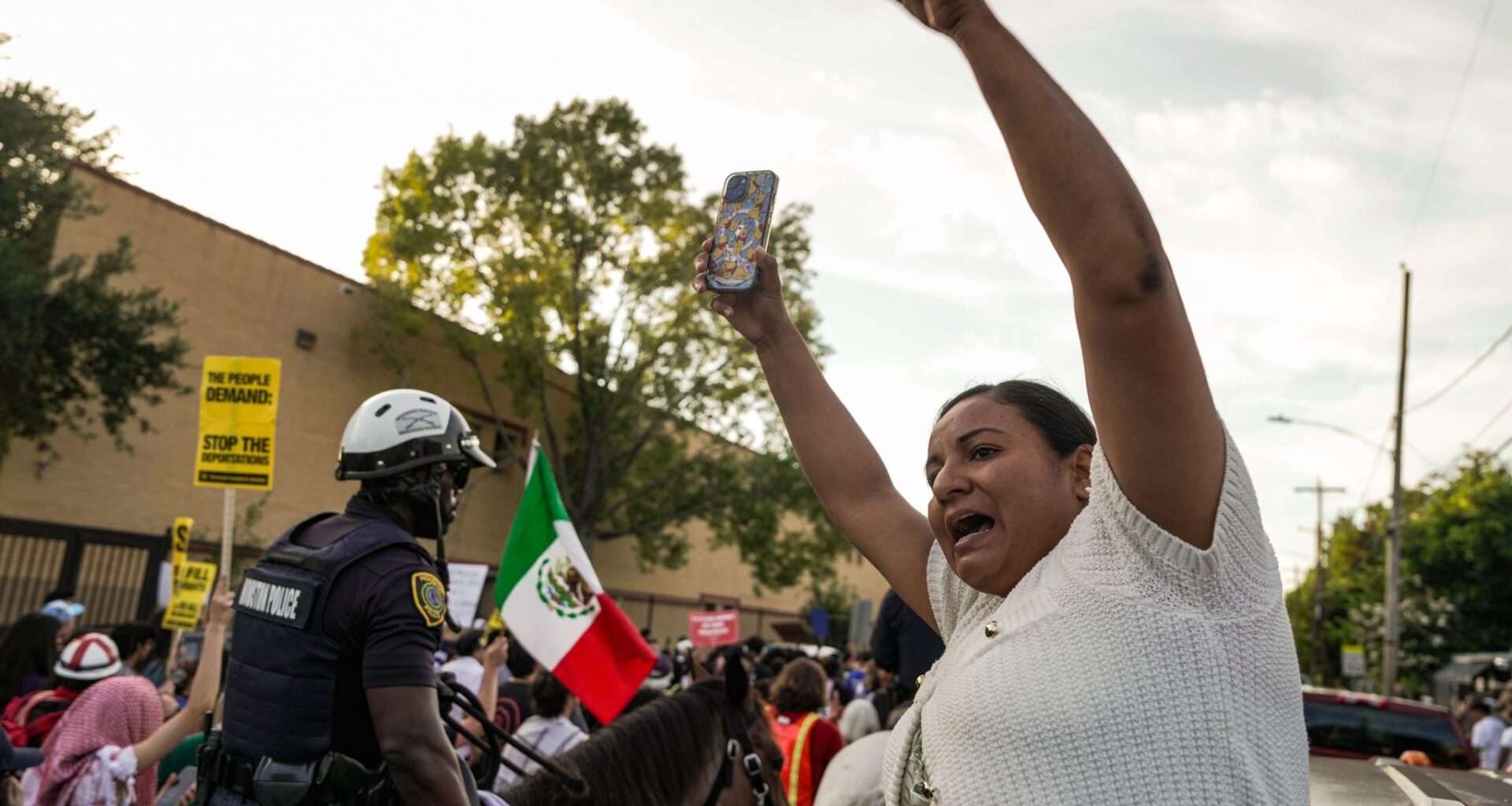
When more than a thousand Houstonians gathered to demand answers after the death of Lorenzo Salgado Araujo, I thought immediately of another gathering, nearly 50 years ago, in Moody Park.
History has a way of asking the same questions of every generation. As a Houston community historian who has spent more than a decade preserving our city’s Latino civil rights history, I have learned one lesson above all others: History rarely announces itself while it is happening. It is not defined merely by what occurs; it is defined by how communities choose to respond when they are tested.
Nearly 50 years ago, José “Joe” Campos Torres died after being beaten by Houston police officers and left in Buffalo Bayou. The resulting Moody Park unrest of 1978 became a defining chapter in our civil rights struggle. Decades later, Houston saw a similar civic awakening following the murder of George Floyd.
These are not distant historical events. They are visceral reminders that public trust, once broken, takes generations to rebuild — and that silence is the primary architect of that decay.
Today, Houston faces that same crossroads. On Wednesday, an estimated 1,000 to 1,500 people marched through the East End, demanding justice for Lorenzo Salgado Araujo. What makes this moment distinct is the breadth of the coalition demanding change. We are seeing a rare, unified front: civil rights organizations, faith leaders, labor unions, veterans, students and neighborhood groups. In a city often characterized by its fragmentation, this coalition is a signal. It reflects a shared belief that every life deserves dignity and every investigation demands radical transparency.
This movement was not born in a courtroom or a legislative chamber. It was born in the streets, where ordinary people decided that one family’s search for answers had become an entire community’s search for justice.
While many elected officials have rightly called for transparency, we must move beyond the rhetoric of “jurisdiction.” Mayor John Whitmire’s point regarding the federal status of the investigation is legally accurate, but public leadership requires more than a statement of legal constraints. When a Houstonian loses his life, the city itself is on trial. True leadership at this moment requires the mayor to leverage his office to ensure an independent, civilian-led review process that operates with complete transparency — regardless of which agency held the badge.
Whitmire’s press conference on Friday shows he’s begun moving in that direction.But we’ll need more than that to uphold the public trust.
The similarities between today’s movement and the aftermath of the Joe Campos Torres case are undeniable. History never repeats itself exactly, but it does echo. And right now, it is asking us three questions:
For more than a decade, my work has centered on preserving the archives of our past. Time and again, the records show that history is shaped not by extraordinary figures, but by ordinary people who refused to remain silent when silence would have been easier.
The names have changed. The uniforms have changed. The generations have changed. The fundamental necessity for justice has not.
Fifty years from now, history will record exactly what we did when our city was tested. It will not remember our excuses for why we couldn’t act; it will only remember whether we had the courage to stand together when justice demanded it.
History is watching. The question is not whether history will remember us. It is what history will say about our integrity when we had the chance to lead.
David Contreras is a Houston community historian, president of the Latino Education and Preservation Alliance (LEAP), former national historian of the League of United Latin American Citizens (LULAC), and current chair of the Harris County Hispanic Cultural Heritage Commission. For more than a decade, he has led community efforts to preserve Houston’s Latino history through archives, oral histories, historical collections and public education.