
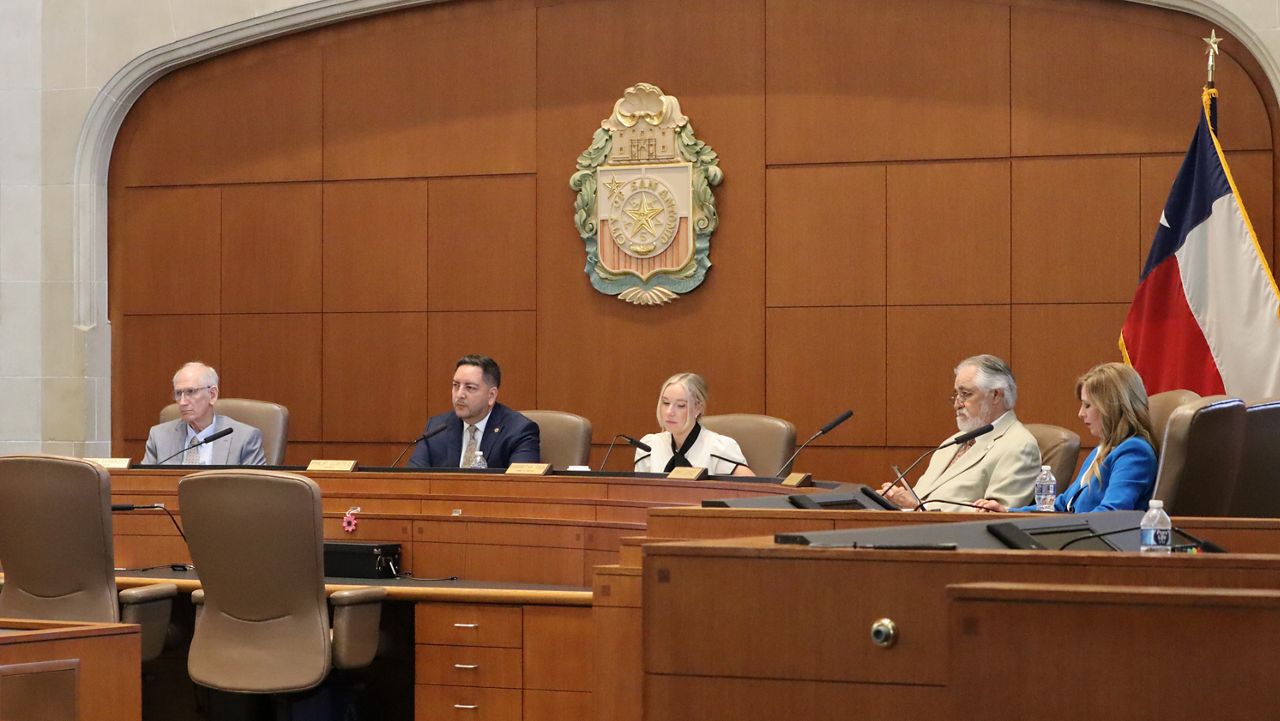
TEXAS — Lawmakers met in San Antonio for a status report on House Bill 114. The bill called for transferring veterans’ mental health services from the Texas Health and Human Services Commission (HHSC) to the Texas Veterans Commission (TVC).
The bill was passed last year and took effect in September.
“We felt that transferring all of the services and all of the resources to TVC, away from HHSC, was the best route to go to ensure all of our veterans are being taken care of,” said state Rep. Philip Cortez, D-San Antonio.
An Air Force veteran himself, Cortez said as overseas deployments grew, he realized HHSC wasn’t as equipped as the TVC for issues specific to service members.
“Specifically on their mental health, suicide prevention and other quality-of-life issues impacting them,” he said.
Army veteran Gilbert Lauriano is one of thousands of veterans who sought resources from the TVC. He was one of the public testimonies sharing his experiences before the Texas House Defense and Veterans’ Affairs Committee.
Before HB 114 was passed, he recalled being confused over not knowing that some services were under HHSC and not the TVC.
He said the bill will help veterans like him get all the services they need under one roof.
“I believe that’s going to play a really big impact in being able to help veterans a lot quicker, a lot sooner,” Lauriano said.
Lauriano also highlighted that TVC staff are often veterans themselves and can better understand the needs of service members than non-veterans.
“Veterans are able to talk to people who they trust in their community and get the services they need, instead of having to reach out to other local governments or outside of Texas,” he said.
The transition is going smoothly, according to TVC officials, but there are some gaps that need to be addressed.
Brenda Keller, the director of veterans’ mental health at the TVC, said contracts have successfully been transferred. She also shared that a suicide prevention action plan, another requirement from HB 114, is underway.
The TVC is now the chief administrator behind programs like the Governor’s Challenge, peer-to-peer coordinators and rural health counselors, though she says staffing for some of those programs could be higher.
According to Keller, there are currently 57 peer-to-peer coordinators and only six rural health counselors covering the entire state.
She said the six rural health counselors are located primarily in East Texas and rural South Texas, with virtually none in the western part of the state. Extra funding for staffing, she said, is critical.
“We could use three times as many of them, for sure,” Keller said.
“I think there was a certain amount of money when they first piloted [the program] to see if it worked. So, a little test title, have six or seven counselors and see how it went, and then grow the program,” she continued. “We realized that it’s awesome, that it works great, and now we’re in a time where it’s time for us to expand. For us to move it into the rest of Texas, all across the west, so that we can have rural veterans’ counselors in all the rural areas of Texas.”
Cortez said he would work with lawmakers to increase funding to the TVC in the next legislative session.