
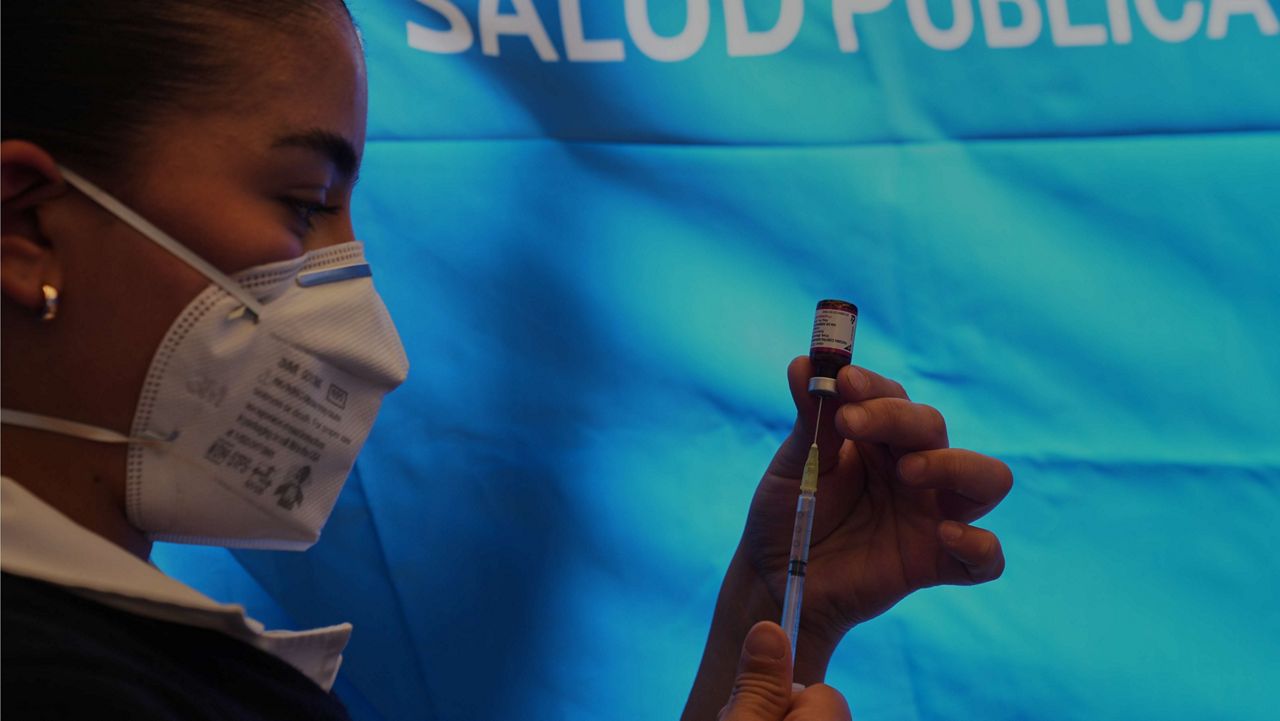
TEXAS — Last year, Texas saw one of the largest measles outbreaks in 25 years. Two children in West Texas died and nearly 100 people were hospitalized.
“We had a whole generation of pediatricians up until a few years ago who never saw a case of the measles,” said Dr. Jeffrey Kahn, the chief of infectious diseases at Children’s Health.
After the COVID pandemic, vaccine rates fluctuated for the first time in years. Then, the state made vaccine exemption forms downloadable and printable, increasing the access families have to reject vaccines.
Over 2,200 cases of measles spread across the country last year, including 762 in Texas.
“What’s probably remarkable is we’re seeing measles now at rates we haven’t seen in 25 years,” said Kahn.
Now, according to the Texas Health and Human Services Commission, vaccine rates are up for kindergartners from 93.2% to 93.3%.
“The increase in the measles vaccine rate has been relatively modest,” said Kahn.
Despite a small uptick this past school year, state records obtained by Spectrum News show measles vaccine rates are still not where they were prior to the COVID pandemic at nearly 97%.
It is still lower than a few years ago when rates averaged approximately 94% to 95% between 2020 and 2024.
“If you step back and look at a little bigger picture, the vaccine rates are still well below where they were before the COVID pandemic. So we certainly still have a lot of catching up to do,” said Kahn.
Measles cases are catching up too. Currently, there are 2,170 confirmed cases across the U.S., including at least 182 cases in Texas. The country is on track to double last year’s case count.
“This is all fairly predictable, and I think if things don’t change dramatically, then we’re going to continue to see more and more measles cases,” said Kahn.
Kahn hopes this year’s 0.1% increase might be a first sign that the rates are changing.
“I think people start to look at that and say well wait a minute this could be a bad disease or they read something in the newspaper…and they’re realizing maybe we should think about this vaccine a little bit more seriously,” said Kahn.
State data also shows conscientious exemptions among kindergartners also increased this past school year by 0.87%.
Seventh graders saw an over 3.5% decline in measles vaccine rates.