
Texas wildlife officials are urging residents to use extra caution around one of the Houston area’s most popular waterfront communities after issuing an alligator advisory for the Clear Lake area.
The Texas Parks and Wildlife Department (TPWD) issued the advisory on July 8, reminding residents and visitors to use extreme caution near waterways, bayous and lakes throughout the Clear Lake and Upper Texas Gulf Coast environment, including Nassau Bay waters and the peninsula.
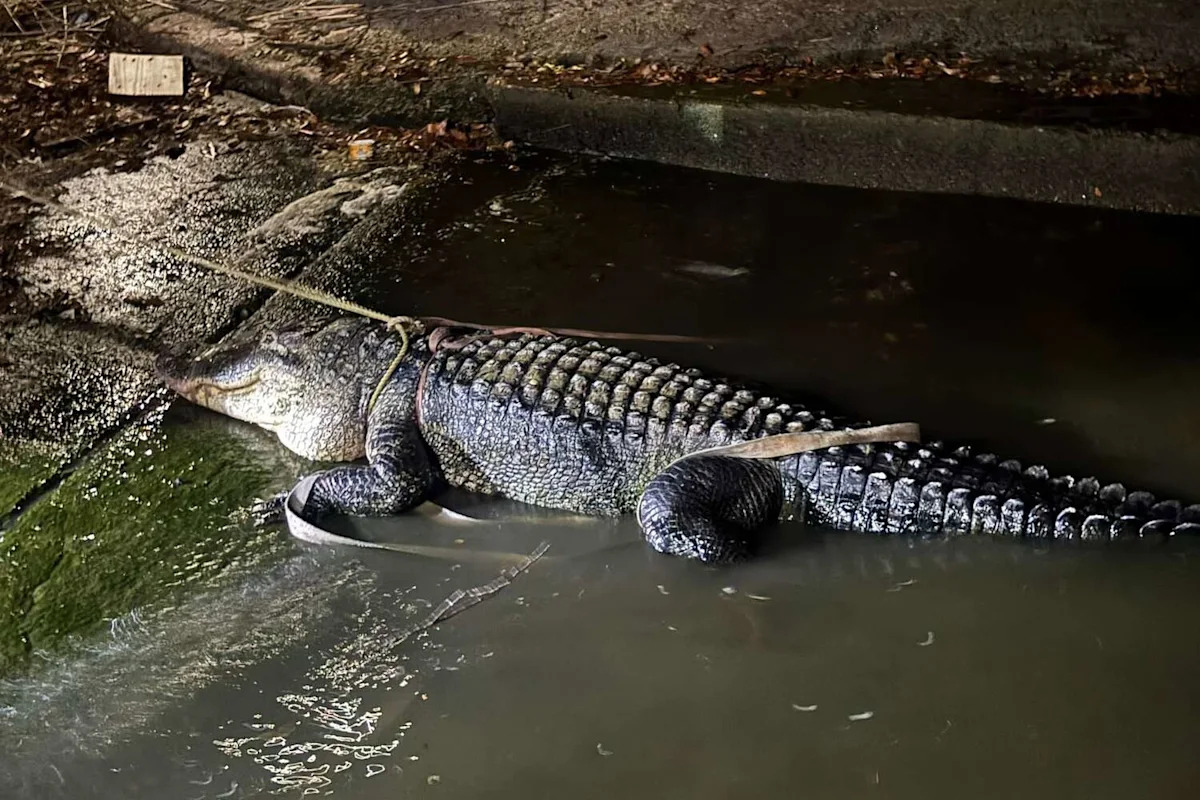
Two days later, the warning was reinforced when the Nassau Bay Volunteer Fire Department announced a massive 13-foot alligator had been removed from the area along Upper Bay Road.
“With the authorization from TPWD, a very large alligator was removed from the area along Upper Bay Rd. in Nassau Bay on Friday evening,” the department wrote on social media alongside a photo of Timothy DeRamus of Bayou City Gator Savers straddling the reptile while securing its jaws.
“The alligator was measured to be 13 ft in length. The alligator will be relocated to an alligator farm in El Campo, Texas.”
DeRamus later said it was the biggest alligator he had handled.

A 13-foot alligator removed from Nassau Bay is secured before being relocated to an alligator farm in El Campo. (Nassau Bay Volunteer Fire Department)
Larissa Ann, who lives near where the alligator was removed, told Chron residents had been warned about alligator sightings in the area for weeks. She shared an email her apartment complex sent tenants June 24 alerting them to reports of alligators in the nearby bay.
Ann watched crews remove the alligator and said they made an effort to avoid hurting it.
“It was a beautiful animal which I had never seen up close,” she said. “They handled it very well, never wanting to harm or hurt him.”
She said crews initially tried pulling the alligator with a truck while it was tied to a rope but changed tactics after realizing it was hurting the animal’s neck. They instead walked it to a nearby pier and were able get it onto the dock.
Although the peak of alligator mating season, which generally runs from March through May, has ended, TPWD says the reptiles remain active throughout the summer. Female alligators continue guarding nests and hatchlings, while younger alligators disperse in search of new territory. Drought and heavy rainfall can also increase alligator movement.
Officials are urging people to keep pets on short leashes, closely supervise children near the water and stay at least 30 feet away from alligators.
TPWD also reminds Texans never to feed or harass alligators. That includes throwing fish scraps into the water, which can cause the reptiles to associate people with food. Feeding an alligator is illegal and is a Class C misdemeanor punishable by fines of up to $500. It is also illegal for the public to capture or relocate an alligator.
Anyone swimming should stay in designated areas and avoid the water at dusk and dawn, when alligators are most active. Anglers who encounter an alligator interested in their bait or catch should cut the line and move to another location.
More Parks & Wildlife
Conservation | More than 17,500 acres of Texas coast are now permanently protected
Births | These newborn kittens could help save one of Texas’ rarest animals
Debuts | Galveston’s Moody Gardens welcomes a giant new resident
Weird | What are those strange sounds echoing across Houston after the rain?
For the latest and best from Chron, sign up for our daily newsletter here.
This article originally published at Texas has an alligator warning for this popular Houston-area lake.