
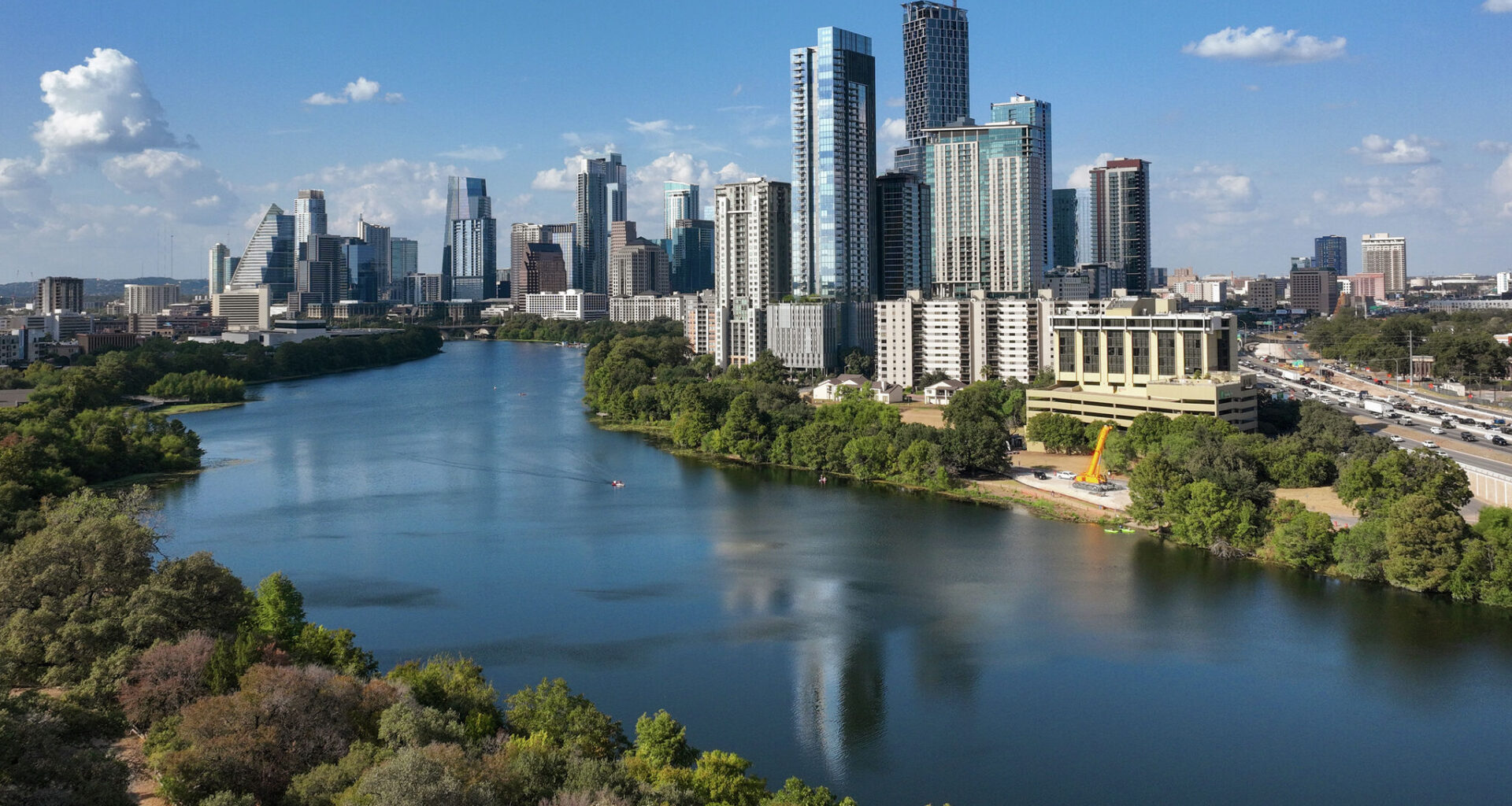
The top 10 neighborhoods for home sales in Austin during May 2026 include areas in Central, East and North Central regions, with Bouldin Creek, Clarksville and East Austin leading the list.Several of the highest-selling neighborhoods feature a mix of historic homes, walkable streets and proximity to downtown, attracting a diverse range of buyers.Rapid redevelopment and adaptive reuse projects are driving increased buyer interest in traditionally industrial or working-class neighborhoods, especially in East and South Austin.
The Austin metro housing market may have cooled, shifting in buyers’ favor, but not every neighborhood is slowing down at the same pace.
Even as higher mortgage rates and increased inventory have reshaped the local market over the past year, demand remains concentrated in some of the city’s most established and sought-after neighborhoods. From historic Central Austin enclaves to rapidly evolving districts east of Interstate 35, certain pockets of the city continue to account for an outsized share of home sales.
Article continues below this ad
Data compiled by UnlockMLS and the Austin Board of Realtors identifies the 10 top-selling residential submarkets within Austin city limits, highlighting where buyers have been most active.
Notably, the data does not account for neighboring cities, a few of which sold at a higher volume than Austin during April and May.
Within Austin, the strongest performing submarkets span a variety of price points and housing styles. While metro-wide housing statistics can paint a broader picture, neighborhood-level data can reveal more nuance in the market.
Here’s a look at the 10 Austin submarkets — and their respective ZIP codes — where the most homes were sold in May 2026.
Article continues below this ad
10. Crestview/Brentwood — 78757
A MetroRail train stops at the Crestview Station, located close to the Crestview and Brentwood neighborhoods.
Jay Janner/Austin American-Statesman file photo
Crestview and neighboring Brentwood exploded during Austin’s post-World War II expansion, offering affordable homes for families seeking more space north of downtown. Today, the adjoining neighborhoods remain known for their classic ranch-style homes and strong neighborhood associations.
Article continues below this ad
The neighborhoods are among North Central Austin’s more walkable communities, with residents enjoying easy access to local restaurants, neighborhood parks, grocery stores and the MetroRail’s Crestview Station, which provides transit connections to downtown.
9. Allandale — 78731
Developed primarily during the 1950s and 1960s, Allandale has become one of Central Austin’s quintessential mid-century neighborhoods. Wide streets, ranch-style homes and towering pecan and oak trees define the community, which was built on land once owned by George Washington Davis, an early Austin civic leader.
Many early homes in the area have been renovated or replaced in recent years, but Allandale has managed to maintain its suburban feel despite sitting just a few miles from downtown.
Article continues below this ad
Allandale is known for its family-friendly atmosphere, neighborhood parks and convenient access to bustling Burnet Road. The area is not as walkable as others on this list, but nearby bike routes provide additional transportation options.
8. St. Elmo/South Congress — 78745
Apartments and condominiums in the St. Elmo neighborhood, pictured from above.
Jay Janner / American-Statesman
The St. Elmo and South Congress area has undergone one of Austin’s most dramatic transformations over the past decade. Historically home to warehouses, light industrial businesses and manufacturing facilities, the district has evolved into a mixed-use neighborhood filled with apartments, offices, breweries, restaurants and sports facilities. Adaptive reuse is a major component of the neighborhood’s character, including the popular St. Elmo Arts District made up of former warehouses that have since turned into pickleball courts, a bourbon distillery and more.
Article continues below this ad
Many residents are able to easily walk or bike to restaurants, coffee shops and entertainment venues along the popular South Congress corridor. Nearby access to Interstate 35, U.S. 290 and public transit also makes commuting relatively convenient. Easy access to Austin-Bergstrom International Airport is also a plus.
7. Cherrywood — 78722
A Google Earth image of Patterson Park in Cherrywood.
Patterson Park
Tucked between the University of Texas campus and Mueller, Cherrywood emerged in the 1950s as a postwar neighborhood of modest ranch-style homes. Since then, its central location and strong sense of community have attracted a mix of longtime residents, young families and professionals. Many original homes remain, and although renovations and infill development have gradually added new housing, the neighborhood’s mid-century identity remains strong.
Article continues below this ad
Cherrywood is known for its walkable streets and easy access to neighborhood coffee shops, restaurants and Patterson Park. Cyclists also benefit from convenient connections to downtown and the UT campus.
Westlake and West Lake Hills feature luxury homes nestled along the Balcones Escarpment, pictured here.
Jay Janner/Jay Janner / American-Statesman
6. Westlake/West Lake Hills — 78746
Bordering downtown across the Colorado River, the Westlake neighborhood and the city of West Lake Hills have long been known for attracting buyers who want to get their money’s worth. The areas offer luxury living, scenic Hill Country views and access to some of the region’s highest-performing public schools.
Article continues below this ad
Much of the area developed in the later half of the 20th century as Austin expanded westward, with neighborhoods built around winding roads, wooded lots and the Balcones Escarpment. Strict development standards and environmental protections have helped preserve the area’s natural character while limiting explosive growth.
Unlike many of Austin’s urban neighborhoods, Westlake is largely car-dependent, but residents enjoy quick access to downtown, Zilker Park and the Barton Creek Greenbelt. The area is served primarily by the highly regarded Eanes Independent School District, whose schools consistently rank among the best in Texas and the country, according to Niche.
5. Springdale — 78723
Canopy, the studio and gallery complex at 916 Springdale Road, is one of many adaptive reuse community spaces born in the Springdale neighborhood.
Austin American-Statesman
Springdale, located in East Austin, has evolved from a largely industrial and working-class area into one of the city’s fastest-changing neighborhoods. The area has seen increasing residential development alongside adaptive reuse projects that have transformed former industrial buildings into creative workspaces, breweries and small businesses. Its location east of downtown has made it a focal point for new investment as Austin grows.
Article continues below this ad
While quieter than some of Austin’s older, more central neighborhoods, Springdale is gaining appeal because of its proximity to downtown, Govalle Park, the Southern Walnut Creek Trail and nearby entertainment districts. Walkability varies throughout the neighborhood but continues to improve as mixed-use development expands. Buyers are drawn to Springdale for its mix of newer homes and redevelopment opportunities, and its location is more central than other rapidly developing parts of Austin.
4. Hyde Park — 78751
Hyde Park Bar & Grill, which features a tall fork as part of its signage, has operated in Central Austin since 1982.
AMERICAN-STATESMAN FILE
Established in the 1890s as Austin’s first planned suburb, Hyde Park was designed around streetcar service that connected residents to downtown and was intended to provide a “pastoral” lifestyle. Promotional materials from the time period described Hyde Park as the “fashionable part of the wealthiest and most aristocratic city in the land,” according to the Hyde Park Neighborhood Association’s website.
Article continues below this ad
The neighborhood still reflects that era, with tree-lined streets, Queen Anne homes, Craftsman bungalows and one of the city’s largest collections of historic residences. Several properties and districts are locally designated landmarks, helping preserve the neighborhood’s architectural character.
Hyde Park remains one of Austin’s most walkable neighborhoods thanks to its compact blocks, mature tree canopy providing shade and neighborhood commercial districts along Duval Street and 43rd Street. Residents enjoy easy access to cafes, restaurants and Shipe Park while remaining just north of the University of Texas campus.
3. East Austin — 78702
Bikers peddle past a newly constructed condo near a bungalow home on Rosewood Avenue. Gentrification of East Austin neighborhoods is evident in the eclectic mix of home styles and local businesses the area attracts.
Bronte Wittpenn/Austin American-Statesman
East Austin encompasses a collection of neighborhoods whose history reflects both cultural resilience and rapid transformation. For much of the 20th century, discriminatory city policies concentrated Black and Hispanic residents east of Interstate 35, fostering generations of locally owned businesses, churches, music venues and community institutions.
Article continues below this ad
In recent decades, the area has experienced significant redevelopment, bringing new housing, restaurants and retail while also fueling conversations about affordability and displacement.
Despite its size, East Austin shares several characteristics that continue to attract buyers: close proximity to downtown, an expanding network of trails and bike lanes, and a growing collection of restaurants, breweries and neighborhood businesses. Walkability varies by district but is generally strongest near East Sixth Street, East Cesar Chavez and the Holly area.
2. Clarksville — 78703
Clarksville sits directly west of downtown and boasts a mix of high-end homes and busy retail districts. Jeffrey’s has been a fine neighborhood staple for more than 50 years.
PROVIDED BY JUSTIN COOK
Founded in 1871 by formerly enslaved man Charles Clark, Clarksville is one of the nation’s oldest surviving freedmen’s communities and one of Austin’s most historically significant neighborhoods.
Article continues below this ad
Located just west of downtown, Clarksville has endured decades of redevelopment pressure, including the construction of MoPac, while residents fought to preserve its historic homes and cultural identity. Many original cottages remain, and the area has been listed on the National Register of Historic Places since 1976.
For today’s buyers, Clarksville provides a uniquely urban lifestyle for those who also want the quiet of neighborhood living. Sidewalk-lined streets connect residents to West Sixth Street businesses, Pease Park, downtown and neighborhood cafes without requiring a car. Students living in the area are generally zoned to Mathews Elementary, O. Henry Middle School and Austin High School.
1. Bouldin Creek — 78704
St. Annie’s African Methodist Episcopal Church in Austin’s Bouldin Creek neighborhood is representative of the area’s history.
Austin American-Statesman
Just south of downtown, Bouldin Creek is among Austin’s most walkable neighborhoods, with easy access to South Congress Avenue, South First Street and Lady Bird Lake. Residents can walk or bike to restaurants, coffee shops, music venues and parks while remaining minutes from downtown. Students in the area are zoned to attend Austin ISD schools, including Travis Heights Elementary School, Lively Middle School and William B. Travis High School.
Article continues below this ad
Bouldin Creek is one of Austin’s oldest neighborhoods and traces its roots back to the early 1800s, when James E. Bouldin purchased 1,000 acres of land south of the Colorado River. Most residential development arrived in the 1920s and 1930s, and the neighborhood became home to a diverse mix of Black, Hispanic and working-class families because its location south of the river left it prone to flooding.
Today, that history is still visible in landmarks such as the St. Annie African Methodist Episcopal Church, the Texas School for the Deaf and a collection of early bungalows and Victorian homes that have survived alongside newer construction.