
October 2022Temple plans announced
In October 2022, The Church of Jesus Christ of Latter-day Saints announced plans for a new temple in northern Texas at a general conference, initially choosing Prosper.
The temple was one of 18 announced at the conference to be built around the world, including South Korea, Nigeria and Guatemala. The church’s construction of temples has accelerated, with 200 new temples announced in the past seven years by former church president Russell M. Nelson, according to the church’s website.
In December 2023, the church announced it was moving the proposed temple site to Fairview and calling it the McKinney Texas Temple.
According to the church, membership in the Dallas-Fort Worth area has quadrupled since the Dallas Temple was dedicated in 1984. The Dallas temple is the only operating in North Texas, and another temple is under construction near Fort Worth.
Laurie Joseph/Staff Artist
Spring 2024Early opposition
In March and again in May 2024, the church hosted community open houses to share information, answer questions and hear concerns, according to previous reporting.
Some residents expressed opposition to the temple’s size at the open house, WFAA reported. They wore green shirts that read “Fairview United” and “Keeping it Country and not an inch more,” which includes a reference to the town’s motto.
About a week after the May open house, the Fairview Planning and Zoning Commission voted to recommend the Town Council reject the church’s proposal for a conditional use permit to build the temple in a residential area where zoning laws allow buildings up to 35 feet high.
A program is seen during the Fort Worth Texas Temple groundbreaking ceremony at The Church of Jesus Christ of Latter-day Saints, Saturday, Oct. 28, 2023, in Burleson. Chitose Suzuki/DMN
June 2024Residents speak out
On June 4, debate over the church’s construction continued when hundreds attended a Town Council meeting. Dozens spoke at a public hearing about the church’s permit request, about 25 in opposition and six in favor, town documents show.
While members of the church have said the proposed temple would accommodate the church’s growing population, opponents said a building of that size would look out of place in a residential neighborhood.
The council decided to continue the discussion at its Aug. 6 meeting and give the church time to revise its plans.
In July, church and city officials met to try to reach an agreement, but were unsuccessful.
The church offered to reduce the temple’s height by 15 feet and change its name, but town representatives did not support the proposed changes.
Former Fairview Mayor Henry Lessner, who had spoken out against the new temple, said the town would allow the church building to reach 42 feet and the top of the spire to reach 68 feet, but church officials rejected those dimensions.
A council meeting in Fairview, Texas, Tuesday, August 6, 2024. Accasia’s Event Venue in Fairview is where the council voted on whether The Church of Jesus Christ of Latter-day Saints could build their proposed temple. Anja Schlein/Special Contributor
August 2024Permit denied
On Aug. 6, the Fairview Town Council denied the church a conditional use permit for the proposed temple after a four-hour meeting held in an event space rather than the town hall to accommodate a bigger audience.
The space was filled with people dressed in white or green shirts to show their support or opposition to the proposed temple. Hundreds more gathered outside the building or watched the meeting online.
After more than 70 people spoke, the council decided to deny the permit request.
Church members argued that the temple is protected under state and federal law and arguments by the opposition are misinformed. Some religious institutions in the town have been permitted to exceed 35 feet in height, and the church says laws allow religious organizations to ask for additional height for a house of worship.
Those against the temple raised concerns at the meeting about the potential impact on property values, lighting and traffic. The church maintains that temple engineers and architects have complied with the town’s ordinances in its plans, including those regarding lighting and land use.
Related: Why does the Church of Jesus Christ of Latter-day Saints want a new temple in North Texas?
“We are disappointed with tonight’s vote by the Fairview city council and express gratitude for the tireless efforts of those who worked to provide correct and positive information to the community about the temple project,” the church said after the council’s decision.
The church said the vote is “part of an ongoing process seeking building approval,” and a spokesperson said the church is evaluating its options for the next steps.
A letter sent to the Town Council in August from church lawyers Richard Abernathy and Jared Pace states temple sites are selected “under the direction of the Lord.” Temple architecture reflects the church’s belief that the temple is “literally the house of the Lord,” the letter states, and the architecture, particularly the steeple, reflects the church’s belief in looking up and ascending to God.
“Religious freedom outweighs subjective concerns about aesthetic appearance and neighborhood character,” the letter states, citing the Texas Religious Freedom Restoration Act and the federal Religious Land Use and Institutionalized Persons Act.
The city council meeting in Fairview, Texas, Tuesday, August 6, 2024. Accasia’s Event Venue in Fairview is where the council voted on whether The Church of Jesus Christ of Latter-day Saints could build their proposed temple. Anja Schlein/Special Contributor
October 2024Legal threats
After the council’s denial, Lessner told The Dallas Morning News editorial board his office received notice that two church members planned to file a lawsuit against the town. The planned lawsuit, which came from individuals and not the church itself, had not been filed as of mid-October, Lessner said.
Art Rascon, a church leader, said at the time the church had taken no official action against the town of Fairview and was still considering all its options. Lessner said the church has said “several times” it would sue the town if officials don’t approve the proposed building.
In October, Fairview created a defense fund for legal costs in anticipation of a lawsuit from the church over the town’s denial of the permit for the temple.
The Zoning Defense Fund, meant to protect the town’s zoning ordinances from potential litigation, collects donations from the public through the town’s website. Present Town Council members unanimously voted to approve the fund in an Oct. 2 meeting.
Fairview Mayor Henry Lessner listens to speakers during a city council meeting in Fairview, Texas, Tuesday, August 6, 2024. Accasia’s Event Venue in Fairview is where the council voted on whether The Church of Jesus Christ of Latter-day Saints could build their proposed temple. Anja Schlein/Special Contributor
November 2024Compromise reached
Fairview and church leaders met in November to mediate the dispute and avoid a lawsuit. In a non-binding memorandum of settlement, the church proposed decreasing the temple’s height by around 54 feet.
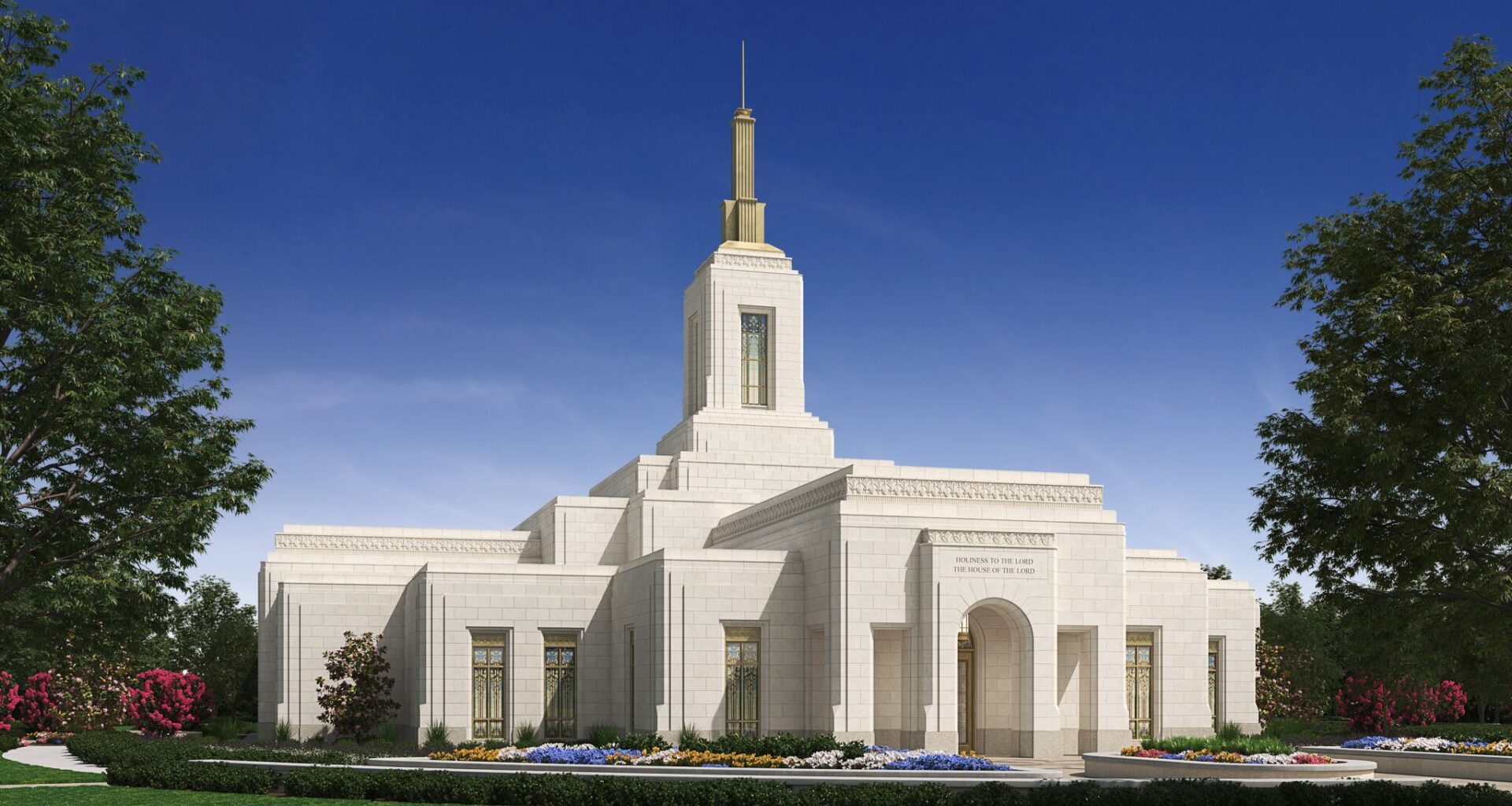
The new proposed temple is around 30,000 square feet with a steeple height of 120 feet, according to Melissa McKneely, spokesperson for the McKinney Texas Temple.
“They significantly changed the configuration, the design of the building,” Lessner said. “It’s quite an attractive building and they made a significant change.”
A rendering of the Fairview Texas Temple, 120-feet tall and about 30,000-square-feet large. The Church of Jesus Christ of Latter-day Saints submitted plans for this version, a compromise from the original plan, to the town of Fairview, Texas, on Tuesday, March 25, 2025. Courtesy/The Church of Jesus Christ of Latter-day Saints
December 2024Residents still unhappy
Fairview put the new building design up for public discussion in December, where the proposed compromise met opposition from residents and neighbors.
Some expressed dissatisfaction with the concessions made under threat of a lawsuit from the church, according to town officials. Many expressed concerns the structure is still too tall and asked why the church wouldn’t consider building in a commercial area. Several people asked the council not to end negotiations.
Residents also expressed concerns that allowing a tall building would set a precedent for other religious institutions to ignore the town’s zoning laws in the name of religious freedom.
Mayor Pro Tem John Hubbard said the church is using religious freedom laws as “a sword instead of a shield.” He said there’s a lot to lose in a legal battle with the church, as legal fees could cost millions of dollars.
Members of the Fairview United group against the temple proposal gathered on the steps of Town Hall to sing Christmas carols, including an original score, to continue support of the Zoning Defense Fund.
Michael Hogue/Staff Artist
Early 2025 Church plans lawsuit
The church planned to present its new application to the town but missed its deadline. Church representatives told Fairview leaders they were concerned the town would not honor the nonbinding agreement and told the town of their intent to file a lawsuit, citing the Texas Religious Freedom Restoration Act. The church said the town violated its rights to free exercise of religion and nondiscrimination in land use regulation.
“While it continues to be the Church’s hope that this matter can be worked out amicably, in the face of continued and unreasonable opposition, it appears the Church has no choice but to defend its rights in court,” the letter states.
In a February statement, Lessner pleaded with church leaders to reach a “common understanding” and avoid a lawsuit. The mayor said he’d travel to Utah, where the church is headquartered, to meet with leadership.
The church rejected the mayor’s request for a meeting in Salt Lake City.
Related: Fairview to launch campaign on height of Church of Jesus Christ of Latter-day Saints’ temple
In March, the president of the Allen stake of the church, Daniel Trythall, sent a letter to the Town Council formally seeking reassurance that it would honor a compromise for a smaller temple. Upholding the agreement would make “judicial assistance” unnecessary, he wrote.
After a 60-day waiting period from its initial notice, the church had plans to sue the town as soon as March 28 if the compromise is not reaffirmed.
On March 25, church officials announced it would resubmit plans for a new temple, possibly forestalling the threatened lawsuit over the height of the spire.
“In building sacred temples, The Church of Jesus Christ of Latter-day Saints always seeks to cooperate with communities while exercising its fundamental rights of worship,” the church said in a statement sent by McKneely. “We look forward to continuing our association with the community as good neighbors and friends.”
People wait outside Fairview City Hall for a meeting discussing the McKinney Texas Temple at Fairview’s council chambers in Fairview, Texas, Thursday, April 24, 2025. Anja Schlein/Special Contributor
April 2025Town approves permit
Fairview’s planning and zoning commission voted unanimously April 24 to recommend the Town Council approve the new application with significant conditions, including reducing the height, renaming it the Fairview Texas Temple and restricting the building’s lighting at night.
On April 30, the Town Council voted 5-to-2 just after midnight to approve the church’s permit application if it follows conditions set earlier by the planning and zoning commission — with one significant exception: The council said it would allow the church to build a spire reaching 120 feet, not the 68 feet the commission recommended.
The decision came after more than five hours of debate over the height of the now renamed Fairview Texas Temple. Hundreds watched at Town Hall and online as the temple’s fate was decided.
“It’s not what we wanted,” Lessner said after voting in favor of the permit. “But the threat of a lawsuit and our fiduciary duty to the town … five of us figure we don’t have any choice but to go forward with this.”
Stephen Drye, a Fairview resident and church member, was relieved by the council’s vote.
“It is extremely good to know that it’s over,” Drye said after the meeting. “They made the right decision, because it would have been devastating had it gone any further. I hate the idea of a church having to sue somebody, but at some point you have to stand your ground.”
Azul Sordo/DMN
Summer 2025Residents challenge vote
Several weeks after the council voted to approve the permit, a group of Fairview residents filed an appeal with the town’s Zoning Board of Adjustment challenging the validity of the vote.
Fairview United called the approval a “procedural failure,” asserting in a statement that by law, at least six votes were needed to approve the permit application because a group of property owners near the temple site protested to the town in writing.
The town responded that not enough property owners protested, but residents disagree and say the town miscalculated.
In June, the residents elevated their appeal to a Collin County district court, filing a lawsuit challenging the validity of the council’s decision. The court later found the town’s ordinance was valid.
Fairview resident Alycia Kuehne, right ,listens during a town council meeting at Fairview Town Hall, Tuesday, Dec. 3, 2024, in Fairview, regarding the non-binding settlement agreement with the Church of Jesus Christ of Latter-day Saints. Chitose Suzuki
February 2026Church breaks ground
The church celebrated the groundbreaking of the Fairview Texas Temple in a private ceremony and expects to complete construction in three years.
“A temple in our community stands as an open invitation for all to come unto Christ, who is at the center of all temple worship,” Bishop Nolan Godfrey, a local church leader, said in a statement. “What a tremendous blessing this temple will be for all who see it, walk its grounds, and enter within.”
The temple is expected to cost nearly $9.4 million, according to filings with the Texas Department of Licensing and Regulation. The church has not officially announced the estimated cost of the temple.
Fairview Mayor John Hubbard said at the time he hopes the town “can put all this behind” and sees the outcome as a win for everybody.
“We’re neighbors. Let’s work together and just do like we were doing before all this,” he said. “It was done. We came up with this compromise. I know it was a little contentious for a while, but it was done. Let’s celebrate it as a community.”
Signs displayed at the construction zone of the Fairview Texas Temple by the Church of Jesus Christ of Latter-day Saints, on Tuesday, May 12, 2026 in Fairview. Shafkat Anowar/DMN
June 2026Opposition campaign launches
Over a year after the temple’s permit was approved, Fairview’s town leaders have launched a public awareness campaign called “Fairview Speaks” in opposition to the temple height in the hopes the church will voluntarily lower the spire.
Fairview Mayor John Hubbard said he hopes a marketing campaign will convey to the church and its top leadership that the height is not popular, even if approved by the council.
“We feel like we’ve been bullied,” Hubbard said. “The council members that voted for the temple height felt like they had no other choice because they were going to get litigated and sued and it would bankrupt the town.”
In a May letter responding to the mayor’s request that the church lower the height of the temple, the executive director of the church’s temple department wrote the church is unable to agree to the town’s request and asked the town “to honor its commitment to support the approved design.”
“My church, through this whole process, has done nothing but follow the law,” said church member and Fairview resident Nikki Butler. “To have more contention stewed up in a campaign against our church for a place of worship, it feels very confusing and disheartening.”
Fairview Mayor John Hubbard speaks at a news conference where town leaders launched a marketing campaign called FairviewSpeaks. The campaign urges The Church of Jesus Christ of Latter-day Saints to reconsider the height of the 120-foot temple under construction in the town. Courtesy/Town of Fairview