
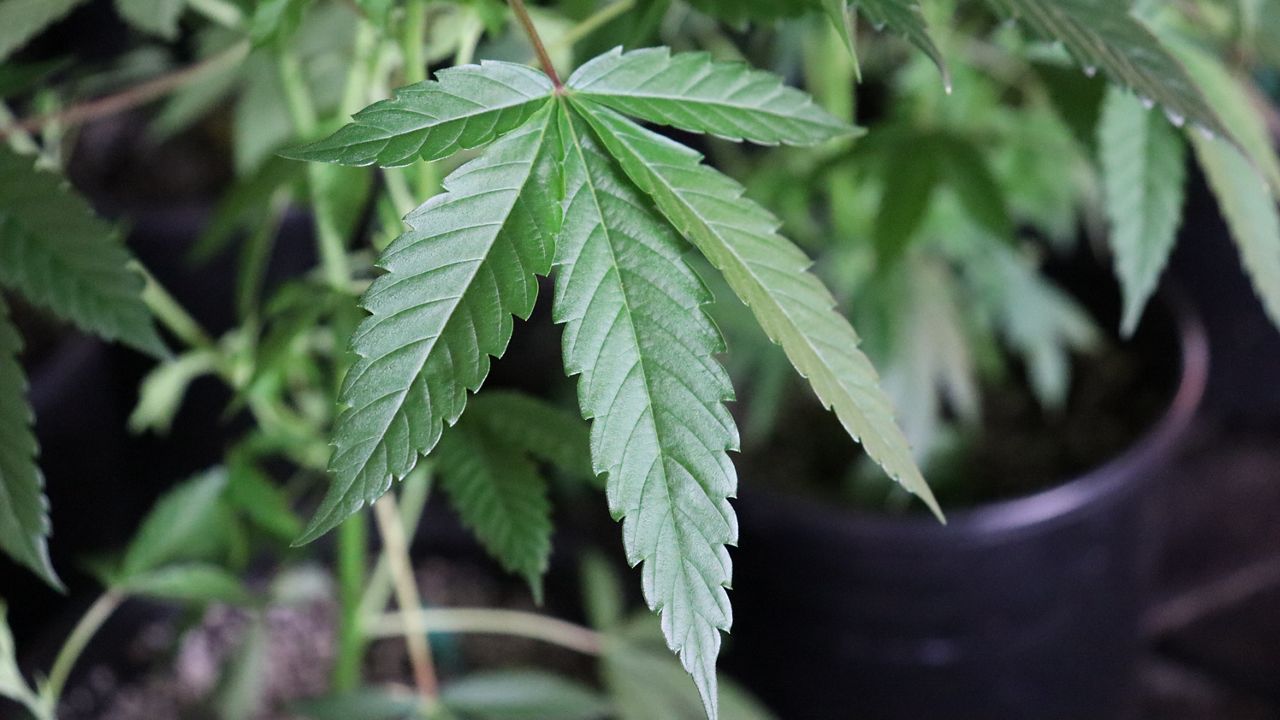
TEXAS — Lawmakers revisited a highly debated topic ahead of the 2027 legislative session — THC.
In a Texas Senate Health and Human Services Committee hearing, lawmakers discussed the “societal impacts of THC product consumption,” as posted by the Texas Legislative Reference Library.
“It was clearly focused on the harms of THC,” said Katharine Harris, a drug policy fellow from the Baker Institute at Rice University.
Some witnesses touched on their loved ones facing addiction, and doctors also testified on the number of cases they see in the emergency room every year from underage THC usage or accidental exposure.
Dr. Manda Hall shared that there were over 6,000 calls to the Poison Control Center for THC exposure for kids ages 0-19 from January 2021 through last May.
Harris says the research and data presented at the hearing were very much valid, showing the risks with THC usage, but she said there could have been an advocate showing the benefits of THC.
There were no advocates for THC on the invited witness list.
“I think certainly advocates were probably frustrated with the fact that their voices were excluded from that process,” Harris said.
State Sen. Charles Perry, R-Lubbock, however, said he is fed up with the hemp-derived THC products that have filled the shelves of smoke shops across the state.
“It was an agricultural product that showed promise in a market for construction, for fiber replacements,” he said, recalling the original intention of using hemp when it was introduced in the 2018 Farm Bill.
But as hemp-derived THC products took the spotlight, he is repeating an effort from the last legislative session — banning hemp-derived THC.
“We’re going to put enforcement in every agency that’s tied to this,” he said. “My patience has run thin.”
However, not all THC is under fire. Perry stated that the only THC products that should be sold in Texas should come from the Texas Compassionate Use Program (TCUP), the state’s medical marijuana program.
“Having products in an unregulated industry is a danger,” said Dr. Robert Marks. “TCUP can provide a safe space where patients can know they’re going to get safe, quality products. They don’t need to worry about other components they may not be looking for.”
Marks is a registered physician under TCUP and is the CEO of Diagnostic Pain Center, where he prescribes medical marijuana products to patients.
“Looking at how we’re able to get patients alternative options to dangerous drugs like opioids, it makes a lot of sense to really keep everything going through the TCUP program,” he said.
TCUP has grown extensively since its creation law was passed in 2015.
When the program opened to patients in 2017, only four people were registered as patients, according to the Texas Department of Public Safety (DPS). As of June this year, there were almost 158,000 patients.
The program also expanded its list of eligible conditions, most recently adding chronic pain in an expansion bill passed last year by the 89th Legislature through House Bill 46. Marks said he has seen an increase in patients at his clinic.
“What I find in our practice,” Marks started, “it hasn’t just displaced opioids for patients. I see a lot of patients that would benefit from interventional pain management procedures, but they end up getting in the Texas Compassionate Use Program. They no longer need to pay for the procedures — they no longer need the procedures.”
As lawmakers look to TCUP as the only source of THC in the state, Harris says another bill expanding the program may not happen so soon after the last expansion bill.
“It’s possible that DPS might, in this time period, go to the Legislature and be like, ‘hey, can you fix this part of it that we need in order to make this program operational?’ As far as a broader expansion for patients, I don’t know that I would expect that this session,” Harris said.
Marks and Harris, however, have recommendations for the program.
Lowering the cost of products, expanding the list of eligible conditions through agency rules and decreasing the stigma on doctors recommending marijuana for conditions, according to both, could help move the program forward.
Perry said that, along with the bill he will file to ban THC products in the next legislative session, he will also aim to have better tracking systems of THC exposure incidents and the costs associated with them.