
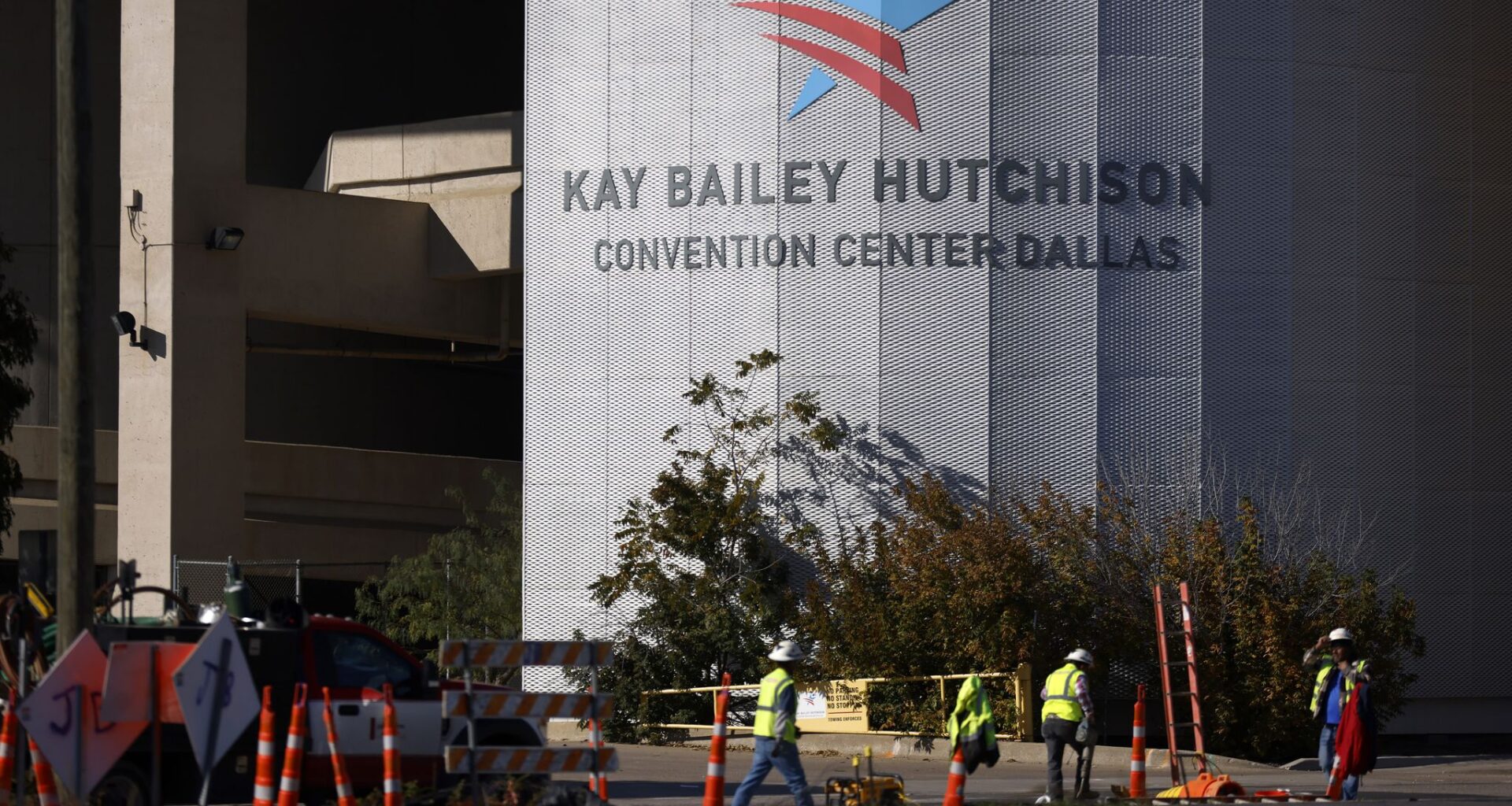
Crews work on the streets near the Kay Bailey Hutchison Convention Center in downtown Dallas, December 2, 2024.
Tom Fox/Staff Photographer
Dallas’ expanded convention center could one day bear a corporate name, much like AT&T Stadium and the American Airlines Center.

While city officials have been busy revamping the Kay Bailey Hutchison Convention Center, they have also been trying to figure out how to pay for the project.
Selling naming rights could help.
Article continues below this ad
Putting a company name on a building can bring in between $7 million and $15 million a year in revenue for stadiums. American Airlines paid $150 million three decades ago to stamp its name on the current home of the Dallas Mavericks and Dallas Stars.
For local officials facing tight budgets, these deals present an opportunity to fund buildings — like the convention center — that struggle to cover all its maintenance and operating costs.
Now with an expanded facility, Dallas officials hope to lure big events from top cities, such as Chicago and Las Vegas.
The convention center redevelopment is projected to cost up to $3.8 billion, with $2 billion funded through bonds. The city must rely on other sources to cover the rest.
Article continues below this ad
A portion of the funding — about $665 million — is expected to come from selling assets and naming rights and getting loans from the state. When it came up in January, council member Gay Donnell Willis sought details about what share the naming rights would make up.
Assistant City Manager Robin Bentley said a “large percentage” would come from selling the name.
The center was named in 2013 for former U.S. Ambassador Kay Bailey Hutchison, a Republican and the state’s first female senator.
It is unclear whether a naming-rights deal would remove the Hutchison’s name from the convention center or incorporate it into new branding. Now retired in Dallas, Hutchison didn’t return emails seeking comment.
Why naming rights?
Dallas tapped venue management company Legends Global last year to study naming rights opportunities, public records show. Officials didn’t respond to questions about the findings of the study, and they have not said how much money the city could charge.
Article continues below this ad
But there are several ways the effort could work.
A new name could cover the entire convention center. Or, rights could be parceled out by meeting room or exhibit hall space.
In recent years, the city has agreements with philanthropic groups and corporate entities for Halperin Park and the city’s planned police academy.
In Fort Worth, officials are hoping their own negotiations will yield $450,000 to $500,000 annually to cover the costs of running the convention center. Over a decade, that adds up to $5 million the city otherwise wouldn’t have.
“When you add that to current revenues for the convention center, it’s not insignificant,” said Mike Crum, Fort Worth’s public events deputy director.
Article continues below this ad
Detroit saved
Naming rights deals are a multi-year process and typically end with branding on the building’s exterior. Cincinnati and Tulsa have renamed their convention centers after banks.
So has Detroit, which has become an example for other cities looking to sell the rights.
The city’s convention center was in serious disrepair and in a $25 million deficit in 2009. The auto show, Detroit’s largest event, was threatening to leave, said Visit Detroit CEO Claude Molinari.
The city relinquished control to the state of Michigan, which set up a regional authority to run the center. State authorities repaired the building and set up a fund that derives revenue from regional hotel and liquor taxes.
Article continues below this ad
About a decade later, the convention center was generating a small profit and the deficit had shrunk. Officials decided to sell the naming rights. They chose a number they thought was “maybe aggressive but was going to work,” Molinari said.
In the end, a bank bought the rights for $1.5 million a year, and the convention center was named Huntington Place.