
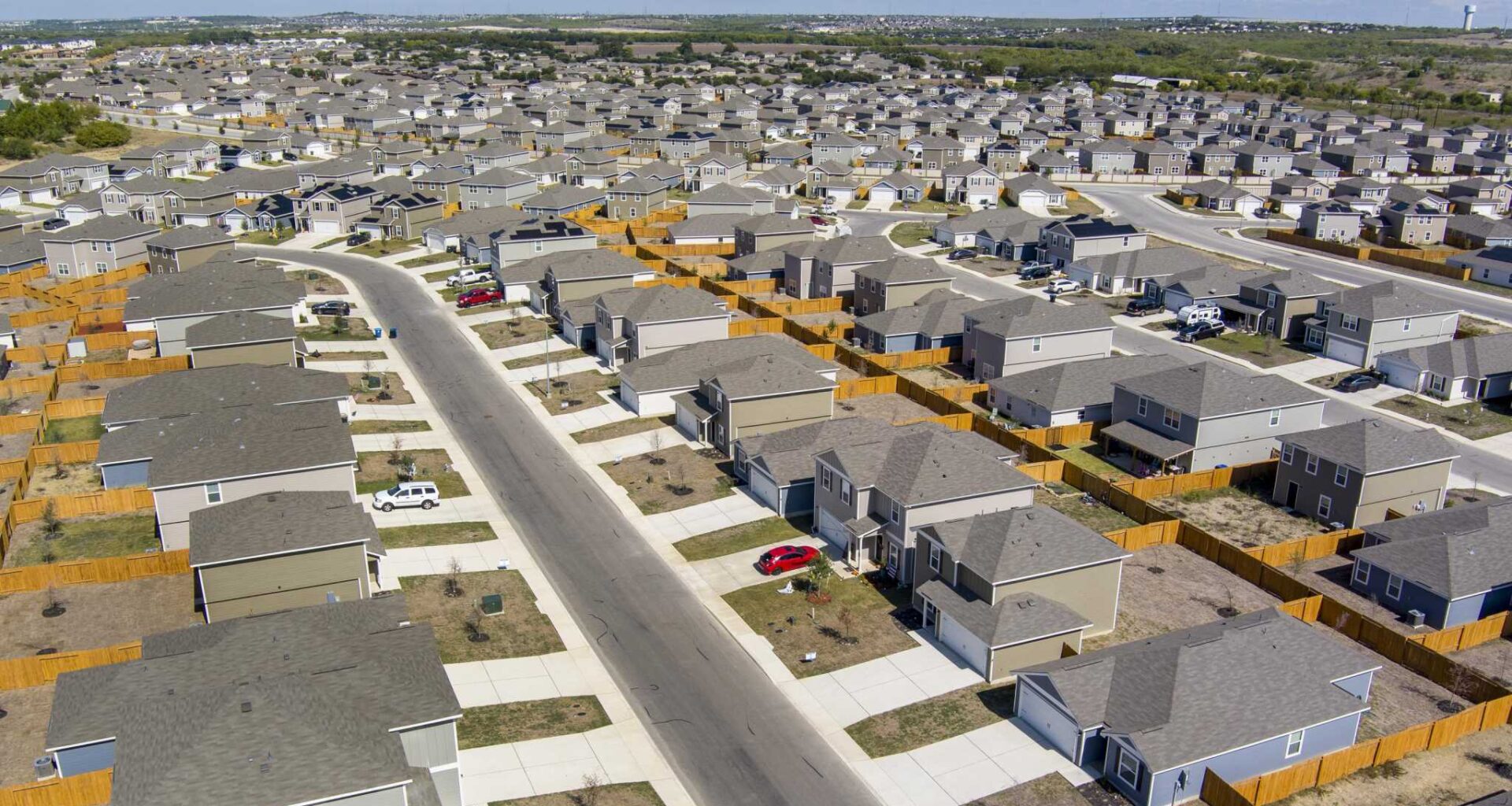
A new piece of federal legislation could help free some housing inventory from the grips of institutional investors in San Antonio.
The 21st Century ROAD to Housing Act, which went into effect Saturday, reduced federal regulations to speed up housing construction, increased access to small-dollar mortgages and blocked institutional investors from owning more than 350 single-family homes. President Donald Trump refused to sign the bill, designed to help improve housing affordability, until Congress agreed to pass legislation requiring proof of citizenship for all voters. However, he allowed it to become law.
San Antonio has one of the highest shares of corporate real estate investors in the country.
In 2025, investors accounted for nearly 16% of the metro’s home sales, with 8,549 purchases, according to a recent report from Realtor.com. This was a 1.5% increase from 2024, ranking San Antonio seventh among the country’s 50 largest metros. Memphis, Tenn., and Missouri cities Kansas City and St. Louis topped the list. Dallas-Fort Worth was the only other Texas city in the top 10, trailing just behind San Antonio with 15.6%.
The report cited San Antonio and Dallas as “deeply investor-active, sustained by population growth and a steady supply of entry-level inventory.” Investors purchased homes at a median of $225,000 in the Alamo City, against a market median of $306,000. Investor sales comprised 13.8% of total home sales in San Antonio last year.
In the first quarter of 2026, investors purchased 3,118 homes in San Antonio, according to a report from real estate data firm Cotality. Small investors with between three and nine properties made up a majority of purchases with 16.3% of all home sales, followed by medium investors with between 10 and 99 homes, with 12%. Large investors with between 100 and 999 properties made up 4.2% of purchases, and mega-investors, who own more than 1,000 properties, made up 2.1% of the market.
Investors have been buying single-family homes in San Antonio and other U.S. cities for many decades.
Real estate has been drawing investors seeking alternatives to volatility in the stock market, rising interest rates and higher inflation. A surge of investment in the sector was largely responsible for the price bubble that burst in 2007, decimating the U.S. housing market.
During the pandemic, when inventory was historically low, buyers were going up against investors, fighting to secure a contract, but as inventory has bounced back, the competition has eased up.
The new federal law could scare mega-investors out of the market altogether. The 21st Century ROAD to Housing Act particularly targets equity-backed investors who own more than 1,000 properties. Institutional investors already have begun to pull back in recent years, with mega-purchases down 70% compared with their 2021 peak, according to Realtor.com.