
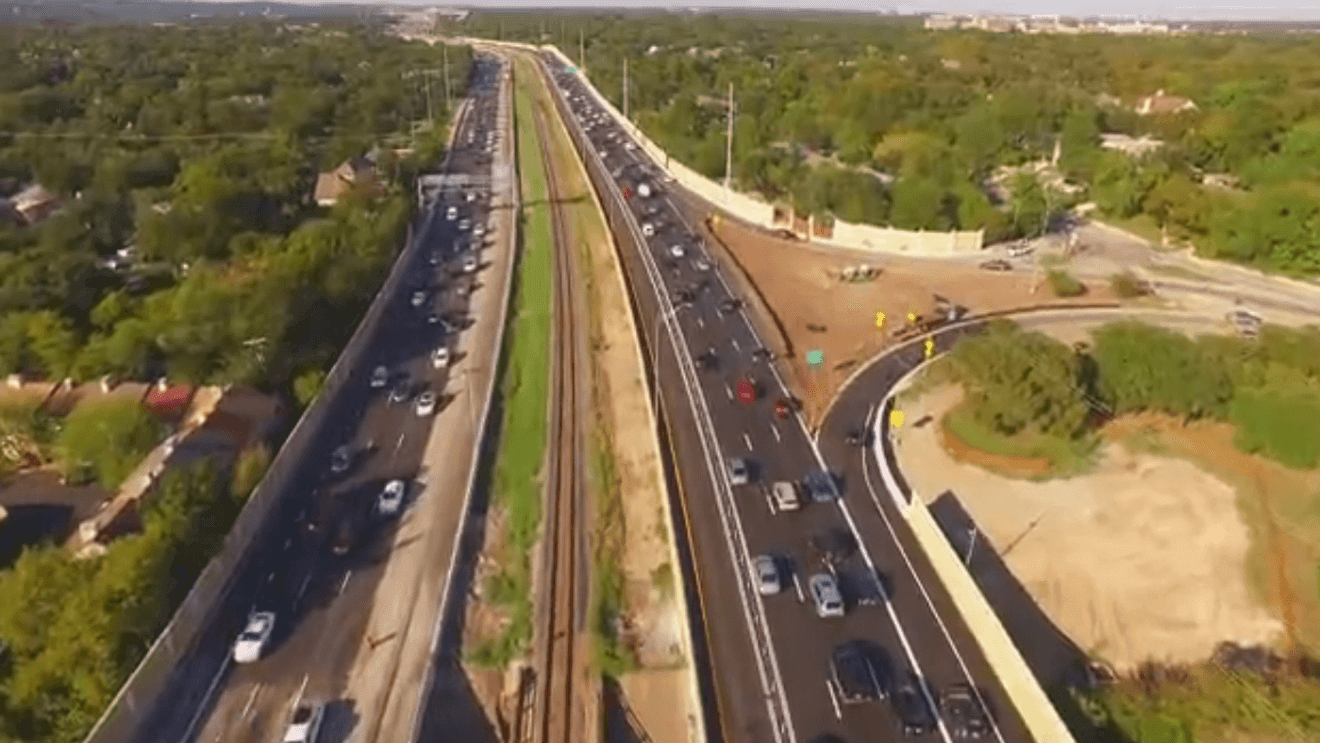
AUSTIN, Texas — The price tag for the MoPac South project has gone up by more than $400 million, and the cost increase is already raising questions from people who use toll roads.
The project would add express lanes along MoPac from Cesar Chavez Street to Slaughter Lane. When it was estimated in 2020, the cost was about $825 million. Now, according to documents from a Central Texas Regional Mobility Authority Board of Directors meeting presentation, the latest estimate is about $1.3 billion. The project would be paid for by tolls.
“I want to know if I’m going to be paying more just because their project was more expensive,” said Eric Ojeda, who uses toll roads daily.
Ben Pirtle, who also uses toll roads, said he wants to know what drivers could be expected to pay. “I would love to see some transparency on what those toll prices will be, and the time frame that they expect for it to be paid off and paid for,” Pirtle said.
Selena Kuglin said she understands costs have gone up, but wants drivers to know why. “I know the cost of construction has increased due to a lot of different things,” Kuglin said.
Still, the new price tag got drivers’ attention. “That took my breath away,” Pirtle said.
“I feel like that’s insane, you know, for a toll road, especially,” Ojeda said.
The increase is leading to questions about why the price has gone up so much, whether it will mean higher tolls for drivers, and who would be responsible if toll revenue does not cover the cost.
CBS Austin reached out to the Texas Department of Transportation for an interview. TxDOT declined and referred questions to the Mobility Authority, which is spearheading the project.
ALSO| Central Texas urged to prepare as heavy rainfall sits in forecast over next two days
KEYE
The Mobility Authority also declined an interview, so CBS Austin sent written questions.
In response, the Mobility Authority said the cost went up because the older estimate came from an earlier phase of the project. The agency pointed to the project’s current plan, inflation/higher construction costs, and new elements requested by stakeholders.
Austin City Council Member Ryan Alter, who represents District 5, said the cost raises broader questions about transportation spending.
“Are there better ways for us to invest this money and get people moving around the city? And that’s an open question that I, I don’t believe we’ve answered yet,” Alter said.
The Mobility Authority said the project will not push toll costs higher. It said toll revenue from MoPac South would be used to pay off bonds for the project and cover operations and maintenance.
But Council Member Paige Ellis, who represents District 8 and chairs the city’s Mobility Committee, said she is not convinced.
“I think it’s going to have an impact on all the other toll roads in town. So even the folks that only use North MoPac should be thinking about this cost impact,” Ellis said.
The Mobility Authority said the express lanes would be dynamically priced. That means there would be a minimum rate, and the price would change based on demand and use.
That minimum rate has not been set.
Alter said toll lanes can help manage traffic, but they also come with an added cost for drivers.
“The tolls are a way to manage those lanes and to make sure that traffic in that, those additional lanes do flow, but it’s just an added cost. It becomes kind of a premium lane for those who can afford it,” Alter said.
If toll revenue falls short, the Mobility Authority said it bears all risk and responsibility. Ellis said she wants leaders to look beyond how quickly a road can pay for itself.
“I think that we shouldn’t be building our roads geared toward how can we make our money back the fastest, but what is really the best footprint moving forward,” Ellis said.
Ellis said she wants a full environmental impact statement before the project moves forward. The project has not received environmental clearance yet.
The Save Our Springs Alliance is against the project. Bobby Levinski, a senior staff attorney with the group, said the project could affect the environment in several ways.
“It has impacts on our groundwater, our air quality; it affects 5-6 endangered species directly,” Levinski said.
The group said it hopes the Mobility Authority looks at all the options before approval. “We have to be looking for alternatives, and you know some of those alternatives could be delivered a little bit faster for commuters,” Levinski said.
Levinski said smaller changes could help drivers sooner and cost less. “If you just make some small tweaks now, you can potentially give some immediate relief to commuters while saving everybody some dollars from their pocketbooks,” Levinski said.
The Mobility Authority expects a decision in late 2026 or early 2027. If approved, the agency said design and construction could take almost a decade before the full project is built out.