
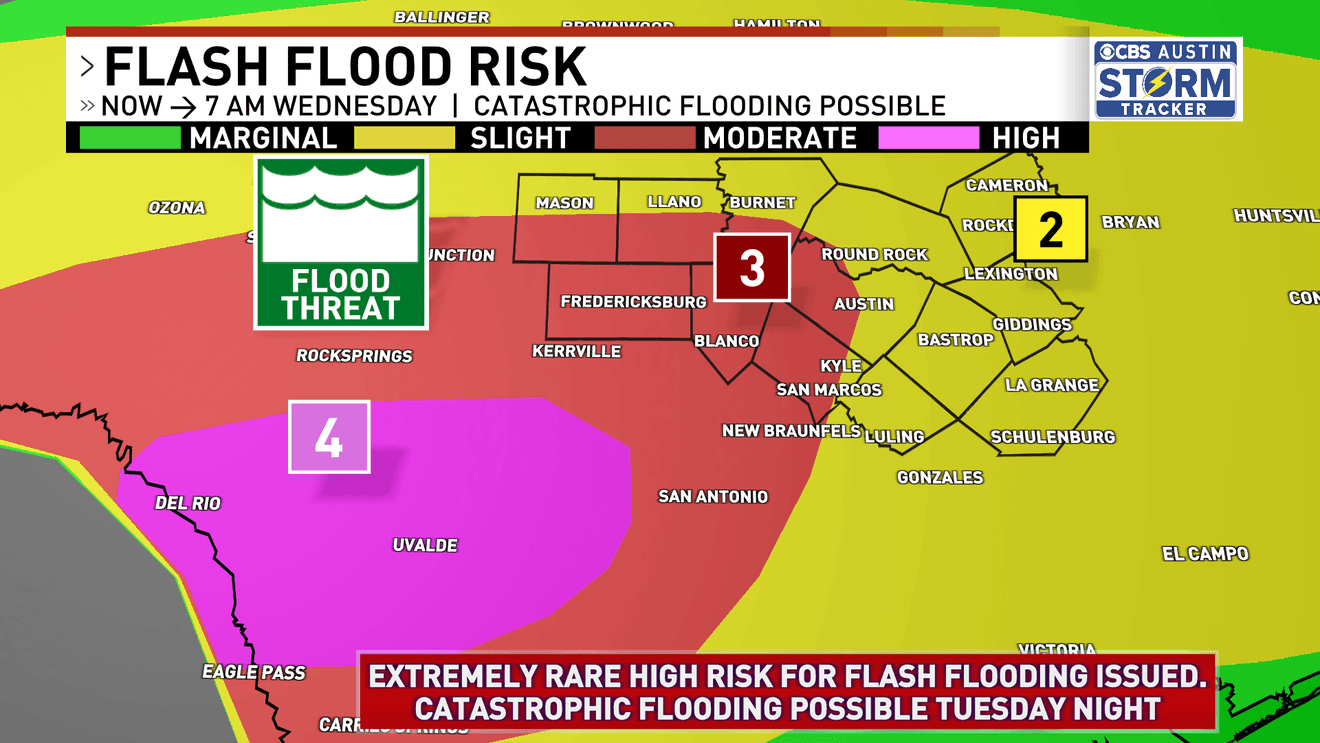
AUSTIN, Texas — Heavy rains and potentially catastrophic flooding are headed for Central Texas and areas west of San Antonio tonight.
Much of the water will fall after most people go to sleep, so it is crucial to ensure that you are opted into emergency alerts.
MORE | Central Texas urged to prepare as heavy rainfall sits in forecast over next two days
What emergency alerts should I sign up for?
Modern iPhones and Androids should automatically receive Wireless Emergency Alerts (WEA), which are issued by the National Weather Service and other federal, state, and local authorities.
These notifications are free, and no registration is required. To ensure your WEA notifications are toggled on, navigate to the Settings app on your phone.
RELATED | Gov. Abbott declares disaster in 59 Texas counties, including Central Texas
What additional alert services are available to me?
Capital Area Council of Governments (CAPCOG) created Warn Central Texas to localize emergency, weather, and community alerts.
Warn Central Texas is free and available to residents in Bastrop, Blanco, Burnet, Caldwell, Fayette, Hays, Lee, Llano, Travis, and Williamson counties.
“The public safety answering points, the emergency managers, law enforcement, fire officials, EMS, they all have access to alerting on the system,” said Martin Ritchey, Director of Homeland Security at CAPCOG. “So they have a screen in front of them with a map of their community. They can drop in a map of the whole community. They can drop in a map of just an area along a riverbank.”
Ashley Morris, Emergency Management Coordinator in Fredericksburg and Gillespie County, says residents should look to receive alerts in more than one way.
“We preach having three ways,” she said. “Three different technologies to get weather information so that if we do have outages, either cell tower or power or anything else, you will always be able to get that warning or that evacuation somehow around all the chaos that is in disasters.”
Will extra opt-ins give me duplicate alerts?
Ritchey said that registering for different alert systems can produce duplicate alerts, but he urges residents to be patient and heed any relevant warnings.
““If [an alert is] not for you, don’t let it affect your personal safety by throwing the baby out with the bathwater.,” he said. “You may receive a message that’s not intended for you, or you may not feel it’s intended for you. If that’s the case, give it forgiveness and move on to the ones that do.”