
Switzerland-based Stadler has been selected to deliver the train cars for Austin Light Rail, the third and final major vendor brought on for the project’s first stages this year.
Officials with the Austin Transit Partnership, the entity overseeing the transit program, advanced a $39 million contract with Stadler to design the fully electric vehicles July 15.
“ATP is excited to have Stadler join the Austin Light Rail team to design a vehicle with features never before delivered in the United States,” CEO Greg Canally said in a statement. “The action today demonstrates our commitment to build a light rail system that is right for Austin as ATP advances toward construction in 2027.”
The overview
The multibillion-dollar Austin Light Rail, a central piece of the Project Connect transit initiative, will run through portions of Central and East Austin with nearly 10 miles of track and 15 stations. Its financing is roughly split between local revenue from a 2020 voter-approved tax increase and federal grant funding that’s yet to be secured.
A nearly $100 million contract for Austin Light Rail delivery was approved back in 2024. The transit program cleared a federal review milestone in January, other updates authorized this year included:
Lindsay Wood, executive vice president of engineering and construction, called the vehicles contract the “third big piece of the puzzle” that’ll inform features like track slopes and curves, station platform heights and access, and maintenance features through extensive coordination.
“Now that we have the trains on board and all of their detailed specifications, our design-build contractors can design to those details to ensure a seamless interface across every element of both the light rail and the operations and maintenance facility contracts,” she said in an interview.
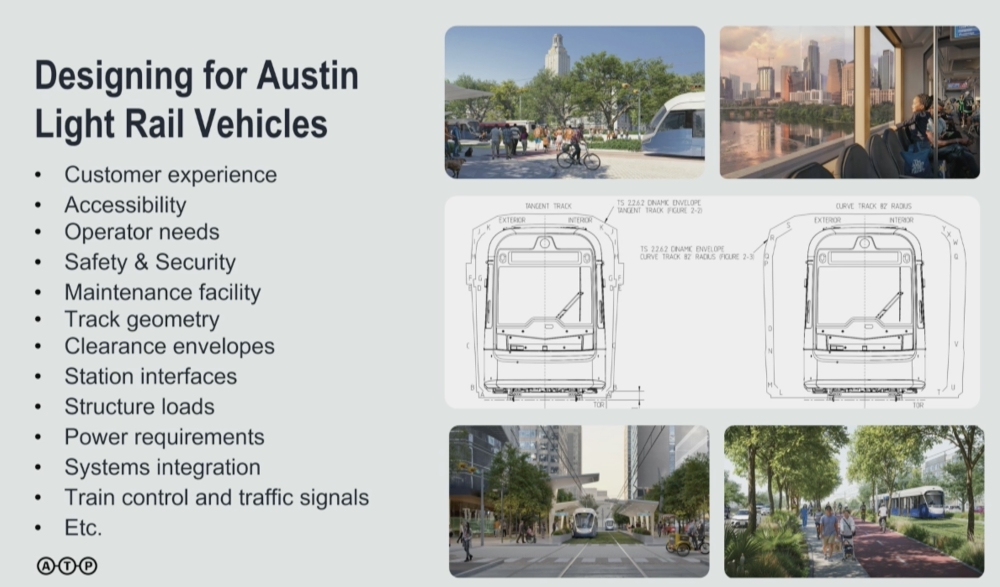 Stadler will collaborate with other Austin Light Rail contractors on multiple aspects of the transit initiative. (Courtesy Austin Transit Partnership)Zooming in
Brad Cummings, ATP’s senior vice president of procurements and contracts, said Stadler was chosen over proposals from Alstom, CAF and Siemens due to a variety of factors like car accessibility, technical qualities and public engagement. Vehicles features include:
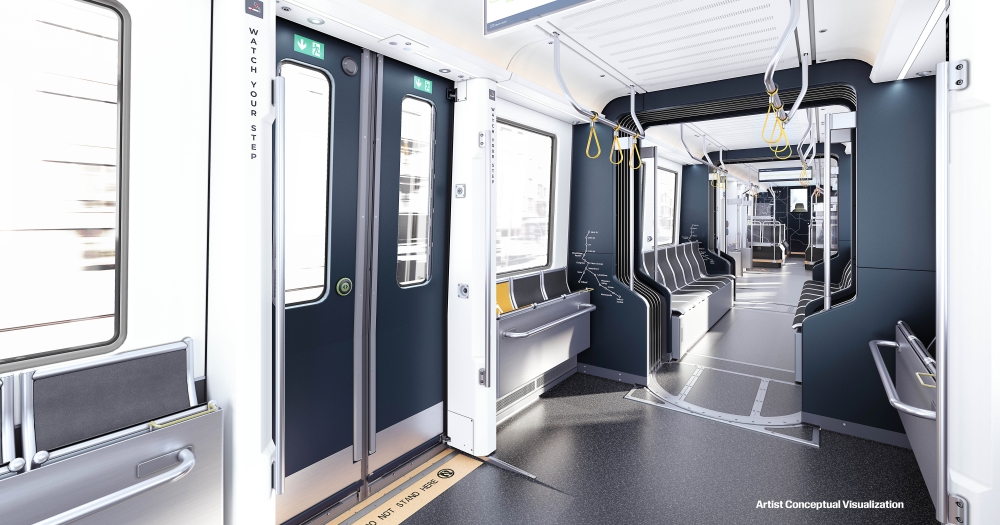
Capacity for 240-plus riders, and the ability to couple cars for special eventsNearly 100 seats, including 60 fixed, 32 flip-up and four accessible spacesLengths of 122 feet with five doors per sideOn-wire electric operationsVehicles will allow for greater rider accessibility, with level boarding access and low floors throughout most of the car area to avoid steps. Wood said those considerations are key as the vehicles represent “maybe the most customer- and rider-facing element of the entire project,” and that feedback from Austinites will inform Stadler’s final designs.
“We have the opportunity to build in design input into that process and have user groups and people with mobility challenges, or families with strollers, and people of all different abilities to provide input into the different design aspects of the train. Everything from wayfinding … to passenger information systems and seating, and even color schemes,” she said. “It’s a really exciting opportunity to make sure that the trains are ultimately right for the Austin riders.”
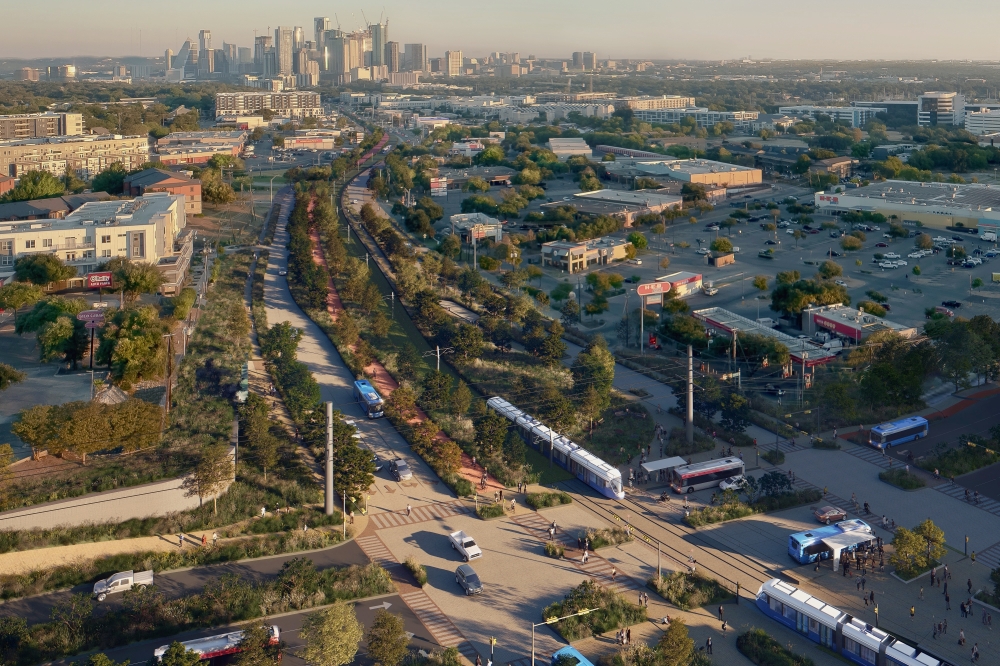 Austin Transit Partnership officials are advancing the first phase work on Austin Light Rail. (Artist conceptual visualization courtesy Austin Transit Partnership)Cummings said the stairless car aisles will be one of the vehicles’ most unique features that increases car capacity and accessibility. He also noted that a lack of steps means more overall room and greater floor-to-ceiling height to create an airy environment for riders.
“We are designing for big, clean, modern, open spaces with big windows, high ceiling heights to make you feel safe by being able to see around you without lots of obstructions,” Wood said.
The context
Austin Light Rail vehicles will be Stadler’s CITYLINK model, which includes hundreds of vehicles operating worldwide, with a unique and longer car design for the local system. Stadler will first produce an initial order of 21 train cars, with the option to add 19 more in the future as needed if the rail network expands.
Stadler’s United States production operations are headquartered in Utah. The company has provided cars for Capital Metro’s existing Red Line as well as other Texas transit systems.
“Stadler’s CITYLINK platform is setting a new benchmark—defining what the next generation of light rail vehicles can be in the United States,” Martin Ritter, CEO of Stadler’s North America Division, said in a statement. “Together with Austin Transit Partnership, we are helping shape a new era of transit in Austin, one of the fastest-growing cities in the United States.”
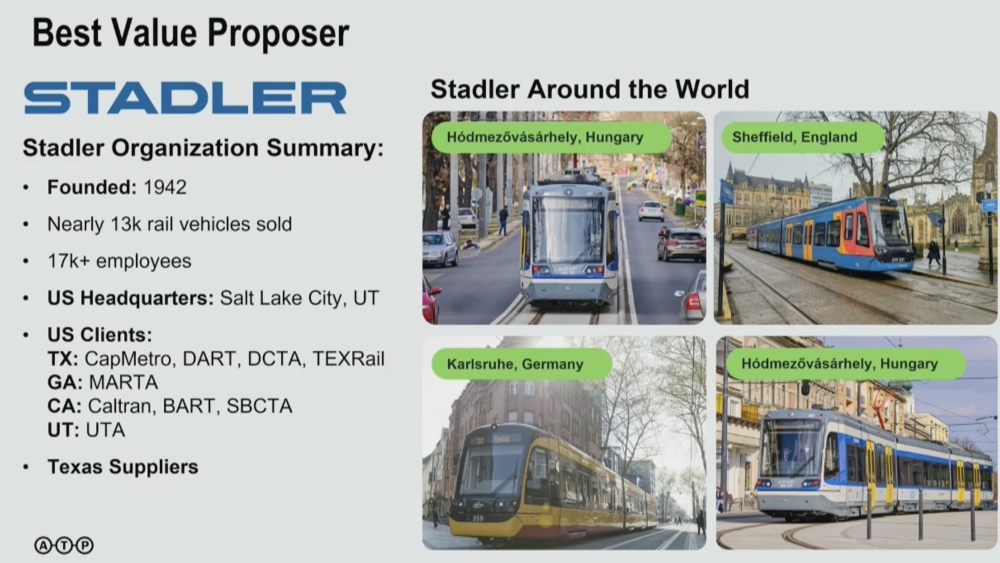 Austin Transit Partnership officials said Stadler submitted the second-lowest cost bid out of four proposers for a $39 million light rail vehicles contract, and was scored above other potential vendors for various vehicle features. (Courtesy Austin Transit Partnership)The initial $39 million authorized in July is one piece of an overall $352.8 million initiative to design, build and test Austin Light Rail vehicles for delivery in the 2030s, and further funding will also require approval by ATP’s board
What’s next
Preliminary design work will now be taking place for the entire Austin Light Rail network, its maintenance facility and the vehicles. The current phase is expected to wrap up by late 2026 ahead of a further design and engineering stage next year, eventually to be followed by final design—at which point federal grant agreements could be reached.
“This process is one where we work hand-in-hand with our federal partners to meet the requirements at each of those milestones or gate checkpoints along the way, rather than a single, one-time application that you’re kind of mailing in and hoping you get the answer you want back from,” Wood said. “It’s designed as a series of checklists of requirements that we work through with them at each milestone. And we’re nearing that next milestone.”
Next phases could be presented to the ATP board for authorization late this year, and the agency expects rail construction to begin in 2027.