
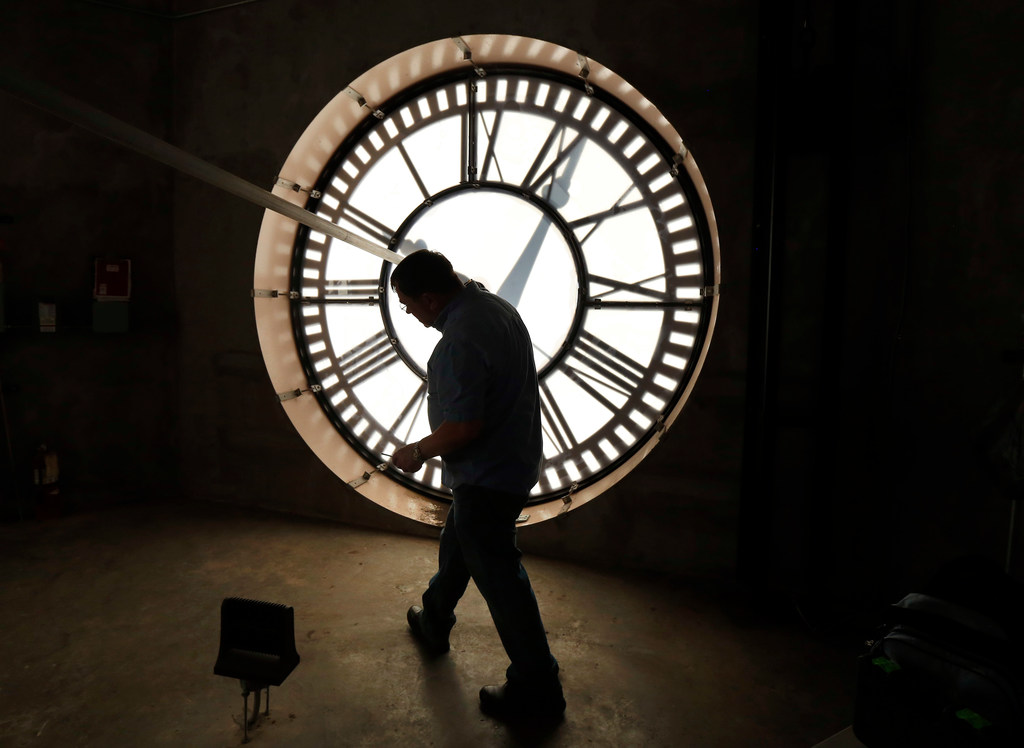
A Texas law putting the state permanently in daylight saving time will go into effect should the Senate clear a House bill enabling states to stay in daylight saving year-round.
Tom Fox/Staff Photographer
Since last June, a bill signed by Texas Gov. Greg Abbott making daylight saving time permanent has been in line to go into effect should the federal government enable states to do so.

The House passed a bill Tuesday with 308-117 bipartisan support that, if passed by the Senate and signed by President Donald Trump, would clear the way for Texas’ trigger law to go into effect.
Texas’ House Bill 1393 followed years of advocacy by state legislators to axe the time change or pass the issue to voters. The bill will require Texas to permanently observe daylight saving time as soon as Congress opens the door through pertinent legislation.
Article continues below this ad
“Great news, Texas,” the bill’s author, Will Metcalf, R-Conroe, wrote in a Facebook post Tuesday, “We’re one step closer to ending unnecessary clock changes for good — the finish line is in sight and Texas is ready!”
In the bill, Metcalf wrote “springing forward” and “falling back” disrupts routines, causes frustration and can pose risks to public health, citing American Academy of Sleep Medicine findings that disrupting internal clocks can cause health complications.
What is daylight saving time?
Time zones, originally implemented by U.S. and Canadian railroads to standardize arrival times, are written into federal legislation and fall under the purview of the Department of Transportation.
Since their formal inception in 1918 with the Standard Time Act, time changes have seen a few legislative adjustments, according to the DOT’s website. The Uniform Time Act of 1966 has led American clocks to switch from standard time to daylight saving time year after year.
Article continues below this ad
The act mandates states either switch to and from daylight saving time on federally standardized dates of the second Sunday in March and first Sunday of November, or opt out of daylight saving time entirely.
Shifting clocks later in the spring and earlier in the fall by one hour each time is intended to extend evening daylight in summer months.
Hawaii and parts of Arizona have chosen to opt out, staying in standard time year-round.
Remaining in daylight saving time has not been a permitted option thus far, hence preventing Texas’ time bill from taking effect.
What’s next for daylight saving time in Texas?
Tuesday, the House passed a bill that would make daylight saving time permanent for all states unless they exempt themselves from daylight saving time entirely before the bill takes effect.
Article continues below this ad
Texas is one of 19 states that have already passed legislation that would make daylight saving time permanent in their state should federal law change, according to The Hill.
First, the legislation must clear the Senate.
Though President Donald Trump has voiced support for the legislation, it is not immediately clear whether the Senate will pass the legislation or even pick it up in the first place, The Associated Press reported. Legislators in support of the bill have said it would keep daylight when Americans are most active, though opponents worry the darker mornings associated with the switch will make commuting to school more dangerous for children.
In 2022, a previous version of the Sunshine Protection Act cleared the U.S. Senate, but the bill later stalled in the House.