
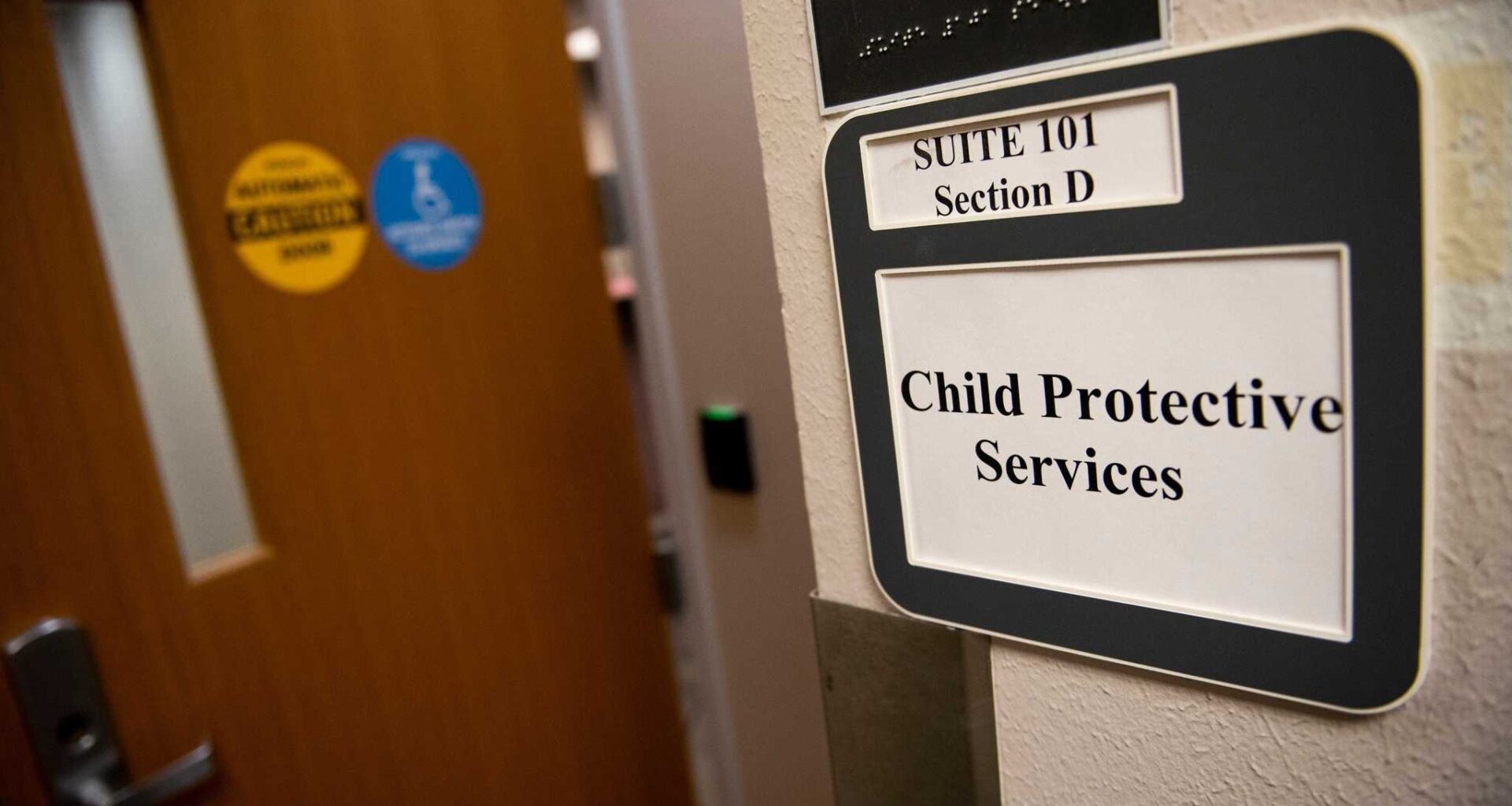
The Texas Department of Family and Protective Services offices in Austin on Nov. 14, 2019.
Eddie Gaspar/The Texas Tribune, Austin American-Statesman
File Photo: Judge Janis Graham Jack
Michael Zamora | Dallas Morning News
File Photo: Judge Aurora Martinez Jones overseeing an adoption ceremony.
Jay Janner/American-Statesman
File: Judge Mary Lou Alvarez
Billy Calzada | San Antonio Express-News
Texas may be trying again to end eight years of costly court-ordered oversight of its troubled foster care program.

It’s a battle with roots in a federal court decision from 2015 — in a case that was filed in 2011 — when a judge declared children were leaving the state’s child welfare system in worse shape than they entered. Federal oversight began in 2018 and, since then, reports have both shown progress and exposed failures.
Article continues below this ad
Now, the state could be seeking relief from the supervision that has cost it $80 million through February.
The content of a new motion Texas filed in the case is sealed, but the last time it filed a similar motion, the state was asking U.S. District Court Judge Janis Graham Jack to stop monitoring its progress on a dozen court orders.
She scoffed at the idea, pointing to the state’s numerous documented failures, for which she had repeatedly found the state to be in contempt and assessed $100,000-a-day fines. “To have the hubris to file a motion for relief is just beyond me,” she said.
But Jack is no longer overseeing the case. Texas was able to have her removed with the help of the 5th U.S. Circuit court of Appeals, which also vacated the contempt fines and narrowed the court’s supervision. Since then, the state has been on a campaign to further reduce the court’s role under a different judge.
Article continues below this ad
The move to reduce or remove the court from the system comes despite new court monitors’ reports filed last month that highlight some of the state’s continuing failures to keep children safe in its custody — especially in its attempts to privatize its foster care system. Earlier this year, the state was forced to take over one of the nonprofits it had contracted with because of child deaths.
“Private providers need to meet the same high standards (as the state), but some are falling short,” said Paul Yetter, an attorney who represents the current and former foster children who sued the state.
Court monitors
The court-appointed monitors filed three reports last month that gave the state some wins while pointing to multiple serious safety compliance failures.
Article continues below this ad
They found high compliance on staff training for issues including sexual abuse and said Texas had improved investigations into allegations of abuse and neglect. They also found dramatic improvements in meeting 24-hour awake staff requirements.
But the report found the state is continuing to fail to inform caregivers when children have histories of sexual abuse or aggression. And the monitors singled out the Health and Human Services Commission — which licenses the facilities where children stay — criticizing it for failing to correctly prioritize investigations that could improve child safety. In more than half the cases reviewed, monitors disagreed with the state’s priority levels.
The state agency, which has a total budget of $2.66 billion in the current fiscal year, was also chided for continued failures in its provider investigations unit, which played a central role in a three-day contempt trial over state failures in 2023.
In one instance in the new reports, monitors found no forensic interview was done in the case of a girl who said she had been raped by other children at a group home. They also criticized an investigation into incidents at Austin State Hospital, where investigators failed to ask basic safety questions and conduct comprehensive interviews.
Article continues below this ad
Another finding showed the state increased the rate at which it was placing children in facilities that are under so-called heightened monitoring — meaning they had previous compliance and safety problems.
“Many of these operations had concerning histories: in more than a quarter (28%) the operation had at least one substantiated finding of abuse, neglect, or exploitation in the six months prior to the start of the child’s placement,” the report said. “More than half (54%) had an open investigation for abuse, neglect, or exploitation when the… child’s placement started.”
Monitors also criticized the state for its process of closing unsafe foster homes, finding that nonprofit foster placement agencies were given veto power and noting some were successfully closed then reopened under a different nonprofit.
Privatization push continues to struggle
Such findings raise questions about the state child welfare system’s decade-long effort to push many of its main functions to private providers, giving multi-million dollar contracts to nonprofits that are taking over swaths of its responsibility.
Article continues below this ad
Those efforts have suffered other setbacks.
The report points to three state vendors that were failing to keep case loads manageable for workers responsible for keeping children safe. While many community-based care providers throughout the state reached 82% or higher compliance, St. Francis Ministries, Empower and 4Kids4Families all had rates between 31% and 59%.
The rating at St. Francis has continued to fall, leaving children in its territory in the Panhandle at higher risk. 4Kids4Families works with children across East and Northeast Texas, and Empower, which covers North Texas, now is subject to a state receiver.
The Texas Department of Family and Protective Services went to court in March to take over Empower’s territory. In a court filing, the agency said the nonprofit, which received a contract to provide services for the nine-county swath of North Texas in September 2023, was an “imminent danger” to children in its care.
Article continues below this ad
According to court records, the move came after Empower failed to protect two infants who subsequently died. The deaths were in addition to numerous infractions and improvement plans the state previously issued.
George Cannata Jr., a 29-year veteran of the Department of Family and Protective Services, was appointed to oversee Empower’s region for at least 90 days.
The state takeover had child welfare advocates, judges and attorneys statewide raising new questions about the state’s effort to privatize.
“This is what happens when you try and save money by privatizing the care of our most vulnerable children,” said Lori Duke, former co-director of the Children’s Rights clinic at the University of Texas School of Law, pointing to basic struggles faced by private providers.
Article continues below this ad
Unable to bring over case workers from the state system, she said, Empower was left scrambling to find qualified, experienced workers. Duke attributed that to the nonprofit not offering the same benefits as are available in the state system.
“Mistakes happen all the time in the legacy system where the state is in charge of case management, but there are systemic checks in place to prevent vulnerable children from dying” she said.
The Department of Family and Protective Services has not responded to requests for comment on the receivership.
Legislative roots
Community-based care models — where the state is divided into regions and nonprofit providers take over large portions of the state’s functions — were pushed through the Legislature in 2017. The effort was supposed to increase placement capacity while keeping children closer to their family homes and improving outcomes. The program was a continuation of the Foster Care Redesign effort passed in 2011, which also pushed private providers.
Article continues below this ad
Austin has yet to award a contract, but there is still concern about what privatization will bring.
“I am very worried, and so are all the lawyers,” said Travis County state District Court Judge Aurora Martinez Jones, who oversees many child-welfare cases. Privatization, though, isn’t her sole worry. She’s not happy with the way the state provides services, either.
For the past two years Martinez Jones has been battling the Department of Family and Protective Services to comply with her orders in child welfare cases. Now, attorneys in the region are asking her to find the agency in contempt. In April, she ordered state officials to appear in her court to explain the obstructions.
Still, she said it is easier for judges to provide oversight when dealing directly with the state agency rather than a contracted, third-party provider.
Article continues below this ad
Judge Mary Lou Alvarez said the Dallas area’s recent trouble with Empower is bringing up memories of San Antonio’s previous bad experience with community-based care.
In 2018, Family Tapestry, better known as The Children’s Shelter of San Antonio, was awarded the contract for the area and began providing services in 2019. Problems quickly emerged. Allegations surfaced that the nonprofit was housing youth in an unlicensed facility and that, as a result, some children had been sexually abused.
Jack, the federal judge who was then tasked with overseeing the state foster care system, publicly rebuked Family Tapestry. The organization announced it would voluntarily give up its contract 60 days later.
“It was chaos,” Alvarez said.
Article continues below this ad
What followed was a crisis that left children across the region without foster care, a situation that persisted for years.
“I saw the consequences,” Alvarez said. “We just didn’t provide for them.”
San Antonio’s region now has a contract with SJRC | Belong, which began providing services March 1.
The region that includes Austin is expected to get a privatization contract in the next two years.
Article continues below this ad
In the Houston area, private provider Texans Together began providing services May 1. Christie Carrington, an organizer with the Texas State Employees Union, said she doesn’t think it will work in the complex region.
“The state is pushing this privatization through and clearly they don’t have the oversight and accountability measures in place to do it,” she said.
Carrington retired in 2022 after 11 years with the Department of Family and Protective Services and said she has heard numerous complaints and concerns about privatization.
Article continues below this ad
“The collateral damage is going to be the families and the kids,” she said.