
U.S. Army North, a San Antonio fixture for decades, was mothballed this week in a Defense Department streamlining that will strip the city of jobs and some of its status as a military hub.

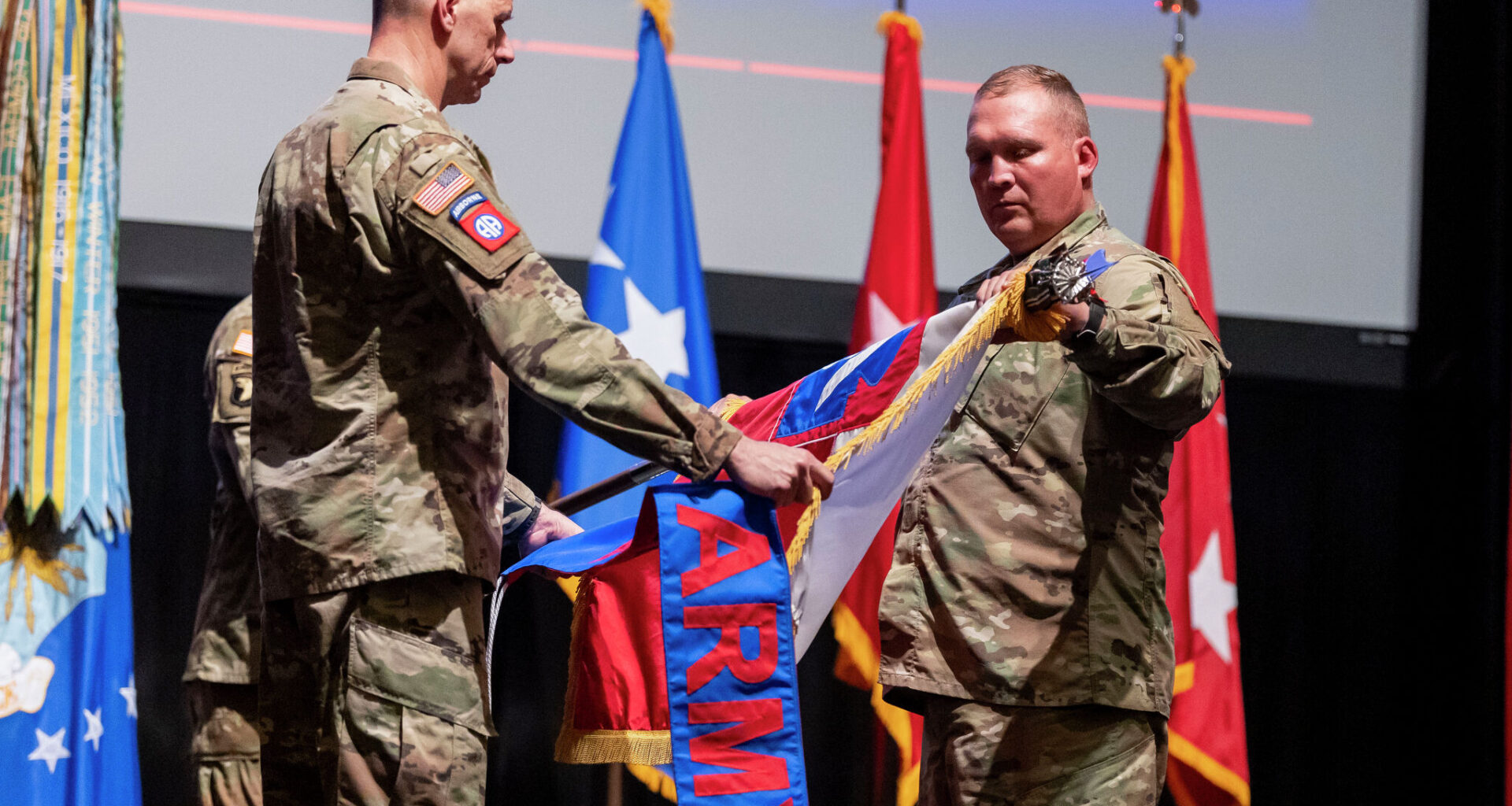
A 75-minute “casing of the colors” ceremony at Fort Sam Houston formally shut down, or “inactivated,” the command, which was born 83 years ago in French-occupied Morocco and was headquartered for decades at Fort Sam’s historic Quadrangle.
“It was an incredible honor to serve as your commander,” Army North’s leader, Lt. Gen. Allan Pepin, said Wednesday in a speech at the Fort Sam Theater. “I don’t want to say the last commander, just as your commander.”
Article continues below this ad
A similar ceremony in late May shuttered U.S. Army South. The two commands are being combined with a third Army organization — the Forces Command based at Fort Bragg, N.C. — to form a new Western Hemisphere Command. Its headquarters will be at Fort Bragg.
It is the most significant change in the military’s presence in San Antonio since rounds of base closures in 1995 and 2005. Army North had as many as 600 uniformed and civilian employees here. About 160 are expected to remain, along with 60 of the 500 Army South personnel stationed in the city.
The consolidation is part of an initiative by Defense Secretary Pete Hegseth to reduce the number of four-star generals and reorient the armed forces away from what he regards as a “woke” political agenda toward a renewed focus on “lethality.” He has said the military’s leadership became bloated, with too many headquarters and too many generals.
Army North’s core mission was the territorial defense of the U.S. homeland. It was part of the Colorado-based Northern Command, created by then-President George W. Bush after the Sept. 11, 2001, terrorist attacks.
Article continues below this ad
Lt. Gen. Allan Pepin, commander of Army North, participates in the “casing of the colors,” a ritual marking the closure of the command, which had been a fixture in San Antonio for decades. The ceremony was held at Fort Sam Houston on Wednesday, July 15, 2026.
Katina Zentz/San Antonio Express-News
Army personnel listen to speeches during a “casing of the colors” ceremony at Fort Sam Houston on Wednesday marking the formal closure of Army North.
Katina Zentz/San Antonio Express-News
Originally known as the 5th U.S. Army, it was one of the service’s most enduring commands. It was created from units that participated in Operation Torch, the British-American invasion of North Africa in November 1942. It was the first American force to invade mainland Europe when its troops landed on a 20-mile stretch of beach south of Salerno, Italy, on Sept. 9, 1943.
Army South supported security assistance, multinational operations, drug interdiction and humanitarian aid in Central and South America and the Caribbean, reporting to the Florida-based Southern Command.
Article continues below this ad
RELATED: Army South is officially history at San Antonio’s Fort Sam Houston
At Wednesday’s ceremony at Fort Sam Houston, Air Force Gen. Gregory Guillot said Army North’s end was in fact a new beginning.
“The deactivation today does not mean the end of this command’s vital mission,” said Guillot, who heads U.S. Northern Command and the North American Aerospace Defense Command. “Rather, it’s a necessary evolution to meet the complex threats of the modern era.”
Army Gen. Joseph Ryan, head of the new Western Hemisphere Command, called the demise of Army North “a new chapter, a necessary evolution, a transformation, if you will.”
Article continues below this ad
He said that that although the command was being “inactivated,” its soldiers would carry on the mission.
Lt. Gen. Allan Pepin, left, and Sgt. Maj. Jerimiah Gan participate in the “casing of the colors” marking the formal closure of Army North. The ceremony was held at Fort Sam Houston on Wednesday, July 15, 2026.
Katina Zentz/San Antonio Express-News
RELATED: Army presence in San Antonio faces big changes under Hegseth overhaul
Pepin joined his command’s sergeant major, Jerimiah Gan, onstage at the Fort Sam Houston Theater for the ceremonial folding of the flag.
Article continues below this ad
San Antonio has witnessed previous waves of military consolidation. Kelly Air Force Base, home to a largely Hispanic, blue-collar civil service workforce, closed in 2001. It employed 25,000 people at its peak, maintaining planes that included the B-29 Superfortress, a World War II-era bomber, and the C-5A Galaxy, a giant cargo jet.
In 2005, the Defense Base Closure and Realignment Commission relocated the remaining Air Force units at Brooks City-Base (formerly Brooks Air Force Base) on the Southeast Side. The Air Force School of Aerospace Medicine was moved to Wright-Patterson Air Force Base in Ohio. The Directed Energy Lab was transferred to Fort Sam Houston. Brooks City-Base closed on Sept. 15, 2011.
The base closure commission softened the blow by ordering billions of dollars in new construction at Lackland and Randolph Air Force bases and Fort Sam.
Audience members honor World War II veterans Jack Hugman, Bill Barnes and Marty Rodriguez during a ceremony at Fort Sam Houston marking the “inactivation” of Army North on Wednesday, July 15, 2026.
Katina Zentz/San Antonio Express-News
Former San Antonio Mayor Ron Nirenberg called the closure of Army North “a bittersweet moment.”
Katina Zentz/San Antonio Express-News
Brook has since been developed into a mixed retail, residential and commercial complex by the Brooks Redevelopment Authority. As for Kelly, its runways and flight infrastructure were transferred to Lackland, and the rest of the base became Port San Antonio, a sprawling hub for tech, defense and aerospace firms.
Article continues below this ad
RELATED: ‘Tough choices’: Hegseth won’t commit to keeping Army commands in S.A.
Former San Antonio Mayor Ron Nirenberg, now the Democratic nominee for Bexar County judge, attended Wednesday’s casing of the colors ritual. He said the city was “facing an unwelcome reality” but added that the military was constantly evolving and “what hurt initially could be part of opportunities for the new story.
“If you’re asking, can I spin this positively today?” Nirenberg asked. “No, it’s a bittersweet moment for San Antonio and, frankly, for the United States Army, but the sun will also rise on both.”
Article continues below this ad
Gen. Gregory Guillot, commander of U.S. Northern Command and the North American Aerospace Defense Command, addresses an audience at Fort Sam Houston during a ceremony marking the formal closure of Army North.
Katina Zentz/San Antonio Express-News