
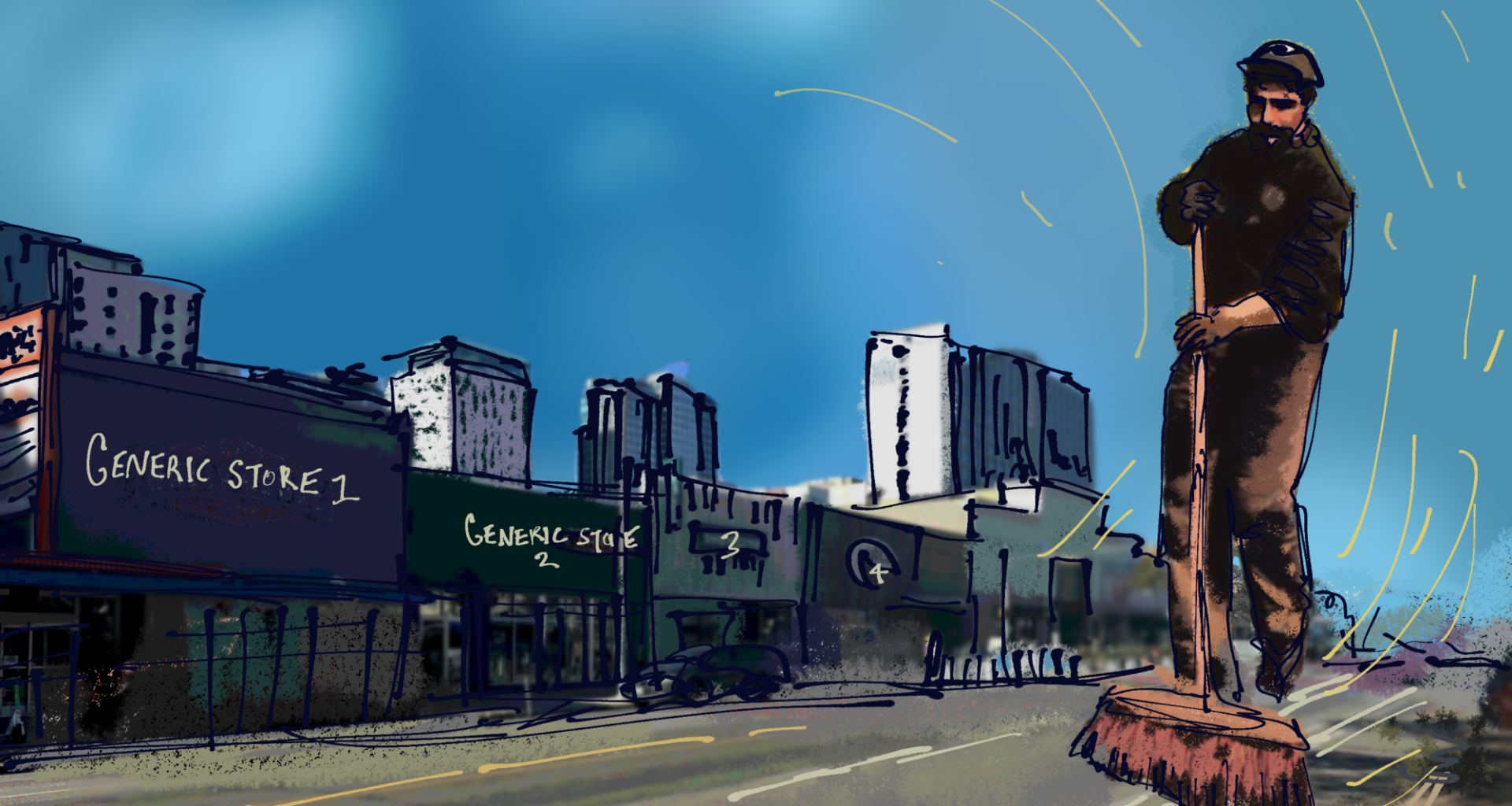
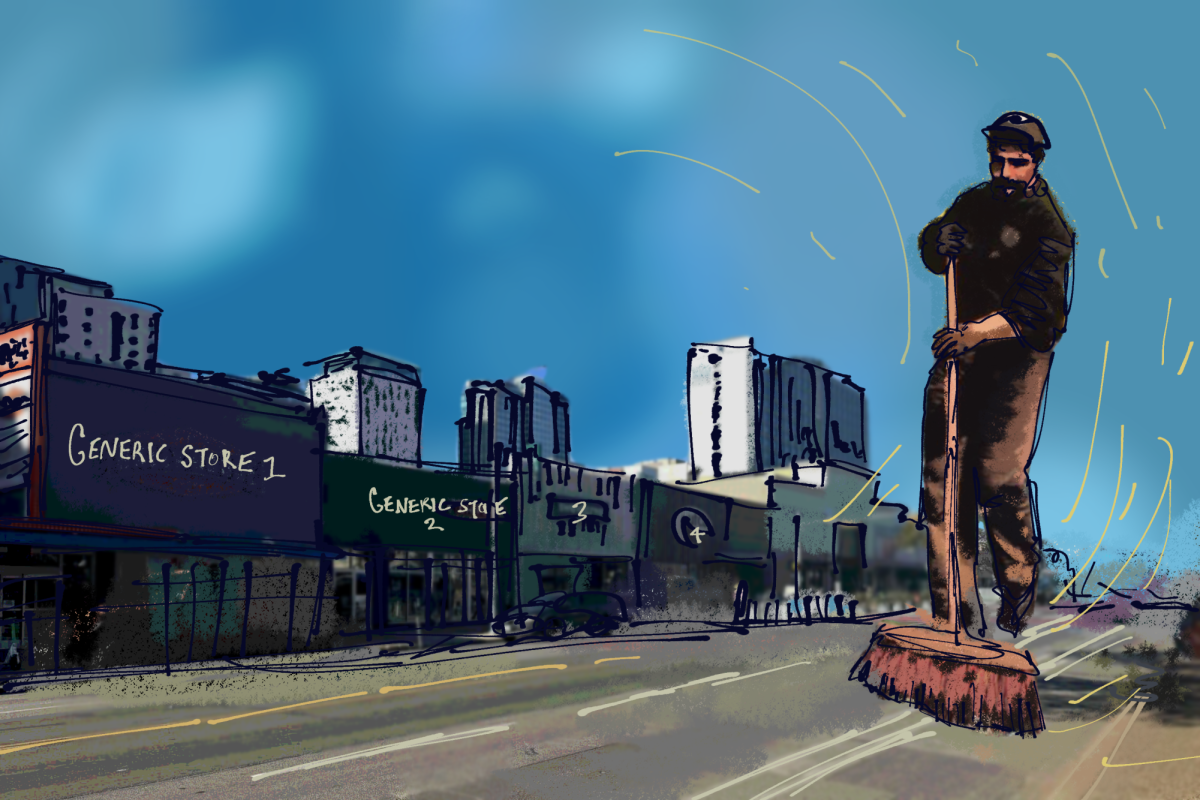
Walking south down Guadalupe Street, starting on 26th Street down to Martin Luther King Jr. Boulevard, one can see the ghostly remnants of the cultural epicenter once known as The Drag.
The old movie theater marquee of Varsity Theatre is now a CVS, the famous “HI, HOW ARE YOU” street art on the corner of 21st Street now sits on a piece of brick wall in front of the remnants of what used to be the Sound Exchange, the marquee of Dobie Theatre is now a Target and the walkway on 23rd Street that used to house the Hippie Market sits mostly empty.
Over the last 10 years, the average commercial rent for retail spaces on Guadalupe Street has increased by around 50% per square foot, forcing smaller tenants out. The seasonal nature of a campus area, where students leave for three months out of the year, can be difficult for small businesses to handle. Once these small businesses are forced out, larger corporate chains move in, further driving up prices and gentrifying the area.
A street that used to be home to local businesses like Quackenbushes, Tower Records and Sound Exchange now largely consists of chain restaurants and clothing stores.
“There’s this homogenizing of the ecosystem that large businesses, corporate kinds of organizations inevitably bring about, and which makes places sort of anonymous and uninteresting,” said UT alumnus Dylon Robbins (‘00).
Ironically, a depiction of blues musician Stevie Ray Vaughan covers the south side of the Moxy hotel, a chain owned by Marriott, looking out onto the gentrified street Vaughan would not recognize from its glory days during his years of fame.
Youth culture and locality defined The Drag, filled with markets selling homemade goods, local businesses, cafes and restaurants. Now, we have a collection of chain businesses that could just as easily be found off of any random highway exit in America.
“Where are you going to get the funk?” Robbins said. “Where are you going to get the weirdness? Where are you going to get things that make places very particular?”
Current students do not have access to these great places of culture and community — and it’s not our fault that they are no longer here with us. But now, what’s left for our generation?
Members of Gen Z are having less sex, and they generally go out less than previous generations. Some blame social media and phones while others blame the COVID-19 pandemic for Gen Z’s anti-social tendencies, but where is one meant to have fun or experience a meet-cute around campus? Beneath the verdant glow of the Wingstop sign? Or maybe in the CVS self-checkout with a loss prevention worker watching every move?
“Guad sucks,” mechanical engineering senior James Lee said. “The only places on Guad are very expensive national fast-food chains.”
With the loss of locality and uniqueness comes the loss of culture and community. There is nowhere for students to go that they haven’t already been to in the strip malls of their hometowns. Guadalupe Street is a place to pass through on the way to the four gray walls of a West Campus apartment bedroom.
Gentrification has wormed its way through nearly every aspect of Austin life, destroying local culture with corporate business as its replacement.
Guadalupe Street is not The Drag, a place to experience culture; it is Guad, a place to DoorDash food from.
Hay is a radio-television-film senior from Bryan, Texas.