
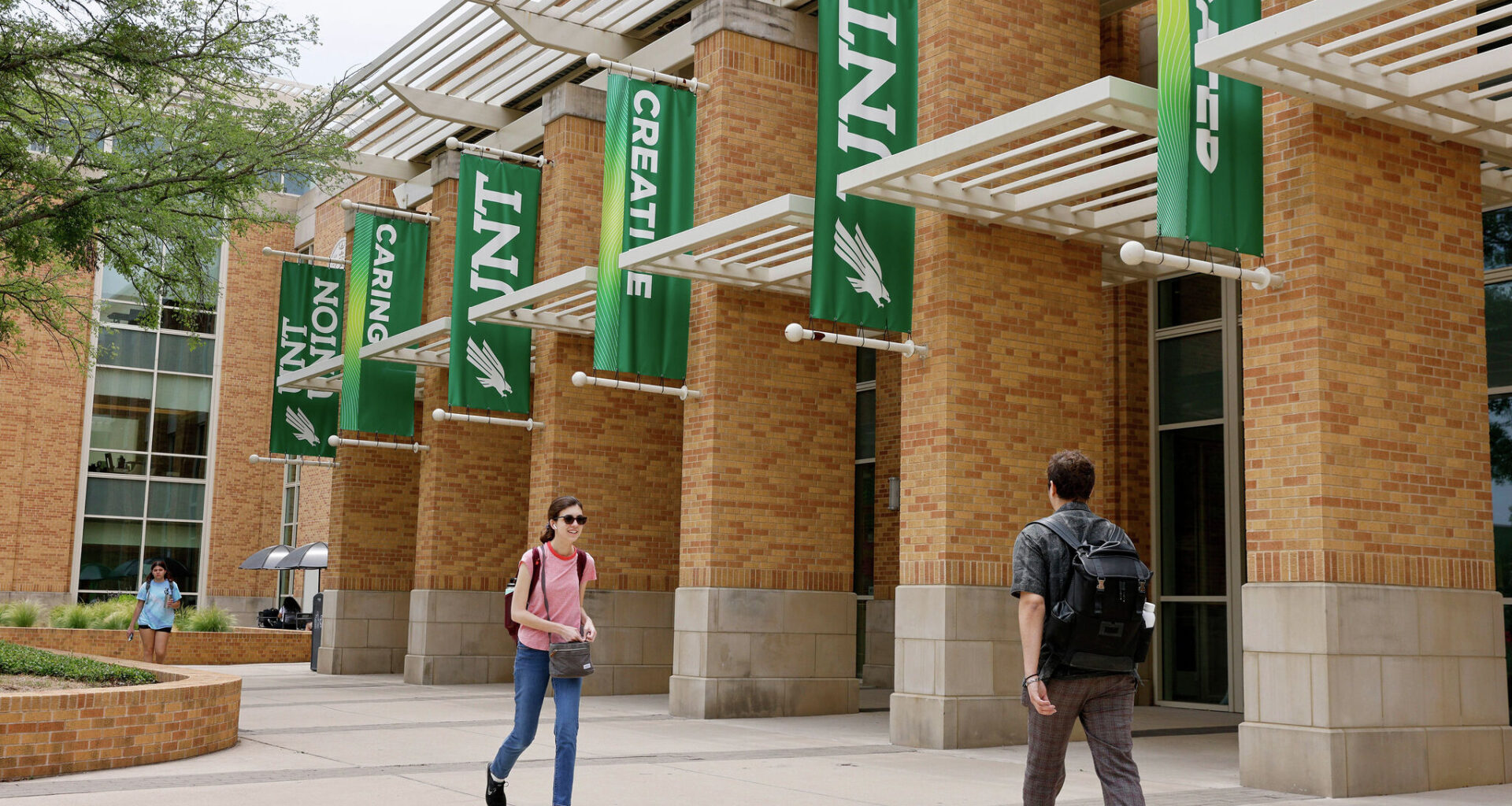
Texas was the first state to extend in-state tuition to undocumented students when former Gov. Rick Perry signed the bipartisan measure into law in 2001. Former state Rep. Byron Cook writes that the state should have stuck to that promise. Pictured here is the campus of the University of North Texas in Denton.
ElÃas Valverde II/TNS
In 2001, the Texas Legislature passed the in-state tuition law, known today as the Texas Dream Act, with overwhelming bipartisan support, and it took effect immediately with then-Gov. Rick Perry’s signature. Texas was the first state to do it because Texas leads and because the math made sense.
The U.S. Supreme Court has long held that states must provide K-12 public education to children regardless of immigration status. Texas taxpayers were already educating these children, often for 13 years per student. The only question was whether Texas would ever collect the return.
The 2001 law was the deal we struck to collect that return. Live in Texas with a parent or guardian while attending a Texas high school. Reside here for at least three years by graduation. Earn a Texas diploma or its equivalent. Sign an affidavit pledging to apply for permanent U.S. residency as soon as legally eligible. Meet those terms, and you would pay the exact same resident tuition as the Texan beside you. Not free tuition. Resident tuition.
Article continues below this ad
The point was not to reward illegal immigration. The point was to ensure Texas did not squander its own investment in students who were already educated here and paying taxes.
We do not have to guess about the return. In 2017 alone, the Texas Higher Education Coordinating Board reported that these students paid $72.8 million in tuition and fees to public colleges and universities, nearly three times what the state invested through formula funding.
Now, Texas has walked away from that deal, an act of fiscal malpractice and a stain on our honor.
I served on the House Committee on State Affairs from 2003 to 2019, chaired it during my final four sessions and presided over every hearing on this issue. I know exactly who these students are. Valedictorians. Salutatorians. Top 10% graduates. Nobody hands them anything.
One witness I will never forget was brought from Nepal at age 7 and received a world class education in Texas schools. He repaid that investment the Texas way: graduating in the top 10% of his class before entering one of the University of Texas’s most selective honors programs to study pre-med and government.
Article continues below this ad
He did not ask for sympathy. His testimony was armed with the state’s own numbers, including a Perryman Group analysis estimating more than $8 in return for every $1 Texas invests. He made the business case himself, sounding every bit as Texan as you or me. He told us he was an American in every way but the paperwork. He was right.
The opponents’ argument never changed: Send them back where they came from. Send him back where? He left Nepal before first grade. Texas is the only home he has ever known. Deporting him means taking an education Texas paid for, plus a future doctor this state desperately needs, and exporting both overseas.
He kept his end of the deal. He signed his affidavit in good faith. Now Texas has reneged.
For most of these students, federal law provides no realistic pathway to legal residency. The opportunity Texas told them to wait for simply does not exist. That is not their failure. It is ours.
The Legislature kept this law on the books for almost a quarter century. For most of that time, Republicans controlled both chambers and the governor’s office. Repeal bills were filed repeatedly and repeatedly failed, as recently as last year. The law remained because the people’s elected representatives left it there.
Article continues below this ad
Unable to repeal it through the legislative process, opponents turned to the courts. The Department of Justice sued Texas, and rather than defend a law the Legislature had left on the books, the Texas Attorney General joined the federal government in asking the court to strike it down.
Within hours, a federal judge did exactly that, without hearing a word in the statute’s defense. Students and colleges who sought to defend it were turned away at the courthouse door, and this month a federal appeals court kept them out. And our state’s leaders praised the outcome.
That is not how laws are supposed to be changed in Texas. When you cannot win the votes to repeal a law, you take your case back to the people, not to a courtroom.
That young man’s testimony stayed with me for 15 years. I have largely stayed out of public debates since leaving office, but this injustice was done in Texas’s name, and silence would make me complicit.
These students graduated at the top of their class. They pay every dollar of their own tuition. They kept every term of the deal. Texas broke its word and gave away one of its wisest investments.
Article continues below this ad
In Texas, a law enacted by the Legislature ought to mean something. We are better than this. Texas should honor its word.
Byron Cook, R-Corsicana, is a former member of the Texas House of Representatives and chairman of the House Committee on State Affairs.
Have thoughts about this? Send a letter to the editor using our letters form or email letters@dallasnews.com. Letters should be no more than 200 words and include the first and last name of the writer and city of residence.