
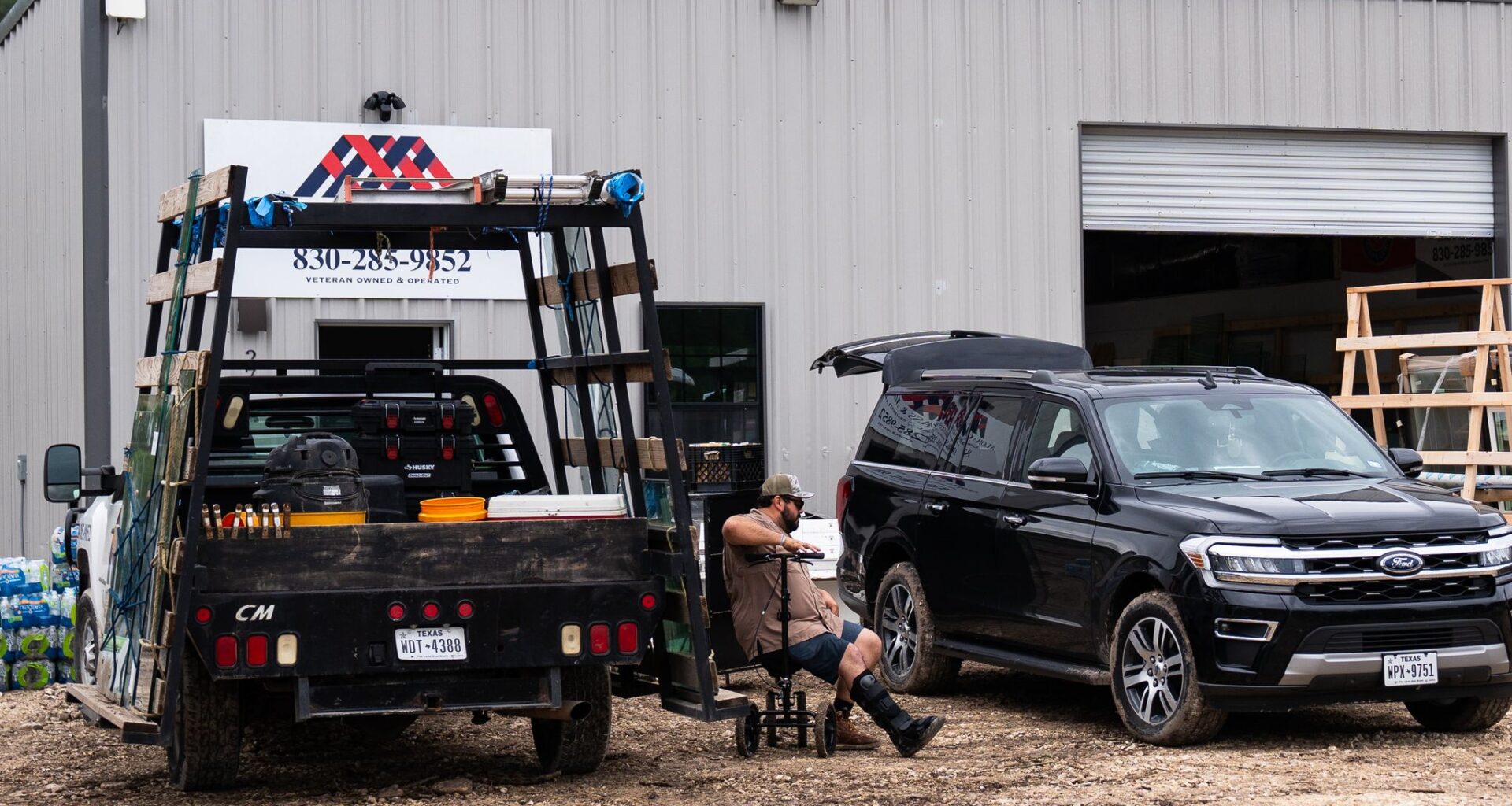
Austin Mousser sits outside Aloha Glass and Mirror near Kerrville on July 17 after flooding damaged his business earlier in the week. For many small businesses after a disaster, timely funding is essential to help them reopen, Amy Hereford writes.
Sara Diggins/Austin American-Statesman
Just one year after catastrophic flooding devastated parts of the Texas Hill Country, another flood emergency is unfolding across many of the same communities, affecting 16 Hill Country counties, forcing widespread business closures and leaving roughly one-quarter of businesses with additional damage and counting.

Many businesses are closed today and do not yet know when they will reopen. For many small business owners, this is especially challenging, as long-term recovery from the first storm has only just begun. It is a stark reminder that while Texas responds quickly to disaster to support its neighbors, it is not moving fast enough to support the recovery that comes after for small businesses and local economies.
Article continues below this ad
The first days after a disaster are urgent and visible. According to data from the Federal Emergency Management Agency, small businesses that do not receive funding quickly enough to stabilize after a disaster face a much higher risk of closing permanently.
The harder work begins later, when cameras leave, insurance questions multiply, rent is still due, employees need paychecks, and owners must decide whether they can reopen. For a small business operating with limited cash reserves, every week without revenue or recovery capital increases the risk that reopening will become impossible.
Owners need timely capital, reliable information and practical guidance while managing property damage, lost revenue and displaced workers.
ALSO READ: The flood ended a year ago. Sandy Creek’s emergency continues
Article continues below this ad
Every delay is a costly consequence for employees, vendors and surrounding neighborhoods. When a small business closes after a disaster, the effects ripple outward. Small businesses in the United States employ nearly half of the workforce. They are a significant part of the tax base. When employees lose income, landlords lose tenants, suppliers lose customers, and communities lose essential services and gathering places, communities simply cannot recover.
Texas should treat small business recovery as essential infrastructure. State leaders, philanthropy, banks and corporate partners should establish a permanent Texas Small Business Disaster Recovery Fund, supported by regional networks prepared to coordinate assistance from the first day of an emergency.
The fund should be capitalized before disaster strikes so grants, bridge loans and technical assistance can move quickly through trusted local organizations. Regional partners should establish in advance how they will assess needs, share information, deploy resources and guide owners through available programs.
As communities begin assessing the impact, LiftFund is connected with affected businesses and working alongside local partners to better understand revenue disruptions, physical losses and the resources needed for recovery. LiftFund provides guidance, deploying personnel in areas most needed, and developing financial assistance, including its Rapid Relief Fund, which provides flexible resources for this work and for small business disaster response.
Article continues below this ad
SIGN UP FOR THE AUSTIN ANGLE and get Statesman commentaries in your inbox
Since 1994, the organization has worked with nearly 12,000 small business owners and distributed more than $230 million in Texas recovery funding after hurricanes, floods, wildfires and other disruptions. That experience shows assistance moves faster through trusted local networks, but no single organization can build the statewide system Texas needs.
Government should provide coordination and public resources; philanthropy and financial institutions should provide flexible capital; and local organizations should ensure assistance reaches affected owners. Before the next disaster, Texas should capitalize the fund, designate regional coordinating partners and publish a statewide small business recovery playbook so owners know where to turn on day one.
Article continues below this ad
As we have painfully learned from watching the storms and its damage unfold, the next disaster is inevitable, and our preparation will determine whether businesses reopen, workers keep their jobs and communities regain their footing. Texas does not need to become better at caring for its neighbors; it needs to become faster and more deliberate at turning that care into lasting recovery.
Amy Hereford is the president and CEO of LiftFund, a San Antonio-based national nonprofit that provides funding and support services to small business owners.