
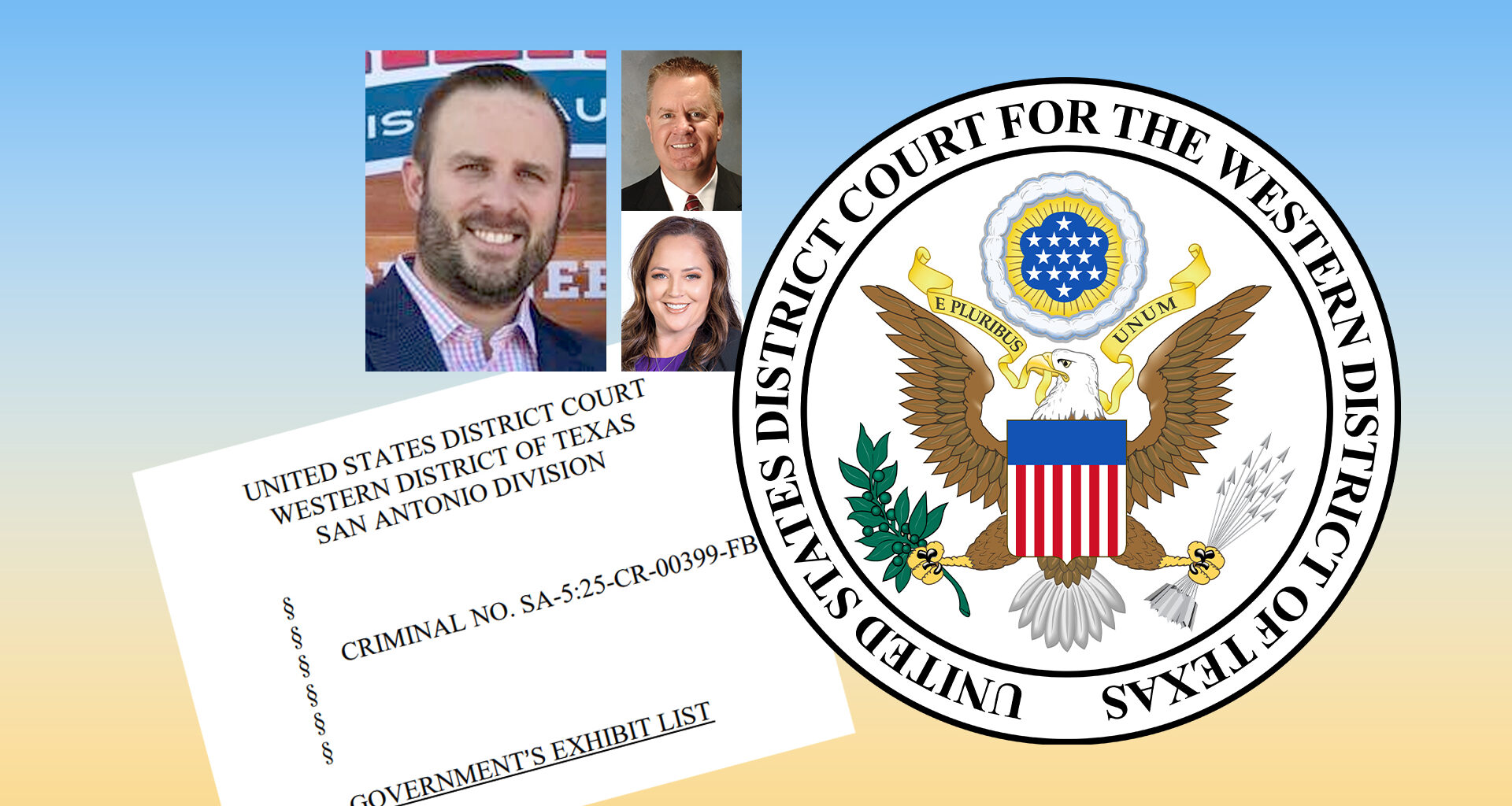
Joshua Allen filed a series of requests Monday to exclude what the jury sees and hears when he goes on trial August 10 – roughly three weeks from now – along with Michael Cox.
Prosecutors, in response, are doing their own work to shape what goes in front of the jury.
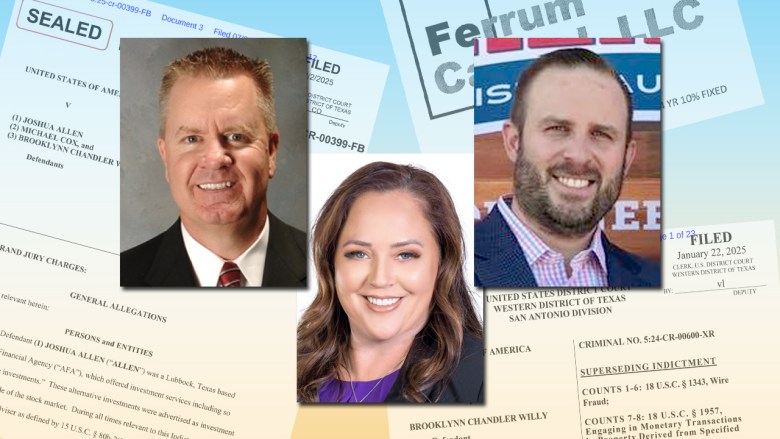
Allen and Cox – cofounders of Lubbock-based Ferrum Capital – are under indictment for:
Conspiracy to commit wire fraud.
Conspiracy to commit money laundering.
Conspiracy to launder monetary instruments.
Securities fraud.
Prosecutors claim the two defrauded hundreds of investors of millions of dollars. Many of those victims were concentrated in the Lubbock and San Antonio areas, according to multiple lawsuits. The case was filed by federal prosecutors in San Antonio, where the trial will take place near the Alamo.
More background (click to expand)
“The United States anticipates the evidence will demonstrate that the defendants [Allen and Cox] defrauded investors,” Justin Simmons, a U.S. Attorney, wrote.
This involved misleading people about the nature of the investment and their sales commissions. In some cases, they removed money from the victims’ accounts without their knowledge or authorization, according to Simmons.
“Defendants used money from later investors to repay earlier investors or pay themselves and/or associates. … These actions occurred over an approximately seven-year period,” Simmons wrote.
An FBI press release in October said, “The use of new investor funds to pay returns to prior investors is characteristic of Ponzi fraud schemes.”
A State District Judge in San Antonio put Ferrum under a court-appointed receiver who has been working to recover money for victims since January 2024.
The fight over evidence
Allen filed a list of motions in “limine” – meaning he wants Fred Biery, U.S. District Court judge, to exclude evidence before it reaches a jury. Cox filed a similar list of requests earlier this month.
Allen and Cox both asked Biery to exclude unrelated crimes or wrongdoing in the past that are not in the indictment. Such evidence could only be included if prosecutors got permission outside the presence of the jury.
They both requested excluding any mention of “alleged co-conspirators” or summary evidence.
However, Allen – distinct from Cox – requested the judge not allow any evidence of being “loosely associated” with Daryl Bank of Virginia Beach.
Allen was concerned about “unfair prejudice” and “guilt-by-association evidence.”
The Daryl Bank connection
Bank, a principal in Sonoqui, was convicted and sentenced in 2021 to 35 years in prison. Charges included conspiracy and mail fraud. Sonoqui worked with an Austin-based company called Collins Asset Group – which has since filed for bankruptcy. Collins also worked with Ferrum in Lubbock.
Federal prosecutors in 2021 said in a press release that the Bank case “… resulted in over $25 million in losses to more than 300 victims, most of whom were elderly.”
Attorneys in civil lawsuits against Allen and Cox have raised comparisons between Sonoqui and Ferrum. Collins settled a class action lawsuit for a little less than $16 million. The same suit named Sonoqui as a defendant.
Allen’s attorney, Anthony Box, wrote, “It is anticipated the government will call witnesses and seek to admit evidence concerning Daryl Bank and his companies Sonoqui, LLC and Diversified Financing, LLC.”
Box wants to stop that.
“Evidence that Allen was loosely associated with Bank is not relevant to any of the crimes Allen is charged with in this case. Instead, it poses a significant risk that the jury will find Allen guilty of the charged crimes because he previously sold similar assets to someone convicted of similar crimes. Such prejudicial evidence should be excluded,” Box wrote in support of his defense of Allen.
Feds pushing back
Some of Allen’s requests were filed Monday and federal prosecutors have not yet filed written responses.
However, the feds have already filed a response defending their effort to provide evidence to summarize the case.
Justin Simmons, U.S. attorney, wrote, “As can be expected, there are thousands of financial transactions involving hundreds of investor victims.”
Simmons then filed copies of the “summary charts” in court records so Biery can decide in advance if they go in front of a jury.
One chart showed the names of everyone who put money into Ferrum, the dollar amount and the date. Those entries add up to exactly $67,787,372.09.
Of that amount, $47.6 million went from Ferrum to Collins. Previous court records said Collins returned some but not all that money. And Ferrum paid back some of its early investors using money from subsequent investors.
In another chart, prosecutors claimed Allen took for himself or his companies just less than $4.7 million. Cox took for himself $2.4 million and their San Antonio business affiliate, Brooklynn Willy, took for herself just more than $2 million, according to prosecutors. Willy pleaded guilty this year and will be sentenced at a later date.
Simmons wrote, “The Defendants are charged with a wide-reaching investor fraud scheme. … These records cannot be conveniently examined in court. As such, summary exhibits are necessary and proper to summarize …”
He also wrote the charts and summaries meet the standards for the federal rules of evidence. Biery has not yet ruled on them.
Judge denies Allen’s request to push back criminal trial set for August 10
July 2, 2026

No plea deal and none expected in Ferrum case as Allen seeks delay and prosecutors balk
June 19, 2026
June 12, 2026

Ferrum Capital investors have until September 3 to file a claim — here’s how
June 4, 2026
June 1, 2026
Collection efforts against Joshua Allen in Walk-On’s case successfully completed
May 15, 2026

May 13, 2026

Ferrum victims may have one place to file claims if judge approves at May 19 court hearing
April 28, 2026
April 15, 2026
April 13, 2026

March 23, 2026
March 19, 2026
Feds update charges against Willy in Lubbock-based Ferrum Capital case, could take her assets
March 4, 2026
February 4, 2026
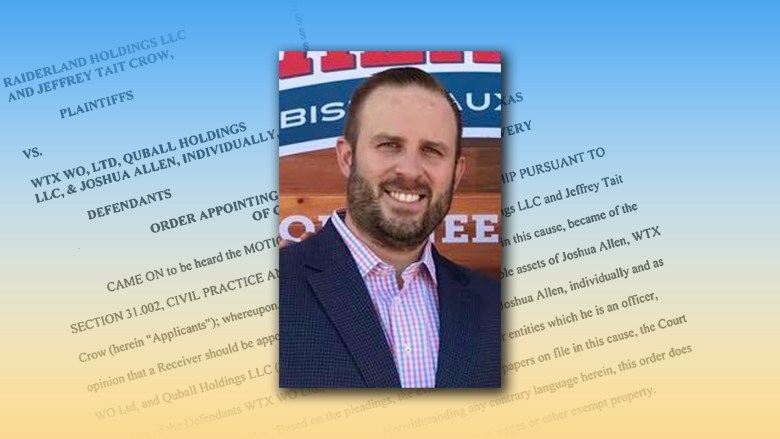
Josh Allen may lose companies as one impact from receivers working on Walk-On’s, Ferrum cases
November 25, 2025

November 21, 2025
November 7, 2025

October 8, 2025
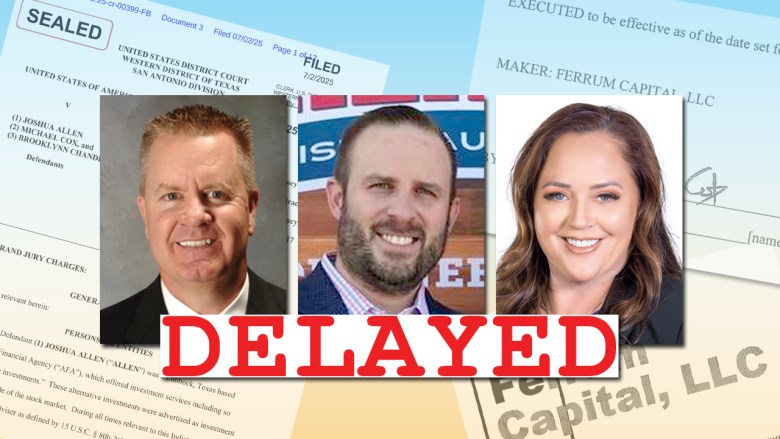
Ferrum criminal trial – Allen, Cox and Willy – pushed back until next year
September 5, 2025
Ferrum detour to Delaware ends; what that means for victims in Lubbock, San Antonio
July 29, 2025
July 24, 2025
July 16, 2025
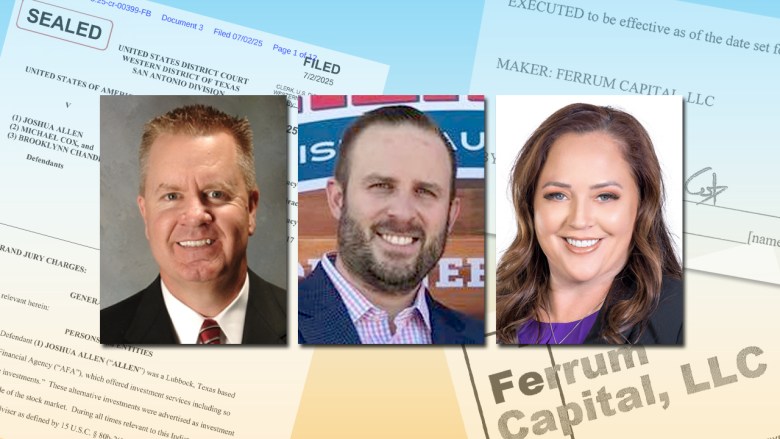
‘Finally … in shackles’ – Ferrum victims ‘ecstatic’ about criminal charges against Allen and Cox
July 10, 2025
July 9, 2025
June 19, 2025

Attorneys trying to recover money in Ferrum cases concerned about legal processes moving to Delaware
June 13, 2025
Two companies tied to Ferrum and securities fraud FBI investigation go bankrupt
June 9, 2025
May 20, 2025
May 2, 2025

Cox deal to keep his house approved but some of his bankruptcy protections lost
April 30, 2025
Allen ordered to hand over personal finance info
Recently Allen asked for a delay – which Biery denied.
The reason for the request centered around constitutional rights.
Allen claimed because some of his business interests were frozen in state court, he might be unable to pay his defense lawyers.
Kristy Callahan, an assistant U.S. attorney, filed an emergency motion for Allen to disclose his finances. Prosecutors wanted to know if Allen could raise a Sixth Amendment issue – meaning, his right to a fair trial with assistance of legal counsel.
Allen’s request for a delay said he was “presently unable to compensate defense counsel.”
Callahan wrote, “No one seems to have a clear understanding of [Allen’s] current financial status.”
The judge agreed with Callahan.
Allen was ordered to fill out a form that included questions about his home, retirement accounts, jewelry, investments, intellectual property (like copyrights and trademarks), mineral rights and the list went on.
However, we don’t know the answers, because a few days later, Allen filed a sealed document.
Federal prosecutors pointed out the Ferrum receiver is willing to let Allen have access to some of his business assets so his defense attorneys get paid.

Related

Related posts