
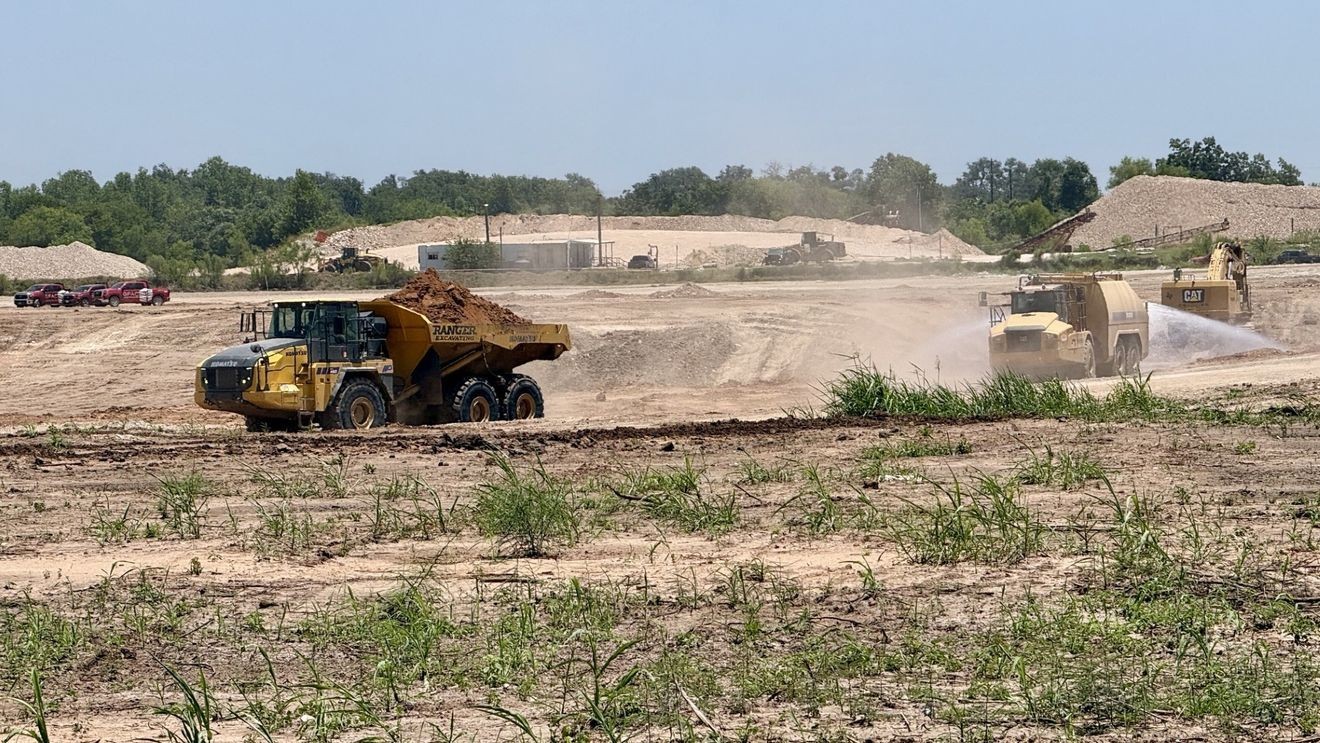
AUSTIN, Texas — Amazon Robotics was named the first major prospective tenant at Austin’s Dog’s Head development project.
Tuesday’s announcement came from city leaders as council members considered greenlighting one of the largest developments in city history. The 2,600-acre Dog’s Head project in southeast Austin would eventually include homes, businesses, and industrial space. It is roughly nine times the size of The Domain in north Austin.
The Amazon robotics division is expected to bring as many as 500 jobs to Austin.
Even with the promise of more jobs, neighbors are worried that the development is moving too quickly and does not do enough to protect the Colorado River.
The Dog’s Head mixed-use development is roughly the size of Downtown Austin, stretching north to include the University of Texas campus. But for the people who call the southeast Austin area home, the massive project is much more personal.
Garrett Tung has lived on Hergotz Lane for five years. He thought it was a hidden gem in a barely noticed neighborhood next to the Colorado River, but he could not have been more wrong.
“What is your biggest concern for your own home?” asked CBS Austin Reporter Bettie Cross.
“My own home, losing it,” said Tung.
ALSO| Texas School for the Deaf mourns death of senior, ‘Godzilla’ actress Kaylee Hottle
KEYE
Tung came to Austin City Hall on Tuesday looking for answers. He and his neighbors are worried the development spearheaded by the Endeavor Real Estate Group could negatively impact their homes and the environment.
“I do not know if we are going to get bulldozed. I do not know if they are going to leave it as is. I do not know if they are going to take five feet and run a trail down there. We just do not know yet,” said Tung.
While residents are focused on what happens in their backyard, Austin City Council is focused on the finances of developing a project that includes residential, retail, offices, and industrial space.
Council members are preparing to vote Thursday on creating a Tax Increment Reinvestment Zone, or TIRZ. It would allow the developer to be reimbursed for part of the estimated $5 billion cost of roads, bridges, drainage, and utilities.
“There’s a potential that if the city and the county participate in a TIRZ, we can get reimbursement for $1.6 billion of a potential $5-billion investment,” said Andy Pastor, a managing principal at the Endeavor Real Estate Group.
Pastor says the reimbursement would come from future property tax growth generated by the project, not existing taxpayer dollars.
Project opponents held a press conference outside City Hall to let the council know their concerns go beyond the financing. They say before the property was annexed into Austin, development under Travis County rules would have required a 400-foot setback from the Colorado River. After Tuesday’s council work session, that setback would average about 300 feet.
“They want to make it seem like that is a good thing, but actually it is a worse thing than it was two months ago. Almost every single environmental protection would have been stronger with the County, previous to the annexation on May 21st,” said Tung.
Pastor says that is one of several misconceptions surrounding the project.
The company says 10% of the overall 2,614-acre master plan will remain open space and the development will restore a former mining site while expanding public access to the river.
“The development, right off the top, we’re committing 266 acres of public open space,” said Pastor.
Tung says he is not against development. He just wants to know it will be done responsibly.
“I would love to see something wonderful out there that could benefit me and my neighbors. But we have to do it the right way. We have to do it in a responsible way that benefits Austinites,” said Tung.
The Austin City Council is expected to vote Thursday on creating the Tax Increment Reinvestment Zone (TIRZ). Environmental groups continue pushing to delay that vote until next year, saying the city needs more time to study the project’s environmental impacts.