
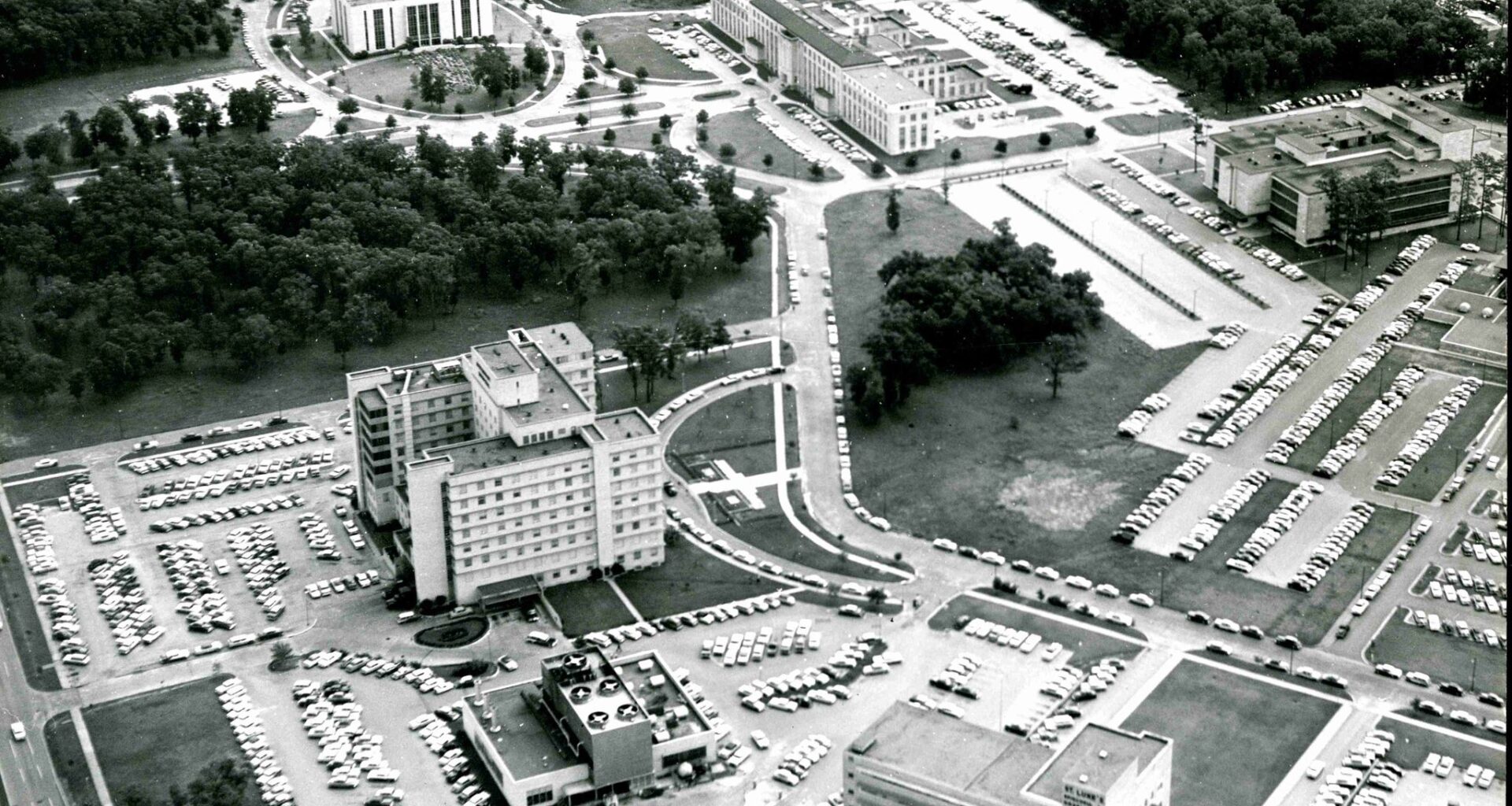
When my father moved to Houston in the 1950s to conduct cancer research at M.D. Anderson, the Texas Medical Center was a small campus with just six hospitals operating. But that was a monumental decade of growth for the med center — springing from shady swampland into 1,300 acres of bustling buildings, construction, cars, trains and pedestrians. With 49 member institutions, it’s now the world’s largest medical complex.
Crucial work is done here: immunology discoveries, cardiovascular breakthroughs, human genome sequencing and pioneering basic research, like my father did.
Pair that medical expertise with Houston’s other exploration giant, NASA’s Johnson Space Center, and you have a hub for scientific innovation. Here’s a look at how Houston became the city of the future.