
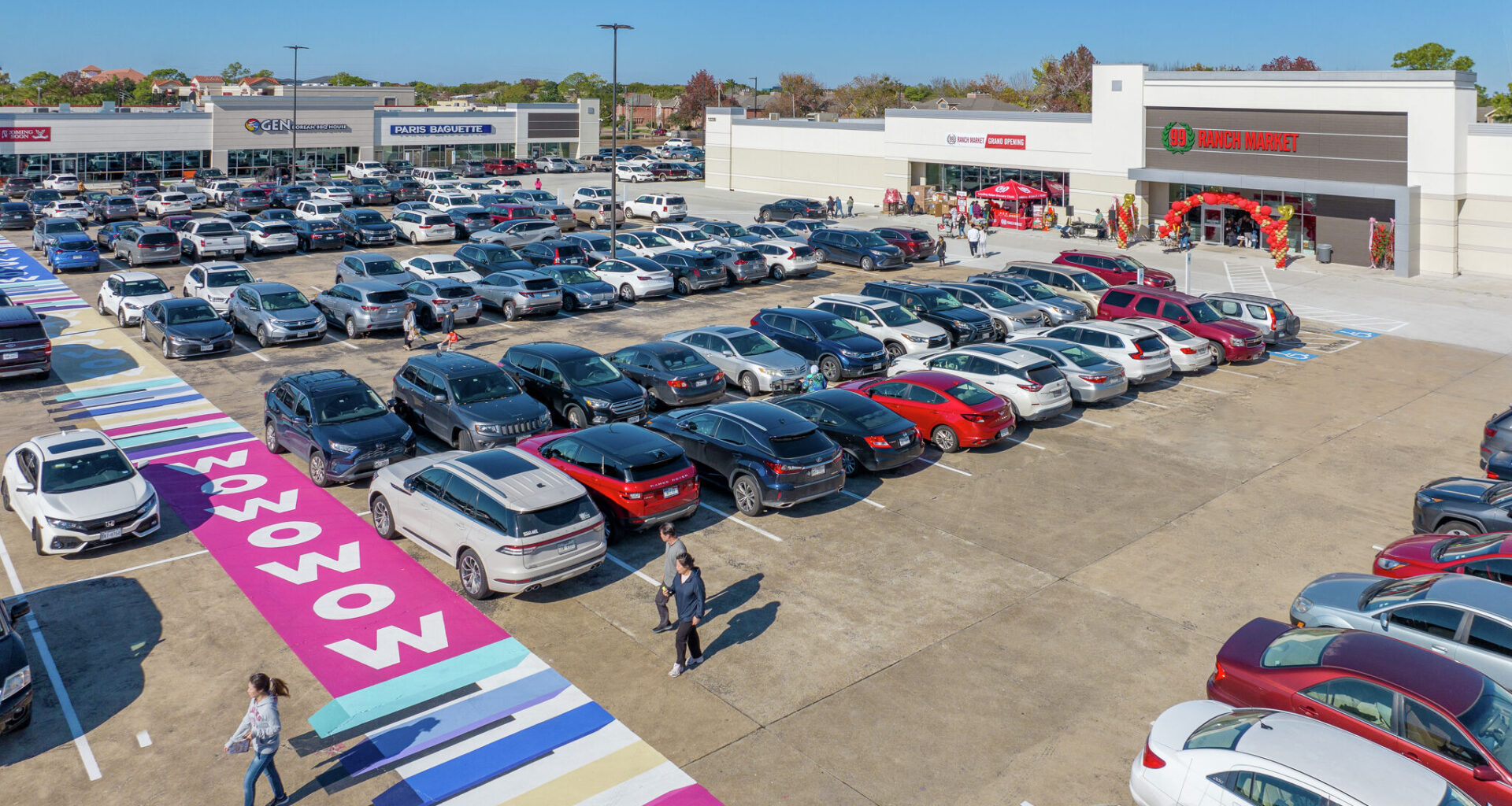
West on West, a redeveloped strip mall, is building its tenants with 99 Ranch Market and international restaurants.
Courtesy of NewQuest Properties
Houston faces triple-digit heat this week, but even during summer there are moments when an afternoon storm cools things off and, maybe if you stand under the shade of a 200-year-old oak and you’re dressed for the weather, a light breeze could make things feel practically tolerable. Perhaps even pleasant. It’s the sort of rare summer moment that has families heading outdoors, walking past storefronts as they make their way to the neighborhood ice cream spot for a refreshing treat. That’s the promise of urban living, and consumers are willing to pay a premium for it. Just one problem. It’s in a Katy shopping center.
Earlier this year, developers announced a $400 million plan to build an artificial walkable neighborhood from scratch at the intersection of Interstate 10 and Texas Heritage Parkway.
Meanwhile, Houston City Hall continues to enforce government red tape that holds our urban core to the same standards as an old-fashioned suburban strip mall — with strict setback requirements, burdensome parking minimums and dangerously wide roads. Many metro regions suffer from expensive housing and stifled growth because developers weren’t allowed to sprawl, but the City of Houston has the opposite problem: Developers aren’t allowed to densify.
Article continues below this ad
For the sake of bolstering economic development, tax revenue and population growth, Houston has to start cutting this red tape. First on the list: Eliminating parking minimums.
Right now, with limited exemptions, City Hall micromanages private development by telling each individual business exactly how many parking spots it needs to provide. This rigid, byzantine system adds unnecessary costs. After all, land and parking garages aren’t free. And requiring parking spots that aren’t needed essentially mandates pouring more concrete in a city already vulnerable to flooding.
Removing these mandates would give developers greater flexibility to build the mixed-use, infill projects that help our city continue to thrive. It would also give Houstonians more places to shop, work and, critically, live. At a time when too many Houstonians struggle to afford quality housing, City Hall should be taking every step possible to add more housing supply.
Article continues below this ad
Parking reform could also help the city’s budget. Not only would it allow for more development — meaning more sales and property taxes — but it could also help Houston qualify for federal transit project funding under the new ROAD to Housing Act.
We’re not the only ones who think the city should eliminate parking mandates. Developers themselves are calling for it too.
In fact, Midway, a Houston-based real estate firm, is asking the city to eliminate parking mandates in a large part of Second Ward, extending exemptions that already exist for Midtown, downtown and EaDo.
“That is the key to making these new mixed-use walkable environments,” David Hightower, Midway executive vice president of investments and development, said at Bisnow’s Houston State of the Market event in April. “It’s getting the parking right.”
The Kinder Institute’s most recent Houston Area Survey found that about 60% of respondents want to live in mixed-use development rather than a single-family home. To meet that demand, developers are building and buying new mixed-use developments all across our region. This year alone, MetroNational purchased M-K-T in the Heights, the RO has been growing at Buffalo Speedway and West Alabama, construction crews broke ground on The Lily River Oaks on Kirby Drive, and, yes, the East River project is on path to transform the Second Ward. Yet parking minimums and other regulations limit where and how these sorts of projects can exist in Houston.
Article continues below this ad
Developers know that mixed-use is a smart investment, and if they can’t buy it or build it within city limits, they’ll just head to the suburbs. Houston makes plenty of headlines about our booming economy and growing population, but all too often that growth is happening far beyond the formal municipality. Cutting unnecessary regulations would open the door to more prosperity within the city itself.
Other Texas cities, including Austin and Dallas, have already made major reforms to their parking mandates. And no, those cities’ neighborhoods didn’t turn into parking thunderdomes. Given the freedom to right-size parking, Austin developers didn’t entirely stop building parking spaces — though they did build about 25% fewer of them. But that still amounts to a big savings, and the added flexibility can be critical for helping a new and affordable development pencil out.
Let’s get rid of the unnecessary government regulations that keep cash from flowing into our city, and build the infrastructure necessary to accommodate growth. Houston’s development is booming, and we need to make sure that boom is eagerly welcomed inside city limits.