
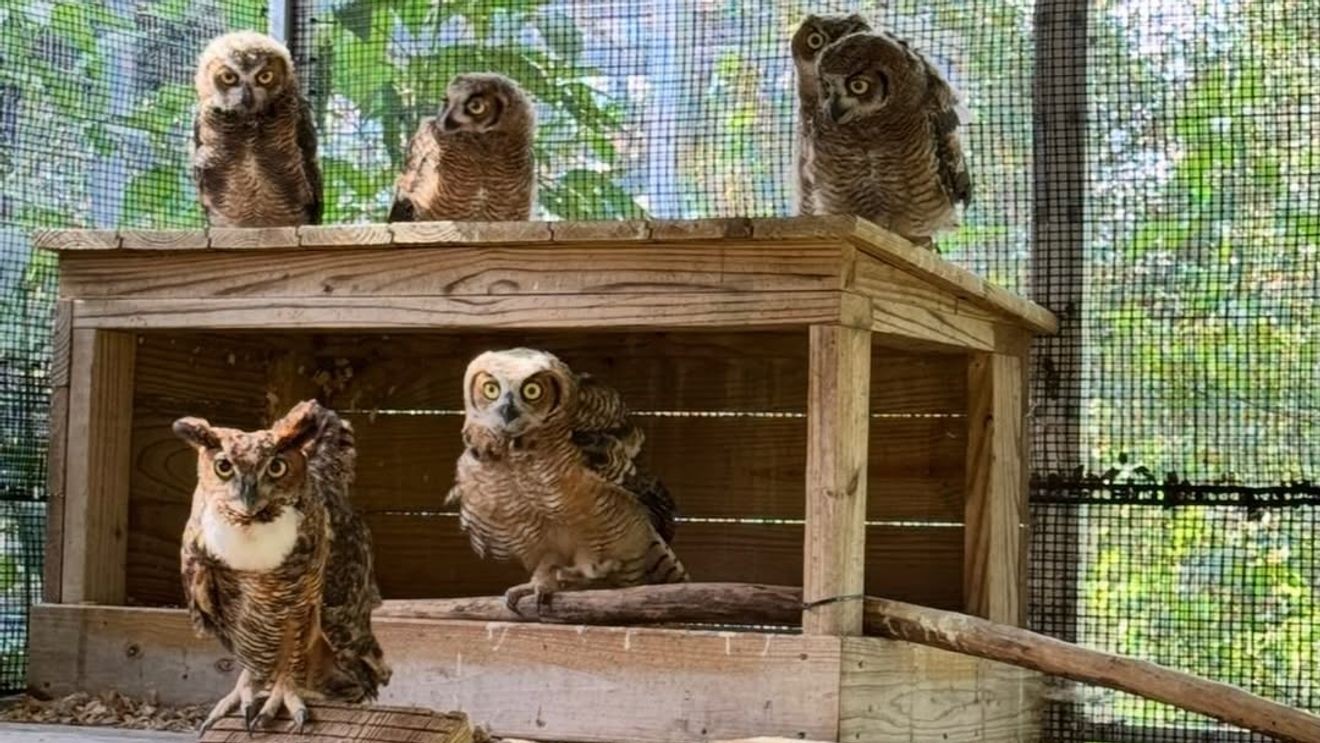
Austin, TX — Eddison can’t fly, but every year she helps dozens of young owls do exactly that.
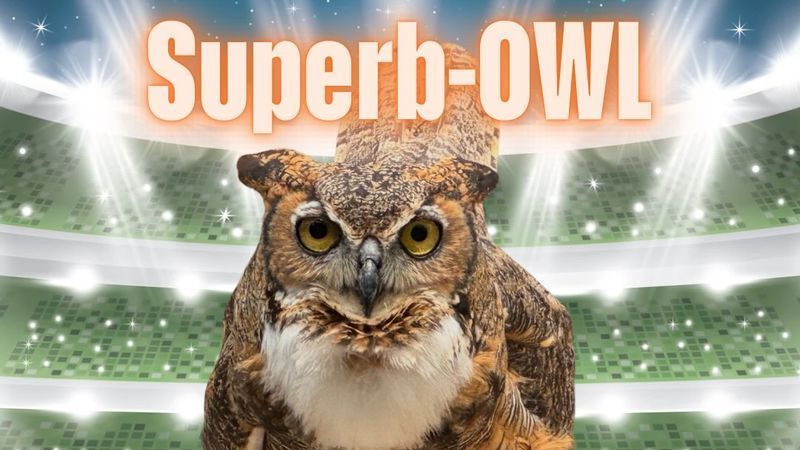
Eddison, the foster great horned owl. Photo courtesy: Austin Wildlife Rescue
The great horned owl has become one of Austin Wildlife Rescue’s most valuable volunteers, serving as a foster mom for orphaned baby great horned owls that arrive at the rehabilitation center every spring.
Eddison came to Austin Wildlife Rescue in 2021 after another wildlife rehabilitator in Bell County retired. She had already spent nearly a decade fostering orphaned owlets there.
Since then, she’s raised more than 38 owls that have successfully been released back into the wild.
Executive Director Jules Marin says Eddison fills a role that people simply cannot.
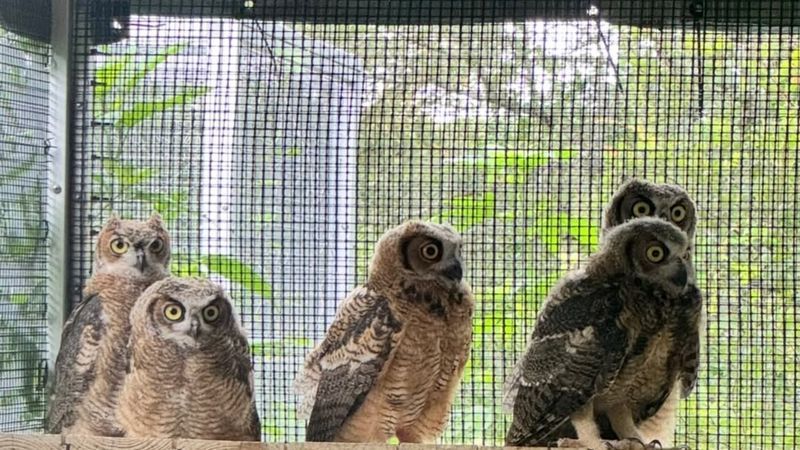
Eddison, the great horned owl, and her foster owlets. Photo courtesy: Austin Wildlife Rescue
While wildlife rehabilitators can provide food, medical care and shelter, they cannot teach young owls how to communicate with other owls, recognize natural behaviors or maintain a healthy fear of humans.
That’s where Eddison comes in.
Each season, she accepts between 12 and 15 orphaned owlets, feeding, brooding and protecting them as if they were her own.
Because Eddison suffered a wing injury when she was young and can no longer fly, Austin Wildlife Rescue modified her enclosure with ramps. Instead of flying food to her babies, she walks up and down the ramps carrying frozen mice and rats throughout the evening.
This year’s family includes five fledgling great horned owls, including the well-known owlet rescued from the Lady Bird Johnson Wildflower Center after concerns about its biological mother, Athena.
Austin Wildlife Rescue says the surrogate family allows the young birds to develop naturally together before eventually being released as a group.
The organization says one of the biggest lessons Eddison teaches isn’t hunting or feeding; it’s teaching the owlets to avoid people.
That natural fear is critical for both wildlife and public safety once the birds return to the wild.
According to Austin Wildlife Rescue, Eddison is about 14 years old and could continue helping orphaned owls for years to come.
During baby season, staff jokingly say she becomes extra protective and isn’t shy about letting them know they’re getting too close.
For wildlife rehabilitators, that’s exactly what they want to see.
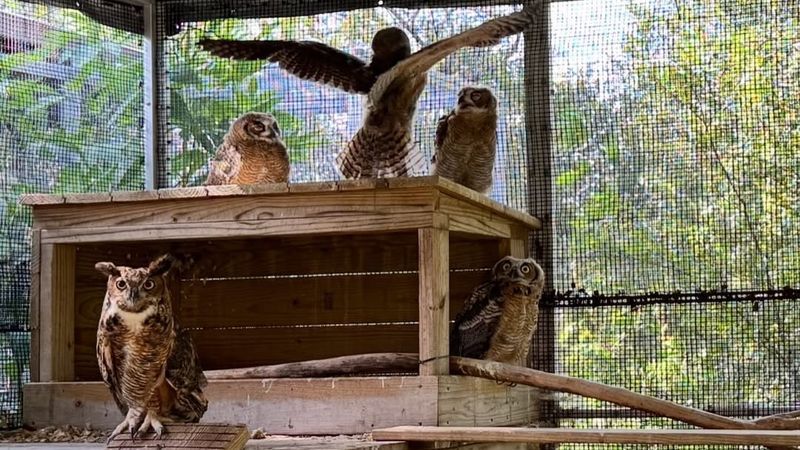
Eddison, the great horned owl, and her foster owlets. Photo courtesy: Austin Wildlife Rescue