
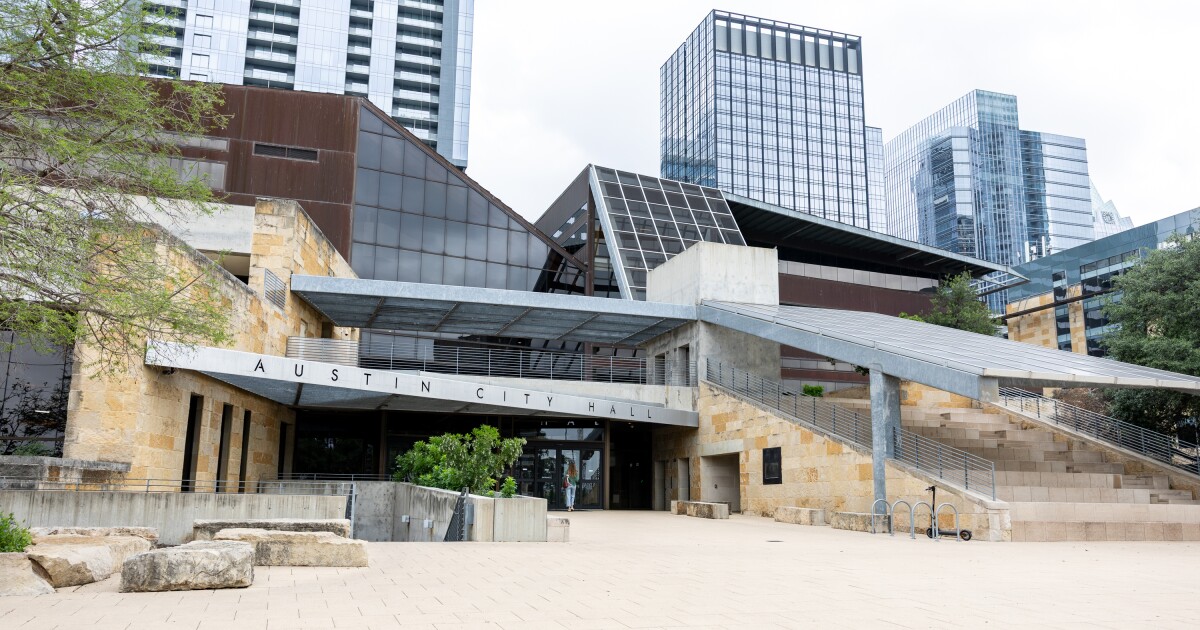
The Austin City Council is set to sign off on an agreement on Thursday that would allow Amazon to move forward with building on a vacant piece of land along the Colorado River.
Earlier this week, the city revealed that Amazon is the Fortune 100 company behind the Dog’s Head development project in Southeast Austin.
Plans for the 2,600-acre site include more than 6,000 single-family homes, 6,200 multifamily units, and millions of square feet in office, retail, industrial and hospitality space.
But the project won’t move forward unless the City Council approves a tax increment reinvestment zone, or TIRZ, a financing tool that would reinvest a portion of property tax dollars into the area to support infrastructure like roads and utilities.
The City Council is set to vote on the creation of the TIRZ on Thursday. It comes a few months after the city entered into a 45-year agreement with Endeavor Real Estate Group to build on the property.
Neighbors’ response
Residents have criticized the city for moving too quickly on the project, saying they had little notice ahead of the council’s decision to annex the property in May.
Assistant City Manager Eric Johnson said the city moved quickly in an effort to secure Amazon as a tenant.
Neighbors have also expressed concern about the environmental impacts of such a large development.
Robin Rather, who spoke out against the development at City Hall this week, urged the council to “say no” to the deal.
“[The property] is bounded on three sides by the Colorado River,” she said. “It’s one of the most pristine sections of water that we have. If we’ve learned anything as a city, we know how to do economic development with environmental protection, with water protection and with our creativity and innovation.”
Economic driver
As Austin faces budget constraints, city leaders have said the new project could help generate additional property and sales tax revenue. City staff estimate it could bring in as much as $3.5 billion in tax revenue over the next 30 years.
Council Member Mike Siegel said concerns about potential environmental impacts and rapid negotiations are not lost on the council. He, along with Mayor Kirk Watson and Council Members Chito Vela and José Velásquez, have proposed some protections as part of the agreement, including a larger buffer zone between the property and the river.
“And so the larger the setback between the river and any developable space, the more we can do to protect the trees, to protect the habitat and provide for green spaces and parks,” Siegel said.
The Austin City Council will meet Thursday at 10 a.m.