
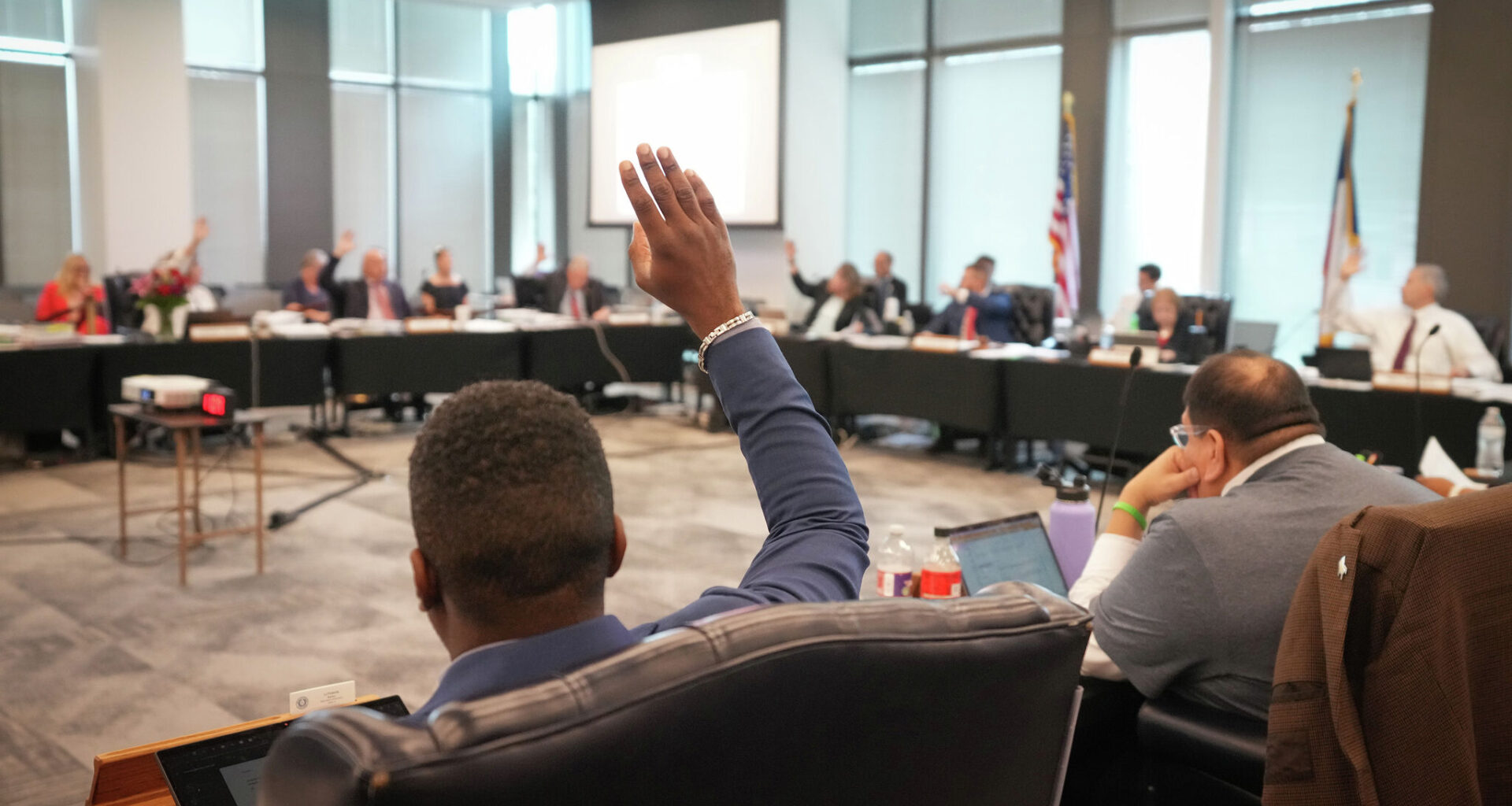
There is no silver bullet in education. But Texas needs to try something new in its approach to teaching history.
Beginning in the 2030-31 school year, public schools will teach history chronologically under new social studies standards that replace the current model, which emphasizes local and Texas history in the elementary grades before shifting to U.S. and world history in middle school.
The Texas State Board of Education is right to embrace this new method. History scores nationwide have been on the decline since 2018, according to the National Assessment of Educational Progress, known as the Nation’s Report Card. In Texas, the most recent STAAR results showed students improved across subject areas, including U.S. history. However, the number of economically disadvantaged students who met grade level standards in history tests has remained stagnant over the last seven years, according to the Texas Education Agency.
About 62% of economically disadvantaged high school students meet grade level standards in U.S. history compared to 70% of all Texas high school students, STAAR results show.
Based on these new standards, which were approved last month, students will start with ancient history in third grade and move through time, reaching the 20th century and World War II by seventh grade. A capstone Texas history course will be taught in eighth grade.
Until now, students have learned history through a method known as spiral learning, in which teachers lay the foundations in earlier grades and the content is revisited, increasing depth and sophistication over time.
The whole idea of teaching chronologically is to give students a better sense of the arc of history. According to an SBOE statement, following the sequence of events will help students develop critical thinking about the past and gain a better understanding of the modern world. There is nothing revolutionary in teaching in chronological order. Many European countries, including France, organize their history curricula this way.
There are concerns regarding these changes, particularly in light of a broader conservative push to include biblical texts in required reading materials. The American Historical Association argued the new standards have “significant omissions and misrepresentations.” Meanwhile, conservative groups like the Texas Public Policy Foundation said these changes don’t go far enough. Others, like former SBOE member Pat Hardy, object on the grounds that chronological lessons might not be age-appropriate.
It’s inevitable that some critics will view the new standards through an ideological lens, but we should consider this matter on its merits, separate from other SBOE debates.
History is complicated, and Texas’ curriculum should reflect that to the extent possible. There should be a reasonable balance representing our achievements as a nation along with our failures. Ignoring the difficult chapters of our history would be a mistake, and state policymakers should consider in good faith the critiques about omissions or framing in history lessons.
Public education is facing enrollment declines and pressure from private and charter schools. There’s room to improve Texas’ history scores along with reading, math and science.This revamp of the history curriculum is more than welcome.
Have thoughts about this? Send a letter to the editor using our letters form or email letters@dallasnews.com. Letters should be no more than 200 words and include the first and last name of the writer and city of residence.