
AUSTIN, Texas — Reporter’s Note: The City of Austin and Austin Capital Delivery Services provided CBS Austin with a written statement concerning progress on past bond projects, but the statement was not received in time for the report’s airtime slot.
Austin City Council was originally scheduled to vote on whether to put a $390 million bond on the November ballot, but the vote was postponed this morning, June 23. City Council will now plan to vote on the item in August.
The City of Austin Council Message Board cited a large number of people signed up to speak at today’s meeting—over 500—as the reason for canceling action on the bond agenda item at the meeting.
“The 2026 bond is one of the most significant decisions we’ll make this year. With today’s meeting already exceptionally long, I don’t believe this item will receive the attention it deserves,” wrote District 6 Council Member Krista Laine. “If we allow the time for thoughtful discussion and deliberation, I believe this Council can arrive at a more unified position.”
What happened with past bond projects?
As Austinites wait to see if they will be voting on another bond, we wanted to ask about the progress on the last few. The city passed its three most recent bonds in 2022, 2020 and 2018.
CBS Austin reached out to the City of Austin and Austin Capital Delivery Services, which manages the public works projects funded by bond money.
We asked how many projects outlined in the bond have been delivered on, and how many are we still waiting to see break ground?
We also asked how long residents would wait to see action on 2026 bond projects if the bond made it to the ballot in November and was approved by voters.
They provided the following answers to our questions:
Can we get an update on the 2022 bond projects? How many have been completed, started, or are still in the planning phase?
“As of July 2026, approximately $203.6 million of the 2022 Affordable Housing Bond has been committed, and $146.4 million remained available for future awards through FY28.”
Which bond categories have progressed the fastest in past bonds (2018, 2020, and/or 2022)? Which have lagged behind?
“Based on expenditures from prior bond programs, sidewalks, bikeways, Safe Routes to School, aquatics, park infrastructure, and parkland acquisition have reached or exceeded the City’s 90% substantial-completion threshold. Vision Zero, transit enhancements, urban trails, parks buildings and improvements, and libraries have not yet reached that threshold.”
What have been the biggest challenges in bringing past bond projects to fruition?
“The largest challenge has been projects entering a bond program before their scopes, costs, schedules, partnership agreements, and long-term operating responsibilities are fully established. Without these plans, staff must later clarify the scope, determine realistic costs and schedules, complete design and permitting, and coordinate utilities and other construction. Projects have also been affected by regulatory changes, rising construction costs, outside funding requirements, and coordination with other infrastructure work.”
If a bond is approved for the November ballot and passes, how long can residents expect to see action on the outlined projects?
“Residents could expect planning, design, procurement, and other implementation activities to begin after voter approval and Council appropriation, but visible construction would vary by project. Some improvements could therefore advance faster, while larger facilities and complex infrastructure projects would take longer.”
Which projects in this new proposal would residents notice first if it’s eventually passed?
“A final implementation schedule has not yet been established. If voters approve the program, the earliest visible work would likely come from established active transportation programs, including sidewalks, bikeways, pedestrian safety, and Safe Routes to School improvements. Smaller park infrastructure, pool, and facility-renovation projects could also become visible earlier than major new facilities, although final sequencing would depend on project readiness and the implementation schedule approved after the election.”
ALSO| Austin City Council debates $390M bond for November ballot or delay to 2028
Past bond project success: Emma S. Barrientos Mexican American Cultural Center
We also reached out to recipients of past bond project grants to gather their perspectives on the pace and effectiveness of the improvements they were due to see. The Emma S. Barrientos Mexican American Cultural Center (MACC) was allotted funds for improvements in the 2018 bond. Renovations wrapped up in June.
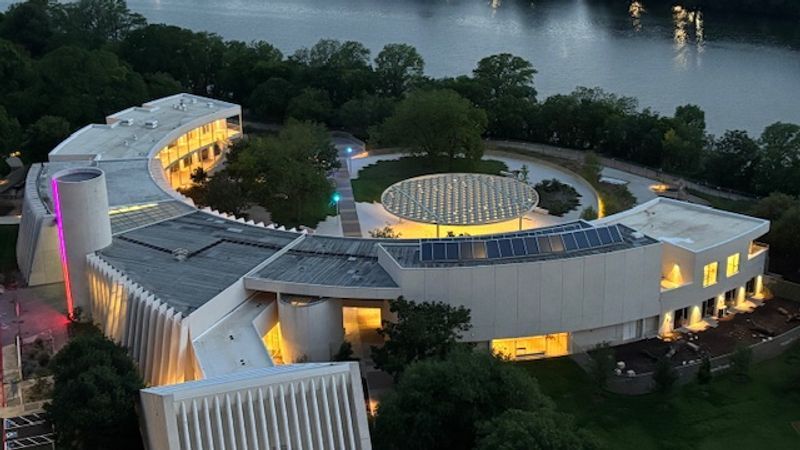
The Emma S. Barrientos Mexican American Cultural Center received $33 million in renovations allotted in the 2018 City of Austin bond (Photo: Austin Arts, Culture, Music and Entertainment)
We asked the MACC about their experience with the timeline and process of the project. They returned information from the Official Spokesperson of Austin Arts, Culture, Music and Entertainment (ACME).
According to ACME, $33 million in renovations were made to the MACC, which “almost doubled the MACC’s previous square footage.” The renovations closed the MACC for three and half years, but “we are so happy about the improvements that were made,” wrote the Official Spokesperson of ACME.
Some of the upgrades made during the expansion include:
A teaching kitchenA children’s education wingYouth and adult multi-purpose room and classroomsNew music rehearsal rooms, a dance studio, an art studio, and a new community galleryA new outdoor shade structure on the outdoor plazaDrought-tolerant native landscapingA sculpture walk and repositioning of public art installations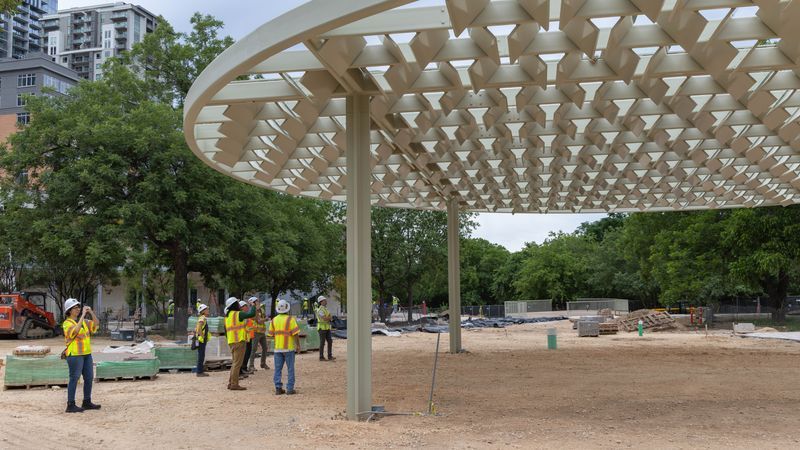
The Mexican American Cultural Center during renovations (Photo: Austin Arts, Culture, Music and Entertainment)
According to ACME, the bond project timeline played out as follows:
May 2018: MACC expansion plan adopted Nov. 2018: 2018 City of Austin bond approvedNov. 2020: Architect selectedFeb.-Sept. 2021: Community engagementJuly 2023: Site permit approvalAug. 2023: Construction beganMar. 2026: Construction completedJun. 2026: Grand re-opening
Regarding the pace of the project, ACME’s official spokesperson noted that “project design and community engagement were conducted during COVID, which added to logistics complications and cost of construction uncertainty.”
However, the MACC is enjoying the long-awaited renovations. The Official Spokesperson of ACME wrote,
“Immediately, we are seeing the benefits! We opened on June 6th with a wonderful celebration that paid tribute to the history and founding members of the MACC. We started our full-day Summer Camp the following Monday, June 8th- welcoming in the students who got to experience the building first hand so soon after reopening! The students are enjoying the safety improvements to the outdoor plaza – they can use the space for dancing, walking, playing, and outdoor recreation while having some distance and delineation from the trail. We no longer have a major issue with folks biking through the MACC at top speed to the trail!”
Past bond project hold-ups: Little Walnut Creek Library
While many project areas from past bonds have seen progress, the City reported that its public libraries have not yet reached the City’s 90% substantial-completion threshold.
The Little Walnut Creek Branch of Austin Public Library (APL) was approved for improvements in the 2018 bond. Some improvements have been completed, but others are yet to happen.
Cody Scott, Facilities Process Manager at Austin Public Library, explained to CBS Austin that improvements to the Little Walnut Creek location are pending completion of renovations at other locations.
The outstanding upgrades to be made include rearranging and making ADA improvements to the library’s entrance ramp. The project also plans to renovate the library’s interior.
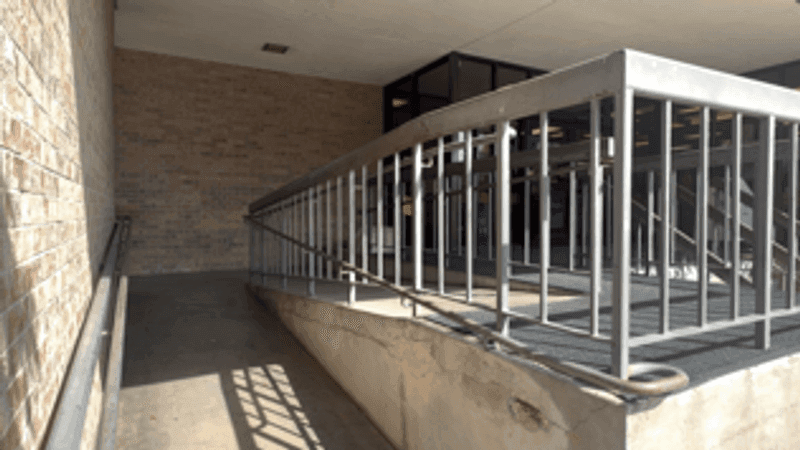
Renovations are planned for the entrance ramp at the Little Walnut Creek branch of Austin Public Library (Photo: CBS Austin/Audrey Wong)
Scott says several barriers to project progress may be unseen by residents. In this case, code changes regarding the ramp and interior have delayed construction.
Additionally, Scott says APL has to be strategic about when they begin renovations.
“Unlike maybe some other bond projects in the city, these projects directly impact access to information and resources,” he said. “So we really have to be cautious about our approach and when we do closures.”
He explained that the Little Walnut Creek upgrades are expected to close the library for a year and a half, but APL wants to make sure there will still be a sufficient number of other library locations open for public use.
“We currently have two other libraries that are closed in the renovation stage,” he said. “So we don’t want to close any additional libraries in the city because that would not be beneficial to the community if we did so.”
How can I see updates to bond projects near me?
To check the status of past bond projects, visit the City of Austin Capital Projects Explorer, which provides information about the projects under the City’s Capital Improvement Program (CIP).