
CARRIZO SPRINGS, Texas — It has been more than 60 years since South Texas ranchers faced a widespread threat from New World screwworm, but the parasite’s northward movement has renewed concerns about the damage it could cause to cattle and other warm-blooded animals.
On a cattle ranch near Carrizo Springs, Bill Martin is relying on lessons passed down through generations of his family.
“I’m probably one of the few people left alive that’s ever actually physically doctored them,” Martin said.
He watched his relatives deal with the pest in the 50s and is using those lessons again now.
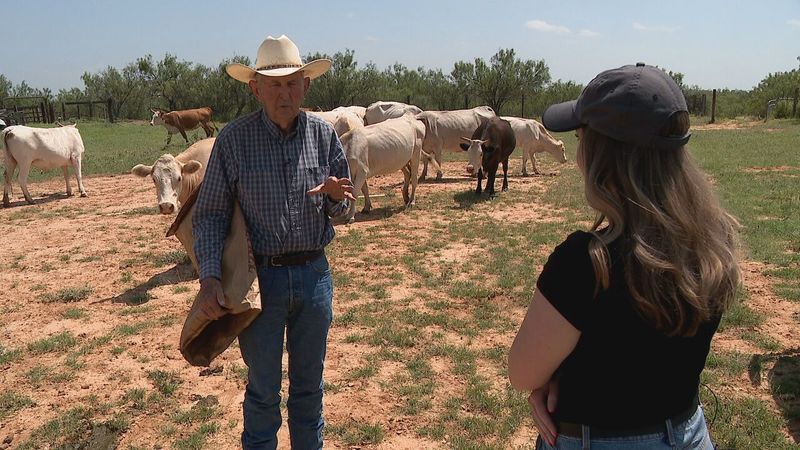
Carrizo Springs rancher Bill Martin explains what it takes to make sure his cattle are safe from screwworm
New World screwworm larvae infest open wounds and feed on living tissue. Martin now checks his cattle daily for injuries where the pest could take hold.
USDA has not reported a confirmed case in Dimmit County, but cases have been confirmed in neighboring Zavala County and nearby La Salle County. Martin said an infestation can become deadly quickly.
The risk is greater for calves, especially when their umbilical cord wounds are still fresh.
“How big of a deal is it if one of them were to have screwworm?” Jordan Elder asked.
“Well, it could kill, in a matter of a week or less, a calf that size,” he said.
Martin said the methods available to ranchers and scientists have improved significantly since the last major fight against the pest.
He cites injectables, pour-on treatments, and more.
“There are more ways, many, many more ways of getting rid of them now than there were back when we were fighting them in the ’50s and ’60s,” he said.
Building a more efficient sterile fly
Some of those new tools are being developed at the Knipling-Bushland U.S. Livestock Insects Research Laboratory in Kerrville.
“This is our New World screwworm research lab,” lab director Kim Lohmeyer said. “Everything that we are doing with New World screwworm happens right here. We’re also using this space for our rapid response efforts.”
The longstanding method for controlling New World screwworm involves raising millions of flies, sterilizing them and releasing them into affected areas.
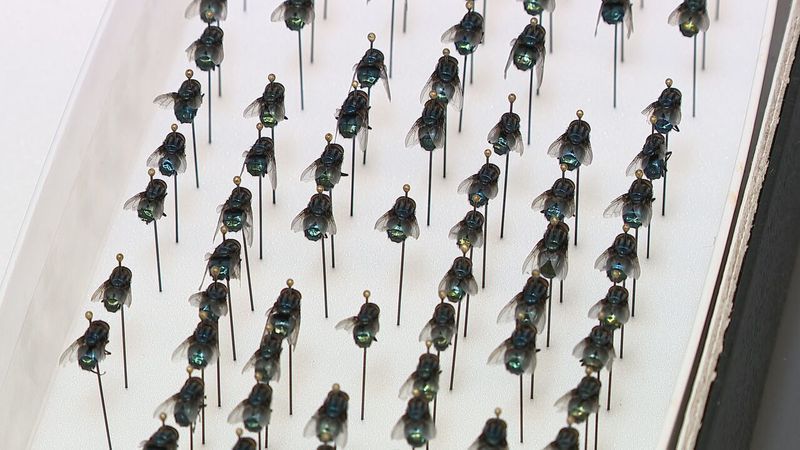
‘Game-changing’ fly could strengthen fight against New World screwworm
When sterile male flies mate with wild females, the eggs do not hatch, helping reduce the population over time.
Researchers currently raise and sterilize both male and female flies, even though the females do not contribute directly to the sterile insect technique.
Now, researchers are now raising a new male-only strain known as Novofly.
The new strain eliminates females at a very early stage inside the production facility, creating male-only batches.
Alex Arp, a research geneticist with the U.S. Department of Agriculture’s Agricultural Research Service, said researchers may produce only a few thousand of these flies in a batch at the laboratory level. A full-scale production facility, by comparison, may need to produce approximately 15 million flies each day.
Arp said the challenge is moving the strain from small research batches into mass production without interrupting the sterile fly program already underway.
He is currently working at the COPEG sterile fly facility in Panama, where flies are currently being mass-produced for release in areas affected by the pest.
A male-only strain would allow production facilities like COPEG to devote their existing capacity entirely to the flies needed in the field.
“And since the capacity of the factory doesn’t change, we are going to take half of that production that’s going to females now and put it all on the males,” Arp said.
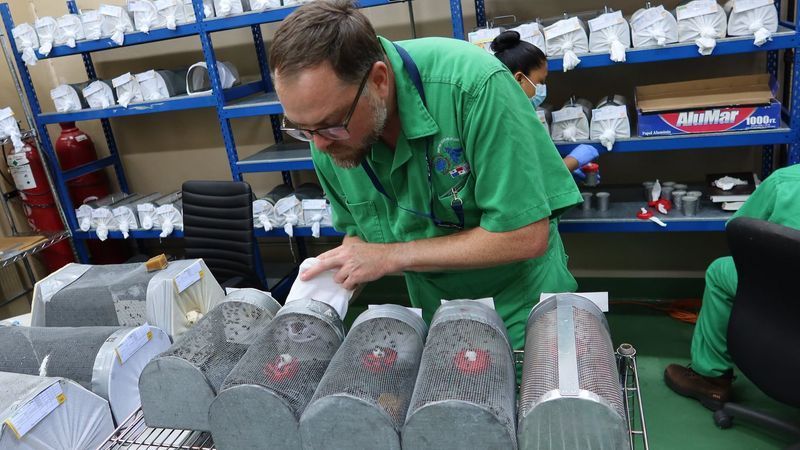
The Novofly could revolutionize the fight against screwworm by making sterilization more efficient and effective (USDA)
Lohmeyer said that could dramatically improve efficiency.
“It would be game-changing from a resources and a production standpoint,” she said.
Researchers estimate the male-only strain could double the number of useful sterile flies produced while reducing radiation, costs and other resources needed during production.
“We can double our production capacity and it saves money,” Lohmeyer said. “Resource-wise, it’s very much more effective.”
Efforts to expand production
Federal officials are also working to increase overall sterile fly production. USDA reopened a modernized sterile-fly production facility in Metapa, Mexico, and the federal government completed a sterile-fly dispersal facility at Moore Air Base in February 2026. A separate sterile-fly production facility broke ground in April and is under construction.
Martin said those efforts should have begun sooner.
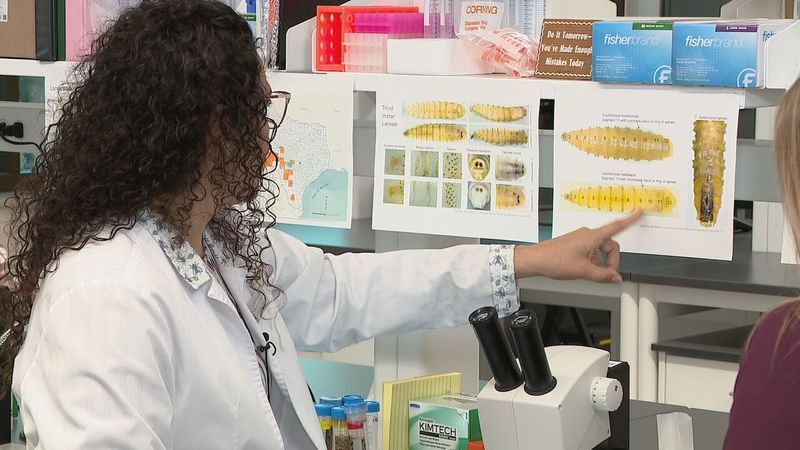
Zamira Yusseff shows us how scientists compare screwworm to other types of larvae to confirm its presence in animals (SBG San Antonio)
“The government was slow to react,” he said. “They shut down our only plant years ago, and it’s taken way too long to get that plant going.”
The overall goal is to release 500 million sterile flies per week to eradicate the New World Screwworm, which is why the USDA is investing in those facilities.
Agriculture Secretary Brooke Rollins has repeatedly told reporters that the administration has been working on screwworm issues since the beginning, and that it was predicted to arrive last summer.
NovoFly is not currently being used in the sterile-insect program. USDA says it must complete regulatory review and field evaluations before it can be deployed.
Lohmeyer said researchers are working with officials in Panama on plans for field trials there before the end of the year. She said the strain would also need federal regulatory approval before it could eventually be released over U.S. ranches.
For Martin, the fight will depend on a combination of careful inspections on ranches and continued innovation in the laboratory.
“We’ll live through this, just like we always have,” he said.