
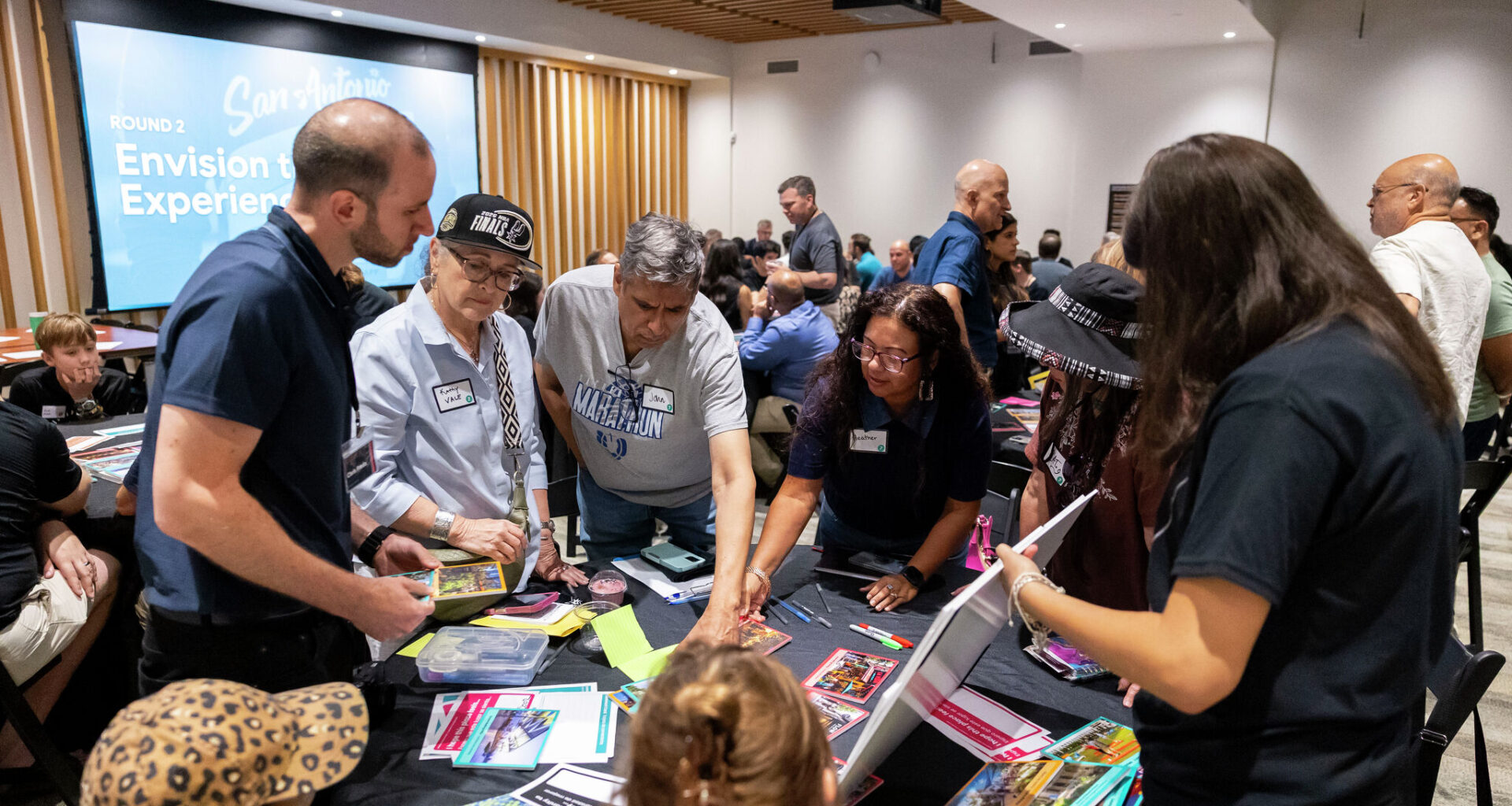
Community members create a vision board during an open house to discuss a new downtown Spurs arena at the Pope Francis Center. Spurs Sports & Entertainment hosted the event. A planned sports and entertainment district needs a long-term mechanism for community input and oversight, Council Member Ivalis Meza Gonzalez writes.
Katina Zentz/San Antonio Express-News
Over the past several months, San Antonio’s conversation about the proposed sports and entertainment district downtown has become increasingly fragmented. One discussion centers on the community benefits agreement. Another focuses on housing. Others debate transportation, neighborhood impacts, financing or the future of the Spurs.

These are important conversations. But they share a common problem: We’re debating outcomes before agreeing on the process.
Article continues below this ad
The question before us is no longer whether this project should move forward. Voters have already approved a key funding mechanism, and our responsibility now is to ensure this district, and a new downtown arena for the Spurs, reflects San Antonio’s values and serves the community.
Before we decide what the district becomes, we must decide how San Antonio will make those decisions.
Too often, the conversation surrounding this project has been framed as a choice between competing priorities: economic development or affordability, downtown investment or neighborhood protection, growth or preservation. Those are false choices. When we bring the right people together early, we produce projects that are stronger, more equitable and more broadly supported than any one interest could have achieved alone.
Fortunately, San Antonio has solved challenges like this before — not once, but many times.
Article continues below this ad
As Suzanne Scott, former general manager of San Antonio River Authority, recently wrote in an Express-News guest commentary, the San Antonio River Oversight Committee helped guide one of the most transformative public projects in our city’s history through years of planning, changing administrations and competing priorities. Its success came from public participation and creating a trusted governance structure that brought stakeholders together and maintained continuity.
We have continued to rely on similar collaborative models. The Airport Advisory Commission provides independent community and industry input on the long-term direction of one of our region’s most important economic assets. The Affordable Housing Advisory Committee brings together housing professionals, nonprofit organizations, developers, financial experts and community representatives to help shape policies affecting at-risk and unhoused residents across San Antonio.
Every five years, our city’s bond committees engage hundreds of residents, stakeholders and experts in evaluating and prioritizing capital investments before recommendations reach City Council.
These committees were created to improve decisions, and the sports and entertainment district deserves that same level of collaborative governance.
Article continues below this ad
Rather than limiting public engagement to individual components of the project, San Antonio should establish a sports and entertainment district advisory committee.
More than providing oversight, this committee would be a working body, turning disagreement into collaboration before difficult decisions are made. It should convene stakeholders from neighborhoods, housing, business, labor, transportation, environmental organizations, arts and culture, education, historic preservation and sports — not simply to monitor progress but to wrestle with competing priorities and develop recommendations.
Its work should include reviewing master plans, evaluating public investments, tracking community benefit commitments, identifying unintended consequences, facilitating public dialogue and issuing recommendations that reflect consensus whenever possible.
Good governance is about creating a process in which disagreement leads to better collaborative decisions.
Article continues below this ad
If we commit to building the right process, we can move beyond competing narratives and toward shared solutions.
More importantly, we can create a process that brings people together — so residents feel heard, stakeholders feel invested and all San Antonians can see themselves reflected in this district’s future.
This should be an experience our community feels good about, not because everyone agreed on every decision, but because everyone had a meaningful opportunity to help shape the outcome.
Article continues below this ad
Years from now, San Antonians won’t remember every debate that took place along the way. They will remember whether we created a district that reflected our values and made our city stronger.
City Council Member Ivalis Meza Gonzalez represents District 8.